
I have long wondered what makes contemporary Republicans tick. It is sophomoric to dismiss them outright because their leader is a vulgar half-wit, but, I’ll admit, Donald Trump’s Svengali-like hold over them confused me. After all, this is the party that has been banging on about family values ever since Dan Quayle launched a crusade against the tv show Murphy Brown because its titular character had a child “out of wedlock” and chose to raise it as a single mother. How did the GOP go from that to bending the knee before a misogynistic serial adulterer who has not only been tried but convicted of sexual abuse and pays hush money to porn stars with big cartoon boobs named Stormy?
When I dug deeper, I began to realize that the party was willing to overlook his obvious character flaws because he brought popular – and by that I mean electoral – support to their agenda(s). His base love his antics. He is nothing if not entertaining, the way JR Ewing was on Dallas. The accepted wisdom is Donald Trump “reshaped” the Republican party in his image, but I think that gives him too much credit. His “genius” (if we can call it that) has been to bring and hold together two factions within the GOP that predate him, and to add his immense, if not dumbfounding, personal popularity to that. This translates into votes, and conservatives now had the power to begin turning back the liberal, New Deal-inspired policies which dominated 20th century American politics.
But the coalition he wove together is showing signs of fraying around the edges.
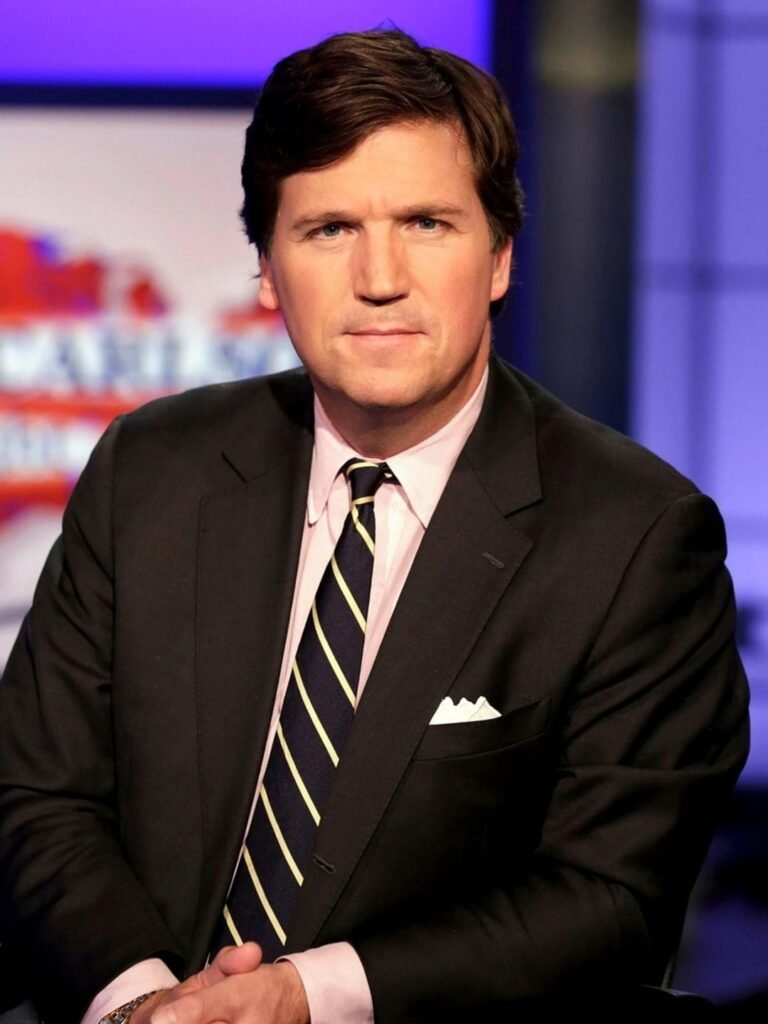
Former conservative Fox News host Tucker Carlson (right), a name synonymous with modern Republican politics since his days as the conservative voice on CNN’s political debate show Crossfire, announced recently that he has left the Republican party.
That is huge. It would be like the Reverend Al Sharpton giving up on the Democrats! So I gave myself some homework: understand why.
Here’s what I found.
Within the modern Republican Party, there exists two closely related but distinct political traditions we will call America First and Make America Great Again (often abbreviated MAGA). Both emphasize national sovereignty, skepticism toward globalization, restrictive immigration policies, economic nationalism, and a belief that the interests of ordinary Americans have been neglected by political and economic elites. Yet they differ in their historical origins, organizational character, and political style. America First is best understood as a recurring foreign-policy and nationalist tradition that predates the modern Republican Party, whereas MAGA is a contemporary political movement centered on Donald Trump.
The phrase “America First” has appeared repeatedly in American political history. It was used by politicians during the 19th century but became especially prominent during the years preceding the United States’ entry into World War II.
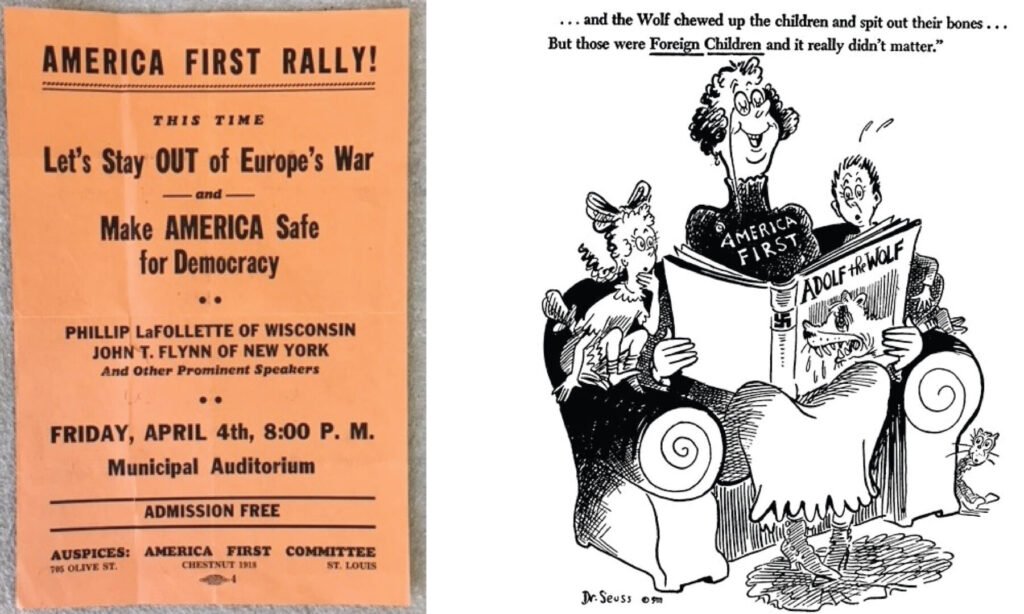
The best-known organization bearing the name was the America First Committee, founded in 1940, which argued that the United States should avoid becoming involved in Europe’s war, maintain a strong national defense, and focus on protecting the western hemisphere rather than intervening overseas. Among its most famous spokespersons at the time was the pilot and national hero Charles Lindbergh, whose speeches reflected widespread isolationist sentiment but also became controversial because some included antisemitic themes and praise for aspects of Germany’s military strength. Even future-president Gerald Ford was a member of the America First Committee while a student at Yale Law School. But following the attack on Pearl Harbor, the organization dissolved as public opinion shifted decisively in favor of entering the war.

After World War II, the Republican Party generally embraced a more internationalist outlook. Republican presidents Dwight Eisenhower, Richard Nixon, and Ronald Reagan supported alliances such as NATO, maintained robust American military commitments abroad, and generally favored free trade. Although nationalist and non-interventionist currents persisted within the party, they occupied a relatively minor position during and because of the Cold War.
But, the end of the Cold War, prolonged military engagements in the Middle East, economic globalization, and rising concerns about immigration created perfect conditions for a revival of nationalist politics. When Donald Trump launched his presidential campaign in 2015, he deliberately revived the idea of isolationism and branded it with the ready-made slogan “America First.” In his usage, the phrase referred to several interconnected principles:
- Prioritizing American economic interests over global trade liberalization
- Restricting illegal immigration and tightening legal immigration
- Renegotiating trade agreements
- Encouraging domestic manufacturing
- Asking allies to contribute more toward collective defense
- Being more selective about military intervention abroad
But Trump and Trumpism wasn’t done dusting off old Republican chestnuts. “Make America Great Again” comes from Ronald Reagan’s 1980 campaign slogan “Let’s Make America Great Again.” Trump shortened it and he had his 2016 presidential campaign slogan. And then came those tacky hats. Geez. He does have an eye for marketing, I’ll give him that. But let’s get real: baseball hats are for baseball players. And teenagers. And for men who are trying to hide their bald spot.
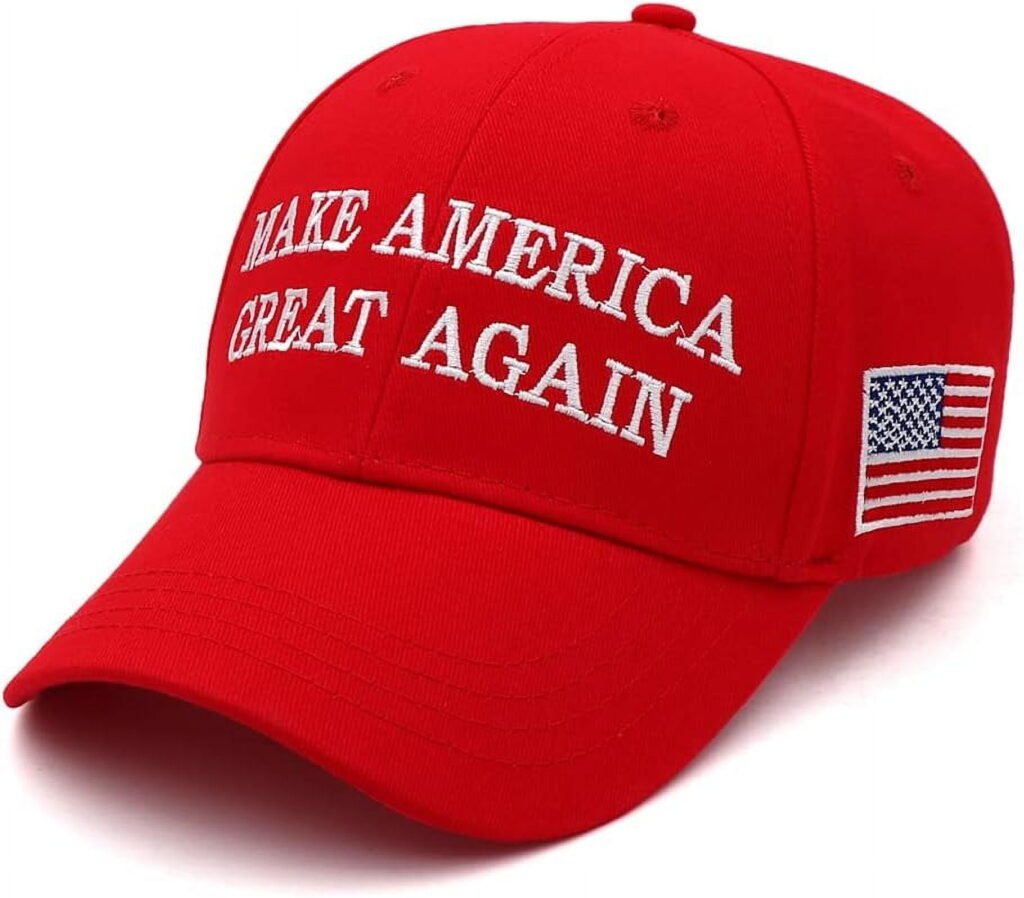
In his hands, MAGA evolved beyond a campaign slogan into a broader political identity. While America First describes a governing philosophy, MAGA encompasses a political coalition, a populist movement, and a distinct political culture centered on Trump himself.
Make America Great Again is a cult of personality that hijacked the Republican party; its supporters generally argue that established political institutions, to include both Democratic and Republican leadership, have failed ordinary Americans. They often criticize what they describe as the “Washington establishment,” legacy media, large technology companies (although you wouldn’t know it given how many are in bed with the current administration), universities, and federal bureaucracies as institutions that exercise excessive influence over American life.
Several themes characterize both America First and MAGA politics:
- Economic Nationalism: Supporters favor protecting American manufacturing, reducing dependence on foreign supply chains, and using tariffs more aggressively to encourage domestic production.
- Immigration Restriction: Immigration is perhaps the defining issue of both factions. They support stronger border enforcement, expanded deportation of unauthorized immigrants, and limits on asylum claims, while emphasizing border security as essential to national sovereignty.
- National Sovereignty: Both movements argue that international organizations and multinational agreements should not constrain American decision-making. This perspective often leads to skepticism toward international institutions and treaties perceived as limiting US autonomy.
- Populism: MAGA particularly emphasizes the contrast between “ordinary Americans” and political, corporate, academic, and media elites. This populist rhetoric distinguishes it from earlier conservative movements that focused primarily on limited government or free-market principles.
- Cultural Conservatism: Many MAGA supporters argue that American cultural traditions – including patriotism, religious liberty, traditional family structures, and local control of education – are under pressure from progressive social movements.
Republican orthodoxy traditionally emphasized free trade, lower taxes, deregulation, and an assertive international role for the United States. While MAGA retains support for tax reductions and deregulation, it places greater emphasis on trade protection, immigration restriction, industrial policy, and cultural issues, which is why it dovetails so nicely with America First whose advocates place greater emphasis on national sovereignty, economic protection, and responsiveness to popular concerns about globalization and immigration.
It’s a marriage made in heaven. But every marriage has its disagreements. The fault lines that are beginning to show amongst Republicans have to do with Trump’s war with Iran and what the America First faction view as a betrayal: his elevation of foreign affairs over domestic concerns like inflation and high gas prices.
Republicans from both the America First and the MAGA camps express nostalgia for what they consider to have been a time of patriotism, religiosity (oh god, here come the diatribes about “family values” again), and prosperity for blue-collar workers.
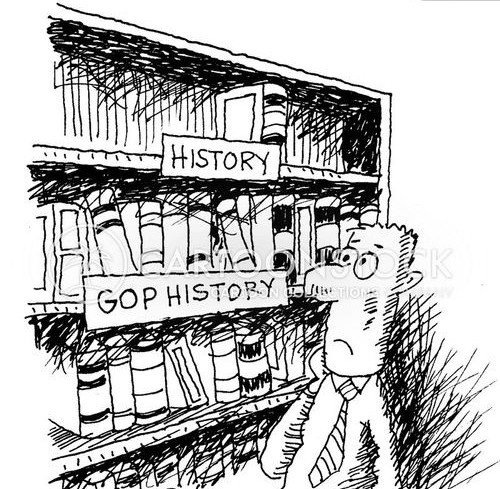
They want to return America to some romanticized era of bliss, even though in practice that means a time when minorities were largely invisible, gays and lesbians were in the closet, and women’s possibilities were mostly limited to marriage and childbearing (and secretary, and stewardess), and they don’t care if they have to rewrite history to get there.
But Trump also relishes the memory of a time when America was by far the most powerful nation in the world and wasn’t shy about using its power to order the international political landscape to its liking, which flies in the face of the isolationist vision of “America first.” His is a kind of political schizophrenia.
Recent votes on reigning in Trump’s “war powers” show the America First folks calling him on his “tough guy on the world stage” persona and policies. And while I certainly hope hostilities can be brought to an end sooner rather than later and someone can put a lid on Israel without being accused of antisemitism, this division between the two factions of Trumpism is the chink in the armor Democrats need to win decisively in the midterms and start applying congressional checks and balances to an administration that seeks not only to dominate Republican politics but American life, because this congress won’t and the Supreme Court has all but abdicated its role.
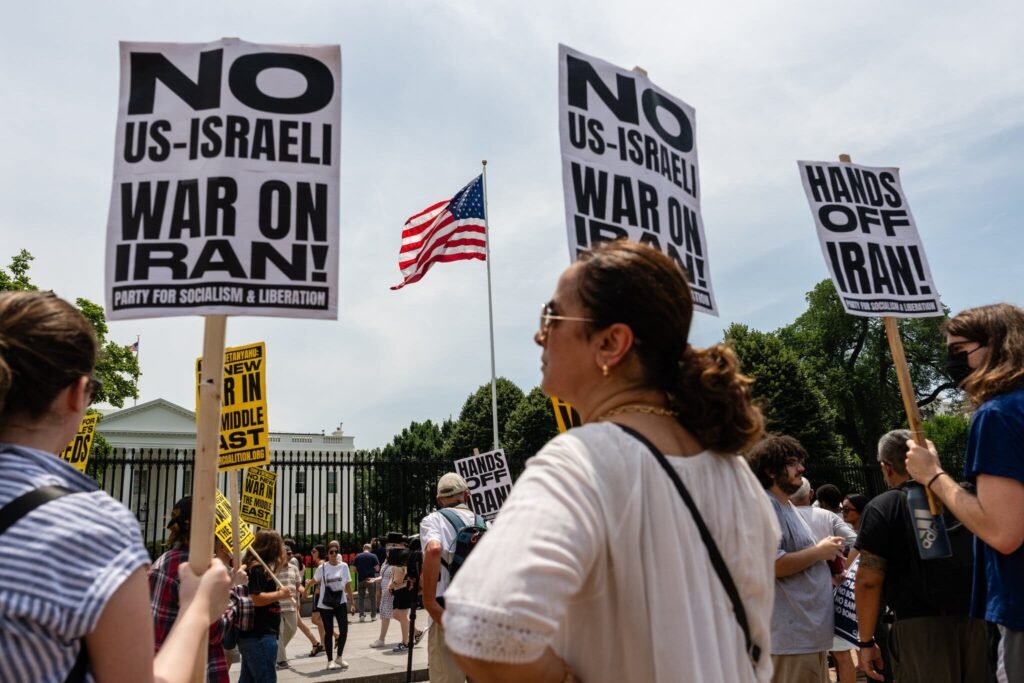
War is a serious business, and the conflict with Iran a sobering moment for a Republican party in thrall to Donald Trump. Trump’s charismatic incoherence allowed him to bring America First and MAGA into the same tent; he forged a successful political coalition. But his Iran adventure has exposed him for what he always was: a charlatan selling snake oil. And while I am loathe to quote someone as vile as Tucker Carlson, it is his analysis I will end on, taken from a recent podcast interview:
I think there was a strong latent desire in the hearts of a lot of Americans to improve the country, make America great again. So on a literal level, people wanted that. They still want it. I still want it. But it was imprecise by design.
The phrase “America First,” however… is precise. Just put your own country first as you make decisions as a leader of your country. … But they don’t use that anymore because of course they’re making decisions on the basis of other criteria. What’s best for this company? What’s best for Israel? What’s best for our donors? I just want to say again, that’s unacceptable. … I’ve been a consistent defender for 35 years of the Republican Party. … But there’s no defending this because it’s immoral and it’s exactly the opposite of what a political party in a democracy is charged with doing. … So no, I’m out. And if I’m out, then I think a lot of other people are out.
