Happy Pride! The first Pride march was held 56 years ago tomorrow, on June 28, 1970, the one-year anniversary of the Stonewall Riots. The Stonewall Riots were a tipping point for the gay liberation movement in the United States, where, after that first march, the last Sunday in June was initially celebrated as “Gay Pride Day,” but the actual day was flexible.
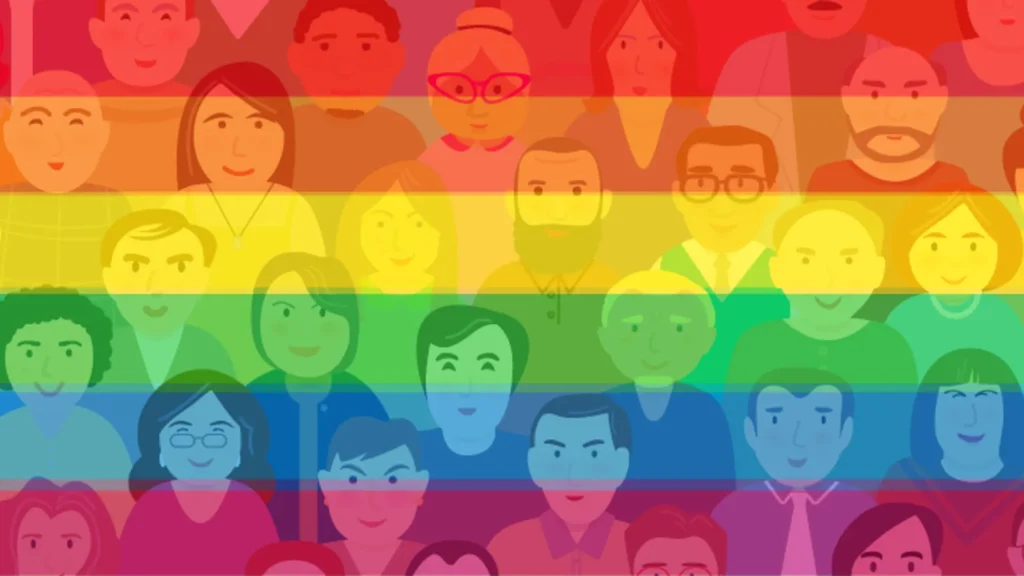
In major cities across the nation the “day” soon grew to encompass a month-long series of events, including pride parades (always the cornerstone), picnics, parties, workshops, symposia, and concerts. Pride Month events attract millions of participants around the world and include those who identify as part of the LGBTQ+ community and our allies. Memorials are held during this month for those members of the community who have been lost to hate crimes or HIV/AIDS, but the overall purpose of Pride is to recognize the important indispensable impact (I’m a sucker for alliteration) that lesbian, gay, bisexual, and transgender individuals have had on history and society locally, nationally, and internationally. And to promote and celebrate community.
When I first came out, it was simply called “Gay Pride” and I was taking my place in the “gay community.” But as time went on, both the community and I realized the importance of inclusivity given that our primary “gripe” (for lack of a better word) was the exclusivity of heteronormative society. We soon began referring to the gay community as the gay and lesbian community, and to Gay Pride as simply Pride, to acknowledge that sexual orientation is not dependent on gender, or to put it another way, there are girl homosexuals, and that our “gay” community includes them too.
I think the strength of my community, and the thing I am most proud of, is its ever expanding inclusivity. And the fact that it does not just talk the talk, but it walks the walk. Nowhere is this more obvious than the identifying initialism we go by today, though at the rate we’re going we may run out of letters in the alphabet to represent everyone in our big joyous tent!
When we started to acknowledge, as Kinsey described, that sexuality is a continuum, from the exclusively homosexual to the exclusively heterosexual, we added the B for bisexuals to the L for lesbians and G for gays. For awhile we were the LGB community. Then came the T. As we developed our understanding of gender as a societal construct, we needed a way to include those whose gender identity did not match the sex they were assigned at birth – and so we added the T for transgenders.
“Fair enough,” everyone agreed. Four letters was still manageable. Efficient. You could say LGBT in a single breath without requiring supplemental oxygen. You could fit it on a bumper sticker without reducing the font to microscopic levels. But as more and more people sought refuge in our tent because they’d been ostracized, persecuted, discriminated against, or just misunderstood everywhere else, the community wanted to recognize them. That is a noble aspiration.
Soon it became LGBTQ, where the Q stood for “queer,” both a prideful reclaiming of a hurtful slur to denude it of its power to harm, and a kindof “catchall” for myriad identities and communities outside the mainstream but not specifically related to sexual orientation or gender. Some use the Q to mean “questioning,” allowing a space in our community for someone who thinks they might identify as a member but isn’t sure yet. We offer a money back unlimited trial period, no commitment required.
Then came LGBTQIA. Embracing our intersex and asexual brothers and sisters. You might even have seen LGBTQIA2S, where 2S refers to two-spirit, used by native Americans who describe homosexuals as those who embody both male and female spirits. I’ve even seen LGBTQQIP2SAA, which includes intersex, pansexual, two-spirit, asexual, and ally. That isn’t a formulation that most people know or can decipher easily (and includes allies, who are usually not accepted as part of the community). The inclusivity intention is good, but spelling it out is beginning to get a bit unwieldy.
So most people, and I by convention on this blog, have settled on LGBTQ+.
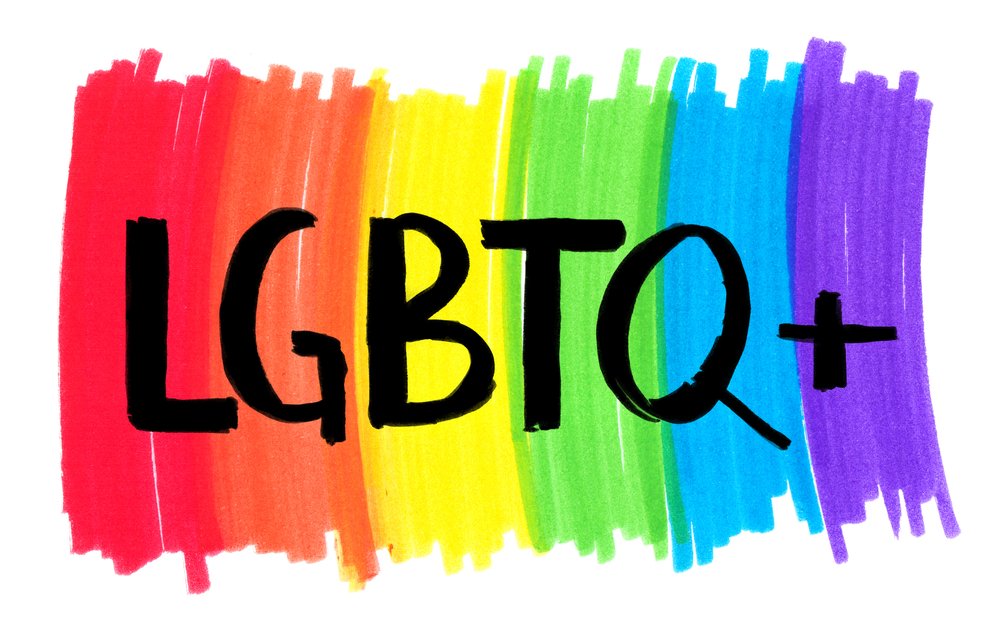
And that “+” is really important because it leaves our identifying initialism open-ended to include as many identities as exist in the community and acknowledges that more may be added in the future. Today, this includes people who are non-binary, gender non-conforming, genderqueer and so much more. It’s actually rather practical. Instead of adding more letters every six months, the plus sign functions like an expandable storage unit for humanity, saving money on everything from signage to stationary. But that hasn’t stopped some people from regularly trying to unpack the storage unit. Every year seems to bring a fresh debate:
“We should update our name.”
“We already did.”
“No, we need another update.”
“But we just finished printing the brochures.”
Somewhere, an exhausted graphic designer is staring blankly at Adobe Illustrator trying to fit another character onto a conference banner that was already stretching the limits of typography. The comedian Dave Chappelle has dubbed us “the alphabet people.” The initialism has reached the point where introducing it verbally sounds less like identifying a community and more like reciting a Wi-Fi password:
“LGBTQIA2S+…”
“I’m sorry, could you repeat that?”
“I’d rather not.”
It’s like trying to memorize the list of planets before Pluto’s career change. The fun part, at least for me, is watching muggles desperately try to be respectful:
“I fully support… um… LGBTQ…” [pauses nervously] “…plus?”
The word “plus” is delivered with the cautious optimism of someone trying to diffuse a bomb.
“Please let this cover everyone.”
And honestly, that’s the entire point.
The expansion reflects an admirable desire to recognize more people rather than fewer. It’s inclusivity colliding head-on with the practical limitations of the Latin alphabet. Imagine if every group adopted the same philosophy.
The NBA would become the National Basketball Association Featuring All Related Leagues, Historical Teams, Youth Programs, Recreational Participants, Referees, Mascots, Statistical Analysts, and Anyone Who Has Ever Touched a Basketball…+.
NASA would simply be “Space Stuff+.”
The irony is that the initialism’s success has created its own challenge. Every additional letter says, “We see another group that deserves recognition.” That’s a commendable instinct. Every additional letter also says, “Good luck fitting this on a baseball cap.” Perhaps the ultimate solution is to stop trying to cram the incredible diversity of human identity into something that sounds like someone lost a game of Scrabble. After all, nobody expects the periodic table to fit into a tweet.
Maybe the plus sign should receive the recognition it’s due. The plus has earned it. It’s the hardest-working punctuation mark in modern English. Some commas separate clauses. Some apostrophes confuse people.
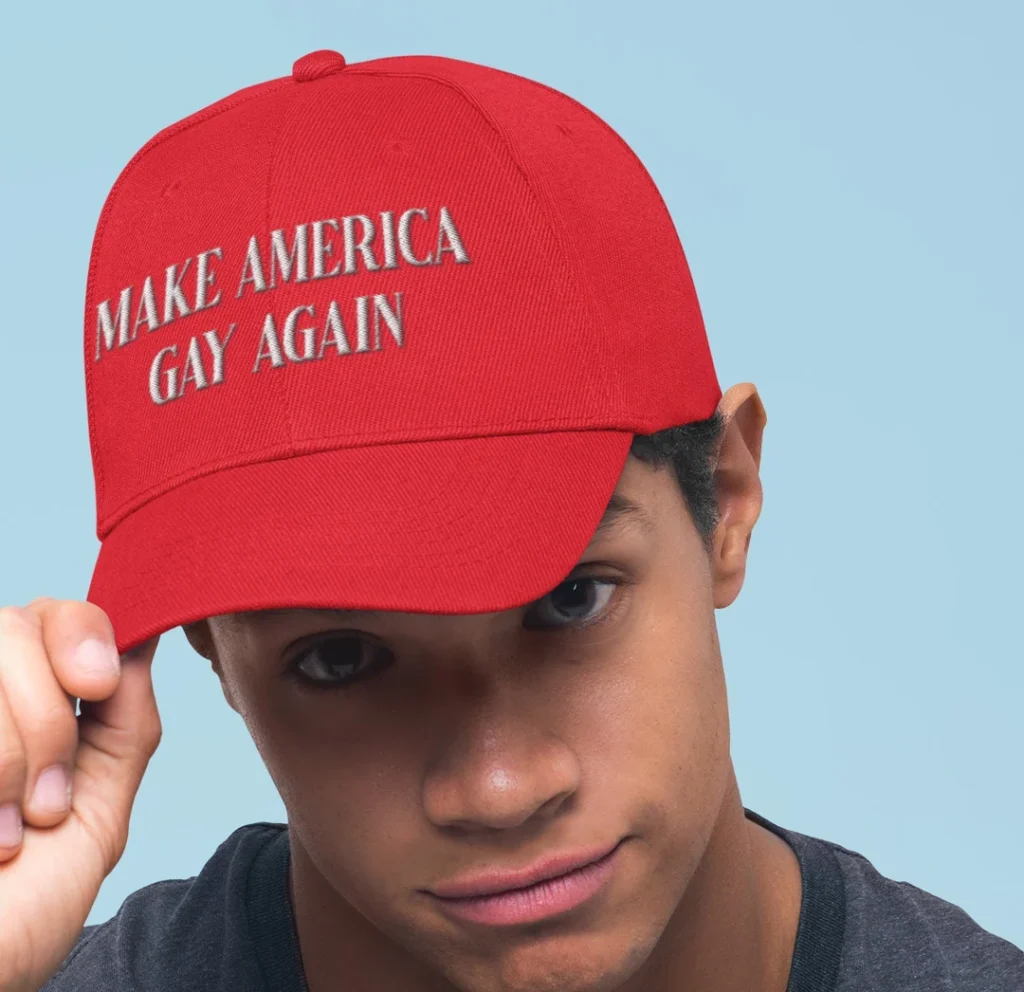
But one little plus sign has somehow been tasked with representing the wonderfully complicated reality that human beings are, in fact, wonderfully complicated. That’s a lot of responsibility for something that also appears on calculators. Or, we could ditch the ever-growing initialism altogether and return to a simpler time with a short, easy-to-remember acronym… MAGA – Make America Gay Again.
