
It’s hard to put into words what it was like living in the shadow cast by AIDS in the 90s. One of my exes (I have several – in my heyday, I was what you might call a serial monogamist) gave HIV the name Pablo, because we could not comprehend nor relate to an unseen microscopic cellular “virus” decimating our community. It was somehow easier to talk about what an asshole Pablo is; to talk about Pablo’s more unsavory character traits; to say Pablo had gotten Chris; to wish that Pablo was dead.
I think the biggest question on everybody’s mind was where did Pablo come from. You had the Pat Buchanan’s of this world making asinine homophobic statements like:
The poor homosexuals. They have declared war on nature, and now nature is exacting an awful retribution.
NY Post, February 24, 1983
And you had Randy Shilts’ 1987 book And the Band Played On amplifying the whole “patient 0” myth (which I debunked here) of a gay, promiscuous, sociopathic Canadian flight attendant named Gaëtan Dugas knowingly spreading the disease.
But even if you were inclined to believe Mr. Buchanan or Mr. Shilts, neither of them answered the “where” question. If you go with Shilts, did Dugas cook HIV up with a chemistry set on one of his layovers at JFK or LAX? Go Buchanan, for whom “nature” is a euphemism for God, and unless you believe God has nothing better to do with his time than pick off unapologetic homosexuals with his wand of divine retribution, we’re still no closer to Pablo’s origin story. Bottom line, HIV had to come from somewhere.
Recently, I received this email from a thoughtful reader:
I just read your “Myth of Patient 0” post … youv [sic] told us where it didn’t come from, how about where it did come from. Is it true someone had sex with a monkey?
Um, no. I mean, well, yes, in the history of life on this planet, it is possible (and even probable, because people are weird) someone somewhere at some point had sex with a monkey, but that is not how HIV got “into” humans. First of all, it originated with chimpanzees, not monkeys, and the best theory of how the virus jumped species is known as the “cut hunter” theory. I’ll come back to that in a moment. But first, we need to free ourselves from the erroneous notion that Pablo made his debut in Los Angeles with that infamous Morbidity and Mortality Weekly Report (MMWR) from the Centers for Disease Control and Prevention (CDC) on June 5, 1981.
In reality, the story of HIV stretches back much further – to the forests of Central Africa, to chimpanzees carrying a related virus, and eventually to a chain of transmission that appears to have carried Pablo from Central Africa to the United States with a stopover in Haiti. It is a story involving evolution, colonialism, international migration, urbanization, sexual networks, and, eventually, one of the most consequential pandemics in modern history.
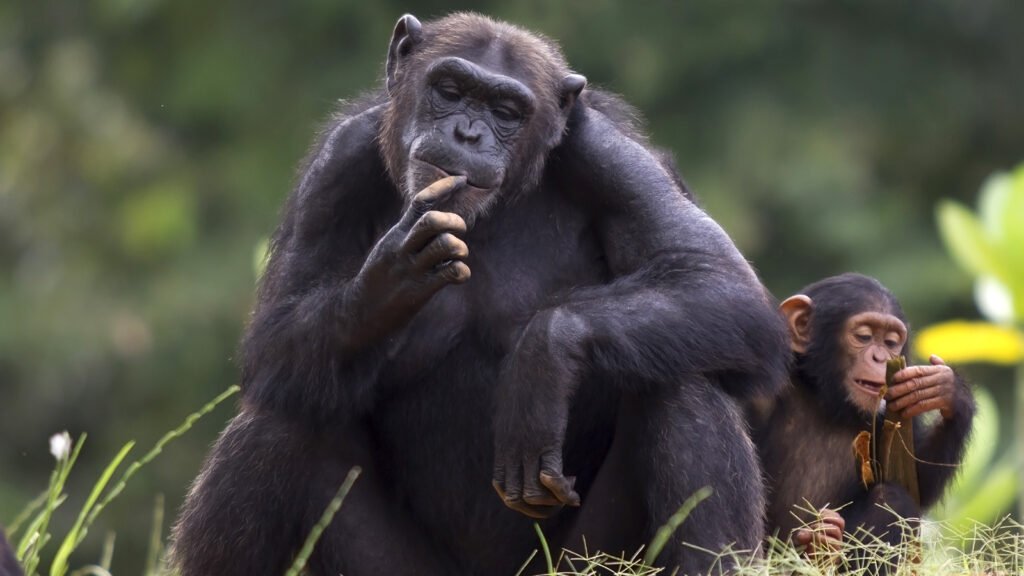
The story begins with SIV. That is not a typo. HIV belongs to a family of viruses called lentiviruses. Its closest relatives are simian immunodeficiency viruses, or SIVs, which naturally infect African primates. The pandemic form of HIV-1 is genetically most closely related to an SIV found in chimpanzees, known as SIVcpz. Scientists believe that the virus that eventually became HIV-1 arose after an SIV lineage circulating among African primates made the leap into humans.
This was not necessarily a single event. The exact individual who first acquired the virus is unknown, and scientists cannot identify a particular chimpanzee as the source. The most plausible explanation is considerably less dramatic than we might like or expect: somewhere in Central Africa, a person hunting, killing, or butchering a chimpanzee got infected blood on them. If that blood entered their body through a cut or other wound, the virus had an opportunity to cross the species barrier.
This is known as the “cut hunter” hypothesis.
The important point is that the hypothesis is about the mechanism of transmission. It does not identify a specific “Patient 0.” The original spillover could have happened more than once, and most such cross-species transmissions probably would have ended without creating a sustained human epidemic. One particular lineage, however, did succeed in establishing itself in humans and propagating.
Genetic studies have allowed scientists (not bigoted politicians, not misinformed journalists from The San Francisco Chronicle) to work backward through the accumulated mutations in HIV. Those studies indicate that the lineage known as HIV-1 group M, which ultimately caused the overwhelming majority of the global HIV pandemic, became established in humans around the beginning of the 20th century.
That does not mean that someone contracted HIV in 1915. It means that the genetic evidence points to that period as the approximate time at which the ancestral lineage of the virus was circulating and beginning to diversify among humans.
And the virus apparently found an ideal environment for expansion in Central Africa. The region around what was then called Léopoldville, and is now known as Kinshasa in the Democratic Republic of the Congo, appears to have become the major early center of HIV-1 group M’s diversification.
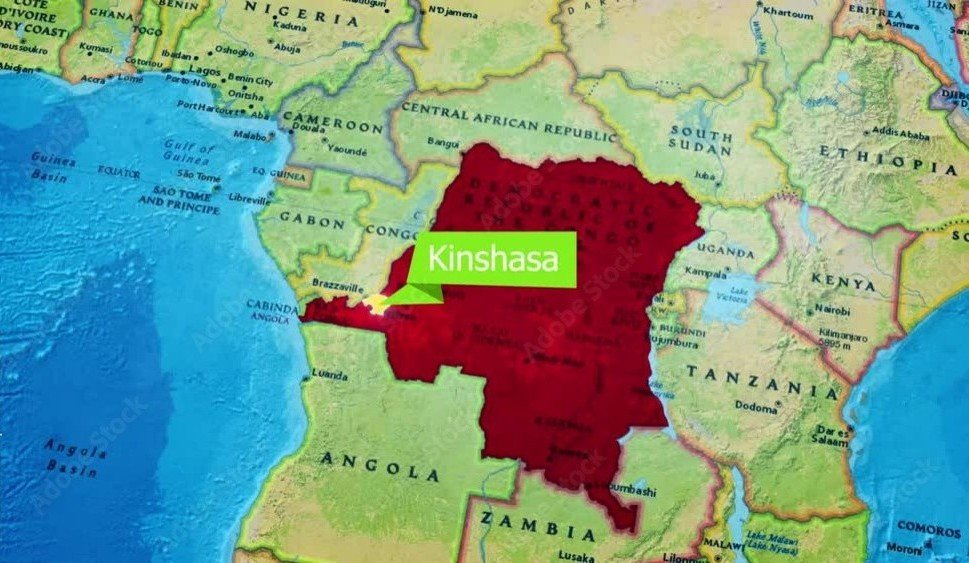
But here I must point out that Léopoldville (modern day Kinshasa) was not necessarily the exact place where SIV first crossed into humans. Instead, it appears to have been the place where the resulting human virus established itself, multiplied, and began spreading through increasingly large networks of people. The transformation of HIV from SIVcpz into a growing epidemic likely involved ordinary and rather mundane forces of the 20th century: expanding cities, migration, transportation, changing sexual networks, and economic development.
For this, we have evidence. In 1959, a blood sample collected in Léopoldville was preserved. Decades later, researchers recovered HIV-1 genetic material from it. In 1960, another sample from the same general region yielded a genetically distinct HIV-1 sequence. These two samples are extraordinarily important because they demonstrate that HIV was not a brand-new virus appearing in the 1970s and being spread by a promiscuous Canadian flight attendant. As early as 1959, and then again in 1960, two distinct strains of HIV were established and evolving in Central Africa.
The AIDS epidemic that became visible in the United States in the 1980s had therefore been developing silently for decades.

There is another famous chapter in the history of HIV known as the oral polio vaccine theory. Journalist Edward Hooper proposed in his book The River that HIV might have been introduced into humans accidentally during the development of an oral polio vaccine in Central Africa during the late 1950s.
The theory suggested that chimpanzee tissue containing SIV might have been used in preparing vaccine material. If so, the argument went, the vaccine could theoretically have introduced SIV into humans, where it might have evolved into HIV.
It was an extraordinary claim, and it received enormous attention. But the genetic evidence does not support this. The HIV sequences recovered from the 1959 and 1960 samples, together with subsequent evolutionary analyses, indicate that HIV was already established and diversifying independently of the development of the vaccine.
The scientific consensus therefore favors natural transmission through zoonosis (an infectious disease crossing species) most likely through exposure to infected primate blood (the cut hunter) rather than contaminated polio vaccine as the origin of pandemic HIV. Once it had crossed species, it evolved into a separate human-only disease. Which is why we differentiate SIV (for simians) and HIV (for humans).
Before we continue with Pablo’s journey to North America, I want to take a little side-trip through microbiology. I’ll begin with a disclaimer: I am not a microbiologist. So what follows is my rudimentary understanding based on being a 29-year survivor of HIV and very nearly succumbing to it in 2007, and a lot of reading and study.
When the first cases of two rare diseases – Pneumocystis pneumonia and Kaposi’s sarcoma – started turning up in Los Angeles and then New York City around 1981 in otherwise healthy young men, doctors knew something very odd was going on.
The patients were all shown to have low numbers of a particular type of white blood cell, called a CD4 T cell, crucial to how the immune system normally responds to disease. Without these cells, the immune system can’t function, allowing rare and weird infections to wreak havoc on the body.
Soon after studying blood samples from the sick patients, researchers in the US and France found the likely culprit: a newly identified virus, one that behaved in very strange ways and was never before seen in humans. That virus was Pablo – HIV.
To be clear, because many people confuse the terms, the collection of symptoms seen by doctors in those early days (like PCP, KS, and even PML which I suffer from) is called AIDS (acquired immunodeficiency syndrome), and it is caused by HIV (human immunodeficiency virus). The “AIDS” diagnosis/label is further indicated when CD4 T cells drop below a certain threshold, which we’ll get to in a minute.
I need to explain how Pablo works, because he’s kindof a mad genius. Almost everything I’m about to tell you about HIV those first doctors didn’t know yet. We learned all of this later, but it explains everything they were seeing.
Pablo doesn’t attack the body directly. Your immune system is a big, coordinated machine, with a lot of moving parts we’ll call foot soldiers. Like any good army, it has a general, one type of cell that looks at the battlefield and tells everybody else what to do. And that is a type of white blood cell called a CD4 T cell. A couple of Chihuahua Credits (which you can redeem for a Gordon Gift) if you remembered those first patients presenting with rare diseases in the early 80s all had significantly low numbers of CD4 T cells.
A healthy person carries somewhere between 400 and 1600 of these CD4 T cells in a single drop of blood. Doctors call it AIDS once that number falls below 200. As a point of reference, I had 40 when I was hospitalized in 2006; today I have 979, thanks to the subsequent 20 years of drug therapy called highly active antiretroviral therapy, known medically by the acronym HAART (we folks with HIV just call it “the cocktail”).
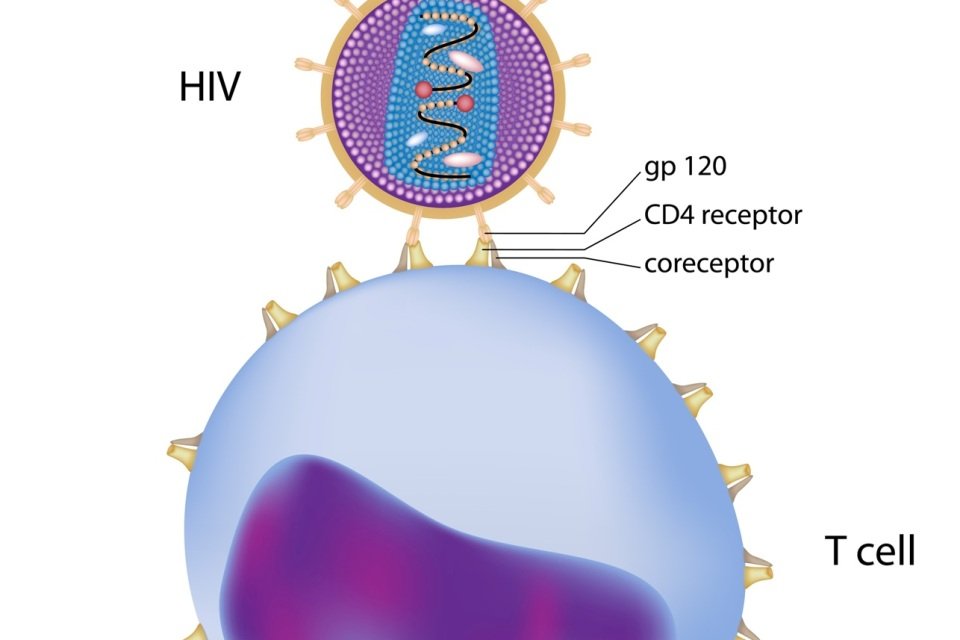
Pablo hunts the one cell (the CD4 T cell) that tells all the other cells what to do to fight off a disease. It’s classic military strategy: decapitate the head and the chain of command crumbles, leaving your body defenseless. HIV doesn’t go after your lungs or your skin (or your brain, or other organs). It searches for that master coordinator of your immune system’s response to infections that target things like lungs and skin and vital organs. It latches onto a docking point (called a receptor) on the surface of the CD4 T cell, and then slips inside.
Now we get to see Pablo’s evil ingenuity at work. When HIV gets into one of your CD4 T cells, it can splice a copy of itself directly into your DNA, into your own genetic code, and then just go quiet, sitting there doing nothing to your immune system for years until one day it flips the switch and decimates your body’s defense against disease. And now, something that should never hurt you, like an infection, or a disease that immune systems know how to fight successfully (PML falls into that category) can turn into a life-threatening situation. The soldiers you’d normally muster into service to fight are confused because Pablo killed the general. So…
IMMUNE CELL-1: we should do something
IMMUNE CELL-2: like what?
IMMUNE CELL-1: I dunno, ask the T cell
IMMUNE CELL-2: can’t find him, we’re on our own
IMMUNE CELL-1: great, well I don’t know what to do
IMMUNE CELL-2: me either! wanna go grab a beer?
That’s what AIDS is. Not one disease. It’s a total immune system collapse that allows any number of diseases to overwhelm you. And if you want to know what that looks like, well, there’s a few of you still around that saw it when you visited me at Cedars-Sinai in the winter of 2006 or after I was discharged in the spring of 2007 at my parents’ house in Glendale. Somehow, I made it through, and you should probably get Chihuahua Credits for putting up with me in the 20 years since!
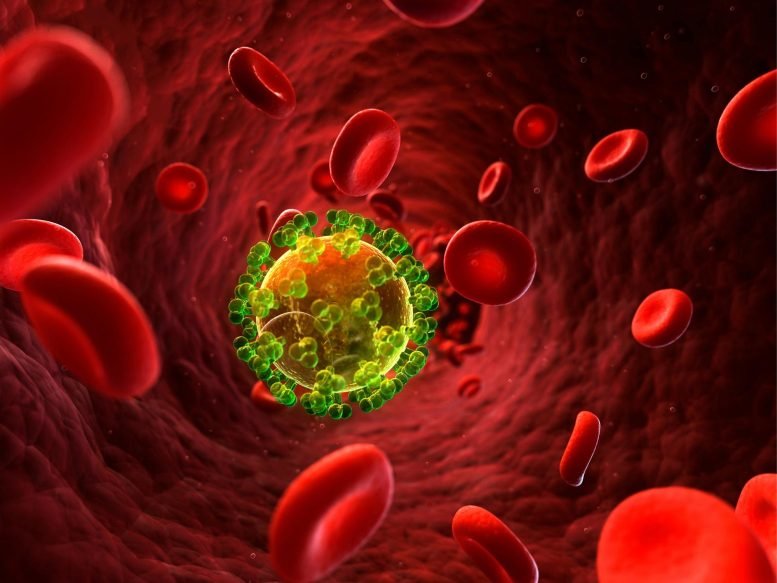
But how does Pablo pull off something that sneaky? Well, to understand that, you have to look at how HIV is actually built. HIV is what’s known as a retrovirus. The instructions for all of the destruction it’s about to unleash in the body are written in just about 9,000 letters of RNA. For comparison, our genome is something like six billion (6,000,000,000) letters; and of course, ours is made of DNA, not RNA. For something this devastating, Pablo has got an almost insultingly small genetic toolkit.
It’s only around nine genes and they make just 15 proteins. A few of them build the basic machine, the shell, the enzymes that copy it and sneak it into your genome. But the rest are pernicious little f**kers with one purpose: immune system chaos.
The most important is an enzyme called reverse transcriptase. Most life on earth runs in one direction. Your DNA gets read out into RNA. The RNA builds the proteins that run the show. DNA → RNA → you.
But HIV uses reverse transcriptase to run the process backward, RNA to DNA. It then basically hot glues itself right into your genome (your DNA), and it hides there, waiting for the right moment to pounce.
It is amazing that something this small could be so clever. If it weren’t such a killer, you could almost respect it for that. But an evil genius is still… evil.
The next part of Pablo’s story is less well known but critically important. Before our little microbiology detour, we left him in Africa.
But by the 1960s, HIV had already spread beyond its original Central African setting. Genetic evidence indicates that a lineage of HIV-1 subtype B moved from Central Africa into the Caribbean, particularly Haiti, around the mid-1960s. Geopolitical circumstances provide a plausible explanation for that seemingly unlikely journey.
Before independence, the Democratic Republic of the Congo was under the colonial control of Belgium until the French-speaking territory gained independence in 1960.
During the period surrounding independence, French-speaking Haitian professionals, including doctors and other skilled workers, were recruited to work in Central Africa. Movement between Central Africa and Haiti therefore created an ideal opportunity for viruses circulating in one region to enter another. Once HIV reached Haiti, it did not simply pass through. It established a sustained epidemic. All because of French!
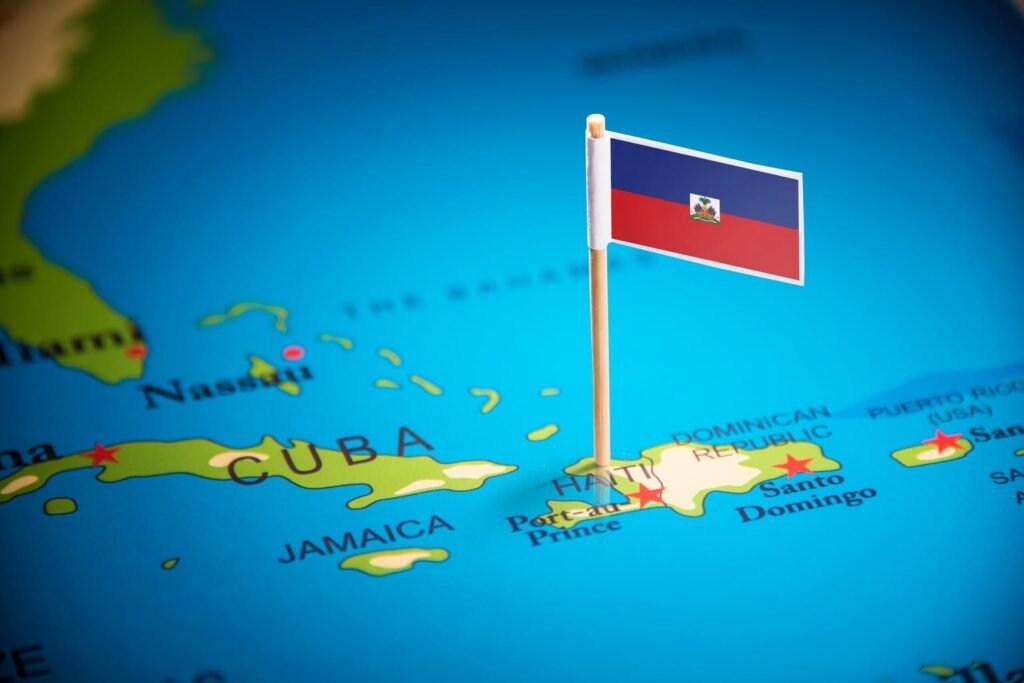
This is important because Haiti was not the origin of HIV. Rather, Haiti appears to have served as a bridge between the Central African epidemic and the emerging epidemic in North America. Genetic studies suggest that the subtype-B viruses that later became dominant in the United States descended from this Caribbean lineage.
The next major step appears to have occurred at least a decade before those first cases in Los Angeles, when the ancestral lineage of the major US subtype-B epidemic entered the United States. Researchers have reconstructed the movement of the virus by comparing thousands of HIV sequences and examining how their mutations relate to one another. The resulting family tree points toward a Caribbean origin for the American epidemic and places the introduction of the relevant lineage into the United States around 1970, in New York.
Again, this is an evolutionary estimate rather than a documented arrival date.
During the 1970s, New York became a major center for the diversification and spread of HIV in the United States. The virus moved through interconnected sexual and injection-drug networks, eventually establishing itself in multiple American cities.
By the late 1970s, HIV was already genetically diverse in the United States. In other words, when doctors began recognizing AIDS in 1981, they were not seeing the beginning of the epidemic. They were seeing the medical consequences of an epidemic that had already been circulating unchecked (and unknown) for years.
As for our Canadian flight attendant:
On the family tree of the virus, Dugas fell in the middle, not at the beginning. “Beliefs about Patient Zero,” Worobey concludes, “are unsupported by scientific data.”
Mapping Out Early AIDS in the US – POZ magazine, May 16, 2016
The history of HIV therefore looks very different from the popular version put forth by the media and amplified, no doubt, by the hysteria and fear (and bigotry) surrounding its “discovery.” This was not a mysterious virus (or “gay cancer” as some called it) that suddenly appeared in Los Angeles in 1981. It was a much longer chain:
African primates → chimpanzees → humans → Central Africa → Haiti → the Caribbean → the United States → New York and other American cities → the global pandemic.
Perhaps the most fascinating aspect of the HIV story is that there was no single moment when “the AIDS epidemic began.”
There were several stages:
- First came zoonotic spillover: a virus moved from primates into humans
- Then came adaptation and establishment: the virus successfully learned to reproduce and spread in human populations
- Then came urban amplification: cities and transportation networks gave the virus vastly more opportunities to move between people
- Then came international transmission, with Haiti becoming an important link between Central Africa and North America
- Finally came recognition: doctors began seeing unusual clusters of infections and cancers in the early 1980s and realized that something new was happening
Pablo had been there all along. What changed in 1981 was not the existence of HIV.
What changed was that the medical establishment finally began to see it.
