
When Queen Elizabeth II of the United Kingdom died in 2022, it was more than a notable death, like that of a celebrity, politician, someone associated with a bestselling book, a certain business or product, or some other position of prominence within society. She was a head of state, yes, but her reign of 70 years and 214 days is the longest of any British monarch, the second-longest of any sovereign state, and the longest of any queen regnant in history. Moreover, her seven decades on the throne encompassed a period of great change in the world and in society, which she navigated with style and grace.
Her loss was felt deeply by the British people, not only because of their immense affection for her, but because, for many, she was the only “queen” they had ever known in their lifetime, and so represented something above and apart from the sitting UK government of the day, popular trends, or the latest “fad.” This was captured poignantly by an American political cartoonist at the Chattanooga Times Free Press named Clay Bennett.
The Queen was a known dog-lover, and equally well known for her beloved Corgis. Bennett’s cartoon captured not only the loss of one of the greatest women to have lived in recent times but also what that loss meant to the United Kingdom and, I would argue, the world by depicting those she left behind as a Corgi. A steady, guiding hand, a reliable companion, a “master” that walks behind yet somehow is not diminished by that – gone. The tag on the collar says “UK” but could just as easily have had a picture of the planet on it (or at least its western hemisphere). And the leash has fallen slack to the ground. The Corgi turns its head without turning its body – someone that was always there suddenly isn’t – we should go on, but how can we?

As a man of English heritage, this cartoon, from Tennessee of all places, captured my emotions on hearing the news of her death. And it is emotions I’d like to discuss today, or rather what my neurologist calls “emotional incontinence,” because I was describing this cartoon at a Pride Party yesterday afternoon and it was all I could do to keep from bursting into tears. Not because I am still upset and emotionally devastated by the death of Elizabeth II, but because I suffer from a condition known as Pseudobulbar affect, or “PBA” as it is sometimes referred to, not to be confused with the Professional Bowlers Association.

Pseudobulbar affect is a neurological condition characterized by sudden, uncontrollable episodes of laughing or crying that are often disproportionate to the situation or inconsistent with a person’s actual feelings. Although these emotional outbursts may appear to reflect a person’s mood, they are caused by changes in the brain rather than genuine emotional responses. As a result, individuals with PBA may experience significant embarrassment, frustration, and social difficulties.
The condition occurs when damage to certain areas of the brain disrupts the normal regulation of emotional expression. The brain contains complex networks that help people control how emotions are expressed outwardly. When these pathways are injured or affected by disease, emotional reactions can become exaggerated and difficult to manage. People with PBA often report that they are unable to stop laughing or crying once an episode begins, even when they recognize that their reaction is inappropriate for the circumstances.
Pseudobulbar affect is commonly associated with neurological disorders and brain injuries. It frequently occurs in individuals diagnosed with amyotrophic lateral sclerosis (ALS), multiple sclerosis (MS), Parkinson’s disease, Alzheimer’s disease, traumatic brain injury, after a stroke, or, as in my case, as a result of the neurological disease called progressive multifocal leukoencephalopathy (PML). Because these conditions can damage areas of the brain involved in emotional control, they increase the likelihood of developing PBA.

The symptoms of PBA can vary from person to person, but the most common signs include sudden bursts of laughter or crying that occur without warning. These episodes may be triggered by minor events or may arise with no apparent cause at all. In some cases, a person may laugh during a serious situation or cry when they do not actually feel sad. Episodes typically last from a few seconds to several minutes and can occur repeatedly throughout the day.
One of the greatest challenges in diagnosing PBA is distinguishing it from depression. While both conditions may involve frequent crying, they are fundamentally different. Depression is a mood disorder characterized by persistent feelings of sadness, hopelessness, and loss of interest that last for weeks or months. In contrast, PBA involves brief, involuntary emotional episodes that do not necessarily reflect a person’s true emotional state. A person with PBA may feel emotionally normal between episodes, whereas depression affects mood continuously. It is also possible for an individual to experience both conditions simultaneously.
There are treatment options available, though I have found them ineffective. Medications can help reduce the frequency and severity of emotional outbursts. One medication specifically approved for treating PBA is a combination of dextromethorphan and quinidine, while certain antidepressants have also been found to help some patients manage symptoms, even when depression is not present. I tried the drugs, they did not work for me, so I’ve had to learn how to deal with PBA’s social and emotional effects, which are often awkward. I no longer see movies in a theater: I laugh too hard and too long when things take a turn for the funny, I cry inconsolably at things that are mildly sad. I used to attend plays staged by a gay community theater troupe here in Palm Springs called Dezart Performs, but had to stop because I got tired of biting the inside of my cheek to cause enough pain to control my outbursts.
I’ve gotten to the point where I can feel it coming on and I’ll generally just change the subject or remove myself from the situation. It’s not hugely debilitating, but it’s there. I haven’t had an episode in public for ages until it came up yesterday describing Bennett’s drawing of one of the Queen’s Corgis.
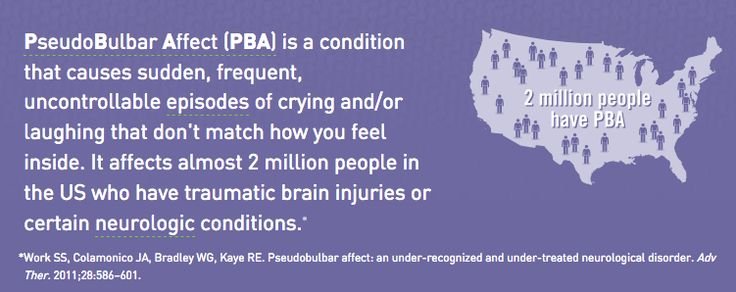
This is not a “woe is me” post. It’s not a painful condition – I mean, if you’re going to “suffer” from something, you could do worse than laughing or crying! That is not to diminish it; it’s just something that can be socially embarrassing I have to deal with thanks to HIV and PML, and since this blog is about me I thought I’d write about it, in case someone else out there – it effects 2 million people in the US – might be dealing with it and reading this. You are not alone.
When confused onlookers have said to me, “what’s the matter?” – if I can’t escape the situation, I’ll just say, “things really matter to me.”