When I was 15, a teacher whose name I’m struggling to remember gave us an essay assignment: in 500 words, describe your life at 35. I had a very clear idea of where I would be and what I would be doing. I had gotten my Master’s degree in English from UCLA, had returned to my high school to teach English, had married Janet, a girl I knew from my parish (I had no physical attraction to nor romantic interest in her, those were focused squarely on Chris Suarez, a boy in my class – but I did not yet understand what that was; however I knew “everyone” got married, so I figured Janet would do) and I drove a silver Honda Accord.
At 16, I began identifying as gay (and pursuing that identity vigorously), at 19 I entered the Conventual Franciscan Order, at 24 I left religious life, began a career in IT, and had my first same-sex relationship that ended when he died of AIDS. At 31, I was infected with the HIV virus myself, though I remained asymptomatic for nine years. Before I’d turned 35, the age imagined in my high school essay, I had been in three long-term gay relationships and was in the midst of a fourth; I’d written a scheduling and accounting program for audio postproduction, and designed/implemented a WAN (wide area network) connecting the administrative computing networks of five affiliated postproduction studios in Los Angeles. But it wasn’t till 2003, when I was 37, that I got my silver Honda Accord.
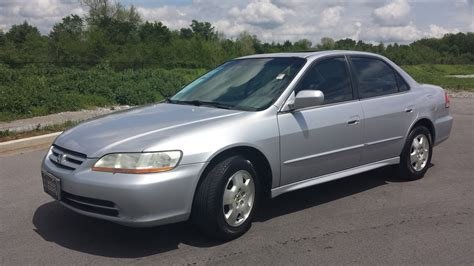
it wasn’t exciting, but it was the best car I ever owned
The Accord was the only thing I prophesied in my 1981 essay that came true. I studied Philosophy at St. Hyacinth’s Seminary, not English at UCLA. I didn’t marry Janet, I spent my nights with Ross, then Miguel, then Ray, and then Alex – you could call me a kindof serial monogamist. I never taught English, I became the “IT guy.” Other than my Honda Accord, nothing went to plan.
Of course, in my 40th year, everything came crashing down. The HIV virus that had been lurking behind the scenes for nine years decided to try to kill me that winter. My relationship ended, my career soon followed, and I would never drive a car again (by this time a beige Nissan Maxima had replaced the silver Honda Accord). The doctors told me that 40 was the last birthday I’d celebrate, and not to expect to see 41. A priest from my high school came to the hospital and gave me the Last Rites. A few former coworkers came to visit – one brought me a Lily to brighten up my hospital room.
A month went by. My parents came to visit on weekends – this was harder on them than me. Another month went by. Two friends from the Bullet Bar in North Hollywood got permission from my attending to take me out for tacos in “East Los” (East LA), and we drove around the city of angels all afternoon visiting my old haunts so I could say goodbye to them.
But then another month went by and it was my 41st birthday. Eight more months went by. I’d been discharged from the hospital – HIV had taken a severe swipe, but failed to knock me out; I was wounded, irreparably and irreversibly, but not down for the count. I bought a house in Palm Springs, and tried to figure out what was next.
The instinct to remain present and engaged with the world, even in the half-light of a manageable chronic condition, is constantly at odds with a culture that demands we stay “productive.” We are conditioned to believe our worth is measured by our “doing.” Chronic illness, however, has a way of upending that, forcing a merciless reorientation from a life of “doing” into a life of “being.” I had to rebuild my definition of self-worth and my concept of what it means to be and to live in this world.
If the last twenty years of living on the edge of dying offer any kind of a silver lining, it is the brutal sharpening of my discernment. The philosopher Martin Heidegger called this being towards death, the Greek Stoics (and Depeche Mode) call it memento mori (from the Latin for “remember that you will die”) and while that focus can sound morbid, they argue it is the essential catalyst for an authentic life. Instead of getting lost in trivial noise and the performative expectations of others, this weird in-between forces you to take the leading role in your own life, focusing on living it. Until you can’t
Time becomes less quantitative (chronos) and more qualitative (kairos).
I have sat in countless “circles” in support groups and listened to people frame their survival in terms of conflict: “battling” their disease, staying “strong,” “beating” the odds. If that’s what keeps them going – great, I am not here to pass judgement. But I decided early on in my disease odyssey that military metaphors are inadequate for those of us who cannot “win” in the traditional sense – my disease(s) has(have) no cure, so I could spend my time struggling, expending untold energy to postpone the inevitable, or I could spend my time aware, focused, and grateful for having any time beyond 41 years of age at all.
I wake up every morning and make a conscious decision to choose the latter. It all may sound a bit cliché and carpe diem, but the in-between bonks you on the head to announce that tomorrow is not guaranteed but today is at hand so don’t squander it. And that makes me think of this poem from Neil Tennant:
Every year it passes by
the day, one year, on which I’ll die
The date is not revealed to me
It keeps its secret patiently
