
Tipping, or the practice of giving gratuities for service, is so ingrained in some societies that it feels natural and inevitable. Yet its origins reveal a far more complex and uneven history, shaped by class structures, labor systems, and cultural values. Far from being universal, tipping emerged in specific historical contexts and continues to vary widely across the world today.
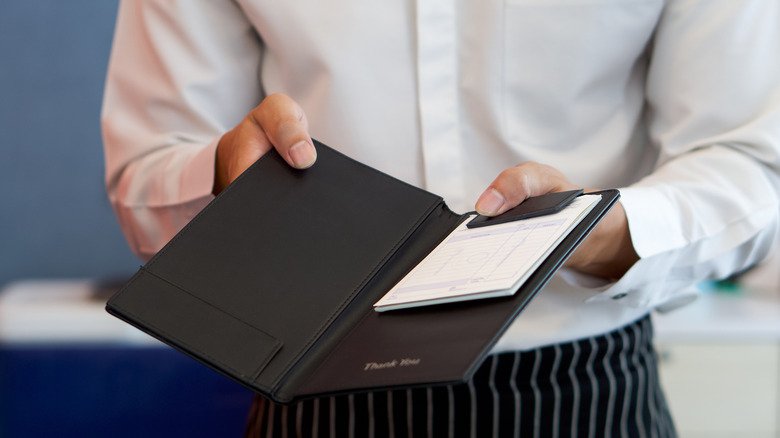
The roots of tipping can be traced back to early modern Europe, particularly in countries such as the United Kingdom and France. During the 17th and 18th centuries, members of the aristocracy would give small sums of money to servants as a reward for attentive service. These payments were not wages but discretionary tokens that reinforced existing social hierarchies. One story claims that “tip” originated as an acronym for “To Insure Promptness,” but this is generally regarded as a myth. Instead, tipping developed organically within a culture where wealthier individuals demonstrated status through acts of patronage and generosity – it was a way to show off.
The practice spread to the United States in the 19th century, largely through Americans who had traveled abroad and sought to replicate European customs. However, tipping was initially met with resistance. Many Americans viewed it as incompatible with democratic ideals, arguing that it created an artificial servant class and undermined the notion of equal citizenship. In fact, several states attempted to outlaw tipping in the early 20th century, though these efforts ultimately failed.
A major turning point came after the Civil War. In its aftermath, tipping became deeply embedded in industries such as hospitality and railroads. Employers began to rely on gratuities as a substitute for wages, particularly for newly freed Black workers who were often denied fair pay. This system allowed businesses to minimize labor costs while shifting the burden of compensation onto customers. Over time, tipping became normalized in the United States, evolving into a central component of service-sector income.
Today, tipping practices differ dramatically across cultures, reflecting distinct social norms and economic systems.
In the United States and Canada, tipping is not only customary but expected. Service workers frequently depend on tips to make a living, and customers are generally expected to leave between 15 and 25 percent in restaurants. This expectation extends to a wide range of service roles, from bartenders to hotel staff.
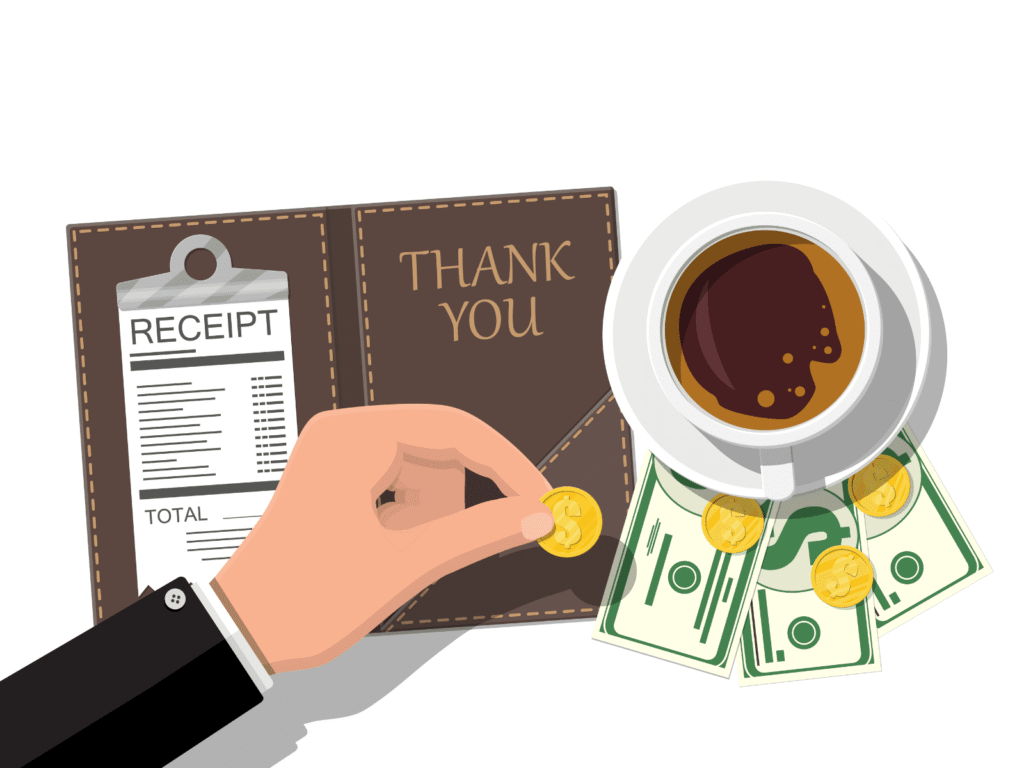
In contrast, tipping in countries like Japan is uncommon and may even be perceived as disrespectful. There, high-quality service is considered a fundamental aspect of professionalism rather than something that warrants additional payment. Offering a tip can create confusion, as it may imply that the worker is not already fulfilling their duty to the highest standard.
Across Western Europe, tipping tends to be more moderate and less obligatory. In France, for example, a service charge is often included in the bill, though customers may round up or leave a small additional amount. In Germany and the United Kingdom, modest tips are customary but not as central to workers’ incomes as they are in North America. These differences are largely due to stronger labor protections and higher base wages, which reduce reliance on gratuities.
Elsewhere, tipping practices continue to reflect local traditions. In South Korea and China, tipping has historically been rare, though it is becoming more common in tourist areas. In Mexico and parts of Latin America, tipping is expected but generally lower than in the United States, typically around 10 to 15 percent. In many regions of the Middle East, tipping – referred to as “baksheesh” – is a customary expression of generosity, sometimes supplementing a service charge already included in the bill.
These global differences highlight how tipping is shaped by deeper societal factors. In countries where wages are lower and labor protections weaker, tipping often becomes essential for workers’ livelihoods. In places with stronger social safety nets and higher wages, it remains a gesture of appreciation rather than an obligation. Cultural attitudes toward service also play a role: some societies view service as a professional duty tied to dignity and pride, while others see it as a personalized exchange that invites additional reward.
In recent years, tipping has become the subject of renewed debate, particularly in the United States. Critics argue that the system is unpredictable, inequitable, and rooted in historical injustices, while proponents claim it incentivizes good service and allows customers greater discretion. Some businesses have experimented with no-tipping policies, replacing gratuities with higher wages or service charges, though such models have yet to achieve widespread adoption.
Ultimately, tipping is not a universal custom but a reflection of history, economics, and cultural values. Its evolution from aristocratic Europe to modern global practice reveals how a simple act of giving extra money for service can carry complex meanings: reinforcing hierarchy in some contexts, expressing gratitude in others.
Why am I banging on about this? Well, yesterday it was over 100 degrees in Palm Springs, which we expect in July or August, but not in March! So I decided to end my day with some ice cream from Cold Stone Creamery delivered by Grubhub.
The Grubhub app allows you to track your order; a realtime map allows you to see your driver en route to the store or restaurant, “picking up” your order, and delivering it to you. My driver made several stops en route to the store, suggesting to me that he was delivering other orders (two to be precise based on the number of stops he made) to other customers when he was supposed to be picking up my order; he even passed the store – Cold Stone Creamery on East Palm Canyon – while heading to one of his stops! He finally did arrive at the store and my order status changed to “driver is picking up your order.”
Then something that has never happened in all the time I’ve used Grubhub, and I use it a lot. I got a text from the driver; it read:
Please increase your tip. Gas is killing me.
It’s a strange quirk of the app that your tip is included in your fee for the whole transaction; your card is charged once for the food, delivery and service fees, and tip (which is over and above a nominal amount the driver gets out of the service fee charged); it’s odd because you’re agreeing a tip before you’ve even received what you are paying for, but it is convenient – no physical money changes hands and you don’t have to keep cash around (who does these days?). I generally tip $1 because I know the driver gets some of the service fee.
But this guy is asking me not only for a tip, but for a larger tip! WTF?
I ignored his text. He arrived with my ice cream half an hour later than my estimated delivery time (probably because of all the stops he made), called me “buddy” in some weird kindof familiar tone, and insisted on (a) telling me how much he likes sweets, and (b) showing me how he transported my ice cream in a thermal container that kept it cold and – his word – “uncontaminated.” He then suggested, again, that I bump up his tip!
I was gobsmacked. I thought of mentioning his tardiness and how I’d watched him in the app making other deliveries when he was supposed to be picking up mine, but I wanted to eat my ice cream so I just smiled and pretended I didn’t hear him. I took the bag from him and settled in to my large size (called a “Gotta Have It”) Chocolate Devotion (at right) with chocolate ice cream, devil’s food cake, chocolate chips, roasted almonds, and fudge – or as I like to call it: medicine.

As I was working my way through my medicine, my phone goes off – a text. Thinking it might be a friend or something I’d want to know, I set my spoon down and looked at my phone, and read:
You gonna increase my tip buddy?
WTF? !! This guy is insane. I thought about responding ‘no,’ explaining multiple reasons why (you’re rude, pushy, unprofessional), and adding that if I could I’d decrease his tip or eliminate it altogether. But my ice cream was melting, so in the end I just ignored his text, again, and finished my “medicine.”
When I woke up this morning I was still thinking about it – the rudeness, the forwardness, the “guilt trip” – gas prices are high, but that’s the Mar-a-Lago Mussolini’s fault, not mine. The whole affair really got under my skin. It shouldn’t – I’ll never see/hear from that guy again. But it made me wonder about tipping in general. I’ve been known to over-tip if a waiter is handsome or particularly solicitous/flirty – I had one at a Brazilian steak house in town, well, words cannot describe how beautiful this man was and I tipped him almost half the total bill! I cannot recall a time I under-tipped, but I would have last night if it wasn’t included in my already paid transaction.
