
Ok. I know how ridiculous this is going to sound. And I don’t believe in this sort of thing. But this really happened. Really. There is always a rational explanation for these things. But I never found one. And sat here today, 37 years later, I still haven’t.
As an undergraduate, I attended the California State Polytechnic University at Pomona, near Los Angeles, where I completed all my general education requirements like science, math, history, and English. I was pursuing a degree in Philosophy.
In my Junior year, I transferred to St. Hyacinth College and Seminary, located in Granby, Massachusetts, run by my religious order, the Conventual Franciscans. At that point I was a Franciscan “brother” cleric: a friar who had taken what are called simple vows for a three-year period while studying to become a Roman Catholic priest. St. Hyacinth’s only offered coursework in Philosophy, as preparation for graduate Theology.
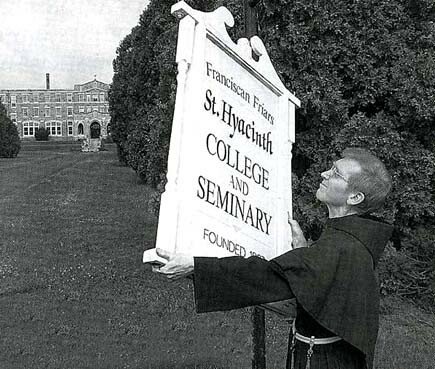
When I arrived at Granby, I was overcome by the beauty of the landscape of Western Massachusetts. Founded in 1927, the seminary sat on 600 acres (240 hectares) of green rolling land and forests owned by the Conventual Franciscan order about 15 miles outside the town of Springfield, Massachusetts. For an LA boy from Southern California, the foliage in Fall was like nothing I had ever seen. I truly loved it there.
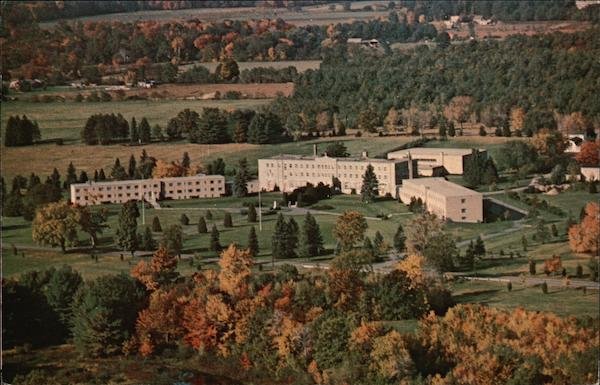
The seminary itself consisted of three buildings in a kind of U formation. The main building, the center of the U, was three stories tall. The first floor contained reception parlors (for receiving guests outside the cloister), offices (for the rector, mission promoter, etc.), the main chapel, and one classroom belonging to Fr. Owen. Father was a right of passage for every young, aspiring priest – you had to survive a year with him (Metaphysics in the Fall, Epistemology in the Spring) to graduate. He was so old it was said he attended the Last Supper with Jesus and the other apostles, but was not mentioned as being at the Garden of Gethsemane later that night when things all kicked off because he had stayed behind to settle the bill with the proprietor of the Cenacle, also known as the Upper Room, a trendy Jerusalem restaurant frequented by messiahs where they’d dined earlier that evening; he gave it four stars on Yelp.
The second floor consisted of a long hallway running the length of the building, with dormitory-style rooms on either side and was a cloister where those students, like myself, who had professed vows lived; the third floor was essentially identical, but was not cloistered – students who had not yet taken vows (called candidates or postulants) lived there and had their own rec room, chapel, etc. I always laughed at that: for an order such as ours based on the charism of “community” (the root of our name, Conventual, is convent, meaning a life lived together in a place), we did everything that was possible to segregate members based on their canonical status.
At the end of the hallway on the second floor was the bulletin board. Once a day, a friar would check the board for what was called his “house station.” House stations were someone’s brilliant idea to maintain the seminary and the grounds without the added expense of housekeepers or gardeners. Why pay for cleaning and upkeep when you’ve got a group of indentured servants who will do it for free? So, after Mass and breakfast, it was classes in the morning, and after dinner and Vespers (a liturgy of prayer, one of the canonical hours in Catholicism), it was study in the evening. But every afternoon, from 1 to 4 o’clock, it was slave labor.
Owing to my delicate constitution, I was usually assigned to complete indoor tasks like vacuuming, mopping, and dusting (someone had to dust off Fr. Owen and check for a pulse!), although I once spent a month shoveling snow off the 50-foot walkway behind the main building to the convent of nuns who served as our cooks – this was a punishment ordered by the rector himself, Fr. Jude, for my having started a water fight one night with the high-powered hose in the dishwashing room, located in the basement next to the kitchen and refectory (dining room).

What you need to know is that Room 13 was haunted by a young seminarian who had come from our mission in Zambia, Africa, and died while performing his house station. On our property was a small lake which we called St. Joseph’s Pond (it really wasn’t much more than a puddle). Friar Mutende had been assigned to clear some brush that was encroaching on the dock, and fell into the lake while doing so. Sadly, he did not know how to swim, and drowned. He lived (well, before he died) in Room 13.
From that day on, strange and unexplained things began happening in Room 13. Friars assigned it as their living quarters reported lights flickering in the evening and the sensation of someone laying on top of them in bed (one wonders, as we were all horny twenty-something year old boys – basically hormones with feet – whether that wasn’t wishful thinking). People were so freaked out that eventually nobody would live in there, and a few seminarians wouldn’t even go in. It was, however, kept furnished with a desk, bookshelf, bedside table, lamp, and a made bed – out of respect.
This all happened in the 70s, and by the time I arrived in the 80s had become the stuff of lore and legend, passed on from cleric to candidate. I, being the paragon of reason and logic I am, declared it all nonsense, and would have asked to have Room 13 assigned as my living quarters (it had a great, west-facing view) except for the fact it was designated 13, and I had, and still have to this day, severe triskaidekaphobia.
So, one winter’s day I awoke and began my morning routine. A fresh layer of snow had blanketed the ground outside. Massachusetts mornings in Winter have a bright, crisp quality to them – I loved them (when I wasn’t shoveling snow). But this morning was cold, wet, dull grey, and heavy. I showered and shaved, and put my habit on in preparation to go to the chapel for Lauds (the morning prayer of the Church – one of the most ancient offices which can be traced back to Apostolic times). I had some time to kill, so I decided to check the bulletin board for my house station that day.
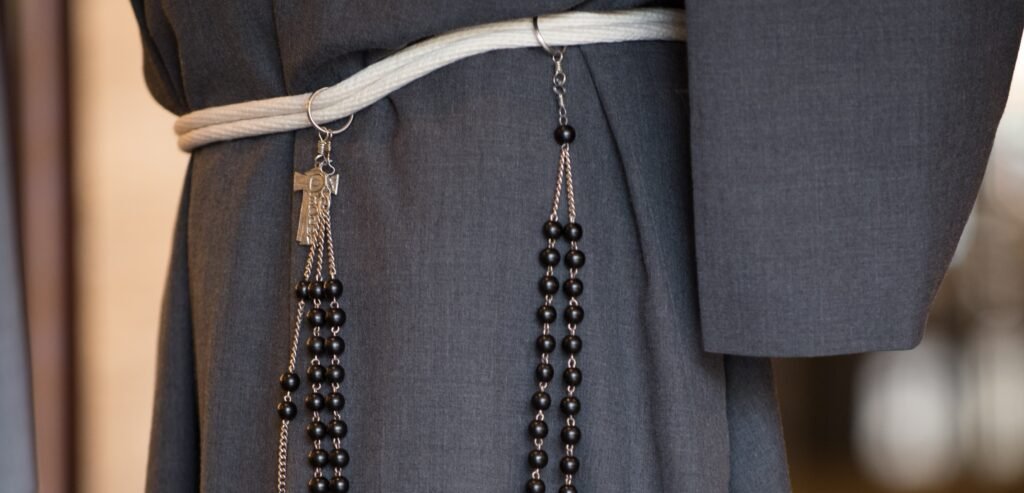
Down the long, deserted hallway toward the board I walked, my crown clanking as I did (a Franciscan rosary consists of seven decades, not five, and is called a “crown,” which is worn suspended from the cord of a friar’s habit which serves as a cincture).
I really hoped I’d been assigned the faculty break room to clean, because they had snacks like Doritos which I would steal and eat in my room. As I passed Room 13, I casually glanced in. The bed was unmade and the blinds were down. A lamp on the bedside table was off. That’s odd, I thought; maybe we had simply professed guests in and someone who was unaware of the danger was staying in there. I shrugged my shoulders and continued down the hallway. I really didn’t give it much thought.
I arrived at the bulletin board and saw I’d been assigned some basic housekeeping on the first floor involving several reception parlors. Eh, no biggie, I thought to myself, I can knock that out in an hour or so, and turned to go back to my room until Lauds.
As I passed Room 13 again, the bed was made and the blinds were raised, revealing what was shaping up to be an overcast, cloudy day, and the lamp on the bedside table was on. Next to the lamp on the table was an open Breviary, a liturgical book used for praying the canonical hours, seven fixed times a day.
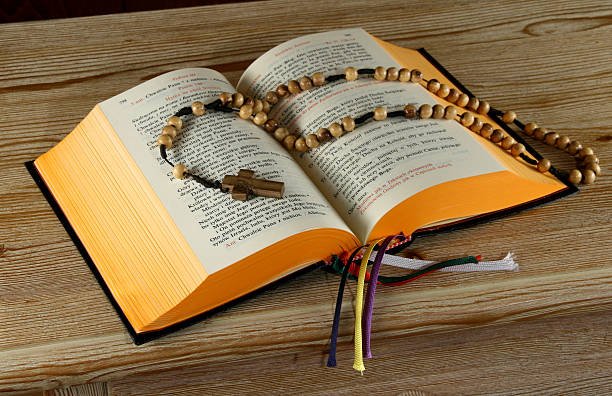
WTF? I went in, and the Breviary was open to that day’s Lauds! Someone was getting ready for morning prayer. I looked around; there were no suitcases that might indicate a traveler, there was no friar’s habit – there was nothing! Just then, the Cleric Master, my superior Fr. Donald, was walking by in the hallway and clocked me in Room 13. Fr. Donald had been a seminarian there when the drowning happened.
“What are you doing Friar Matthew?”
“Good morning Father, I saw the light on in here and came in to turn it off. We don’t have a guest do we?”
“No. Now leave Friar Mutende in peace so he can get on with his morning prayer.”
“Yes Father.”
I returned to my room. I never spoke of this – not with Fr. Donald, not with my classmates – ever. You, thoughtful readers, are the first people I’m telling this to. There are things in life we cannot explain, even given all our sophistication, reason, and education. Sometimes I am quite certain that there is… more than this.
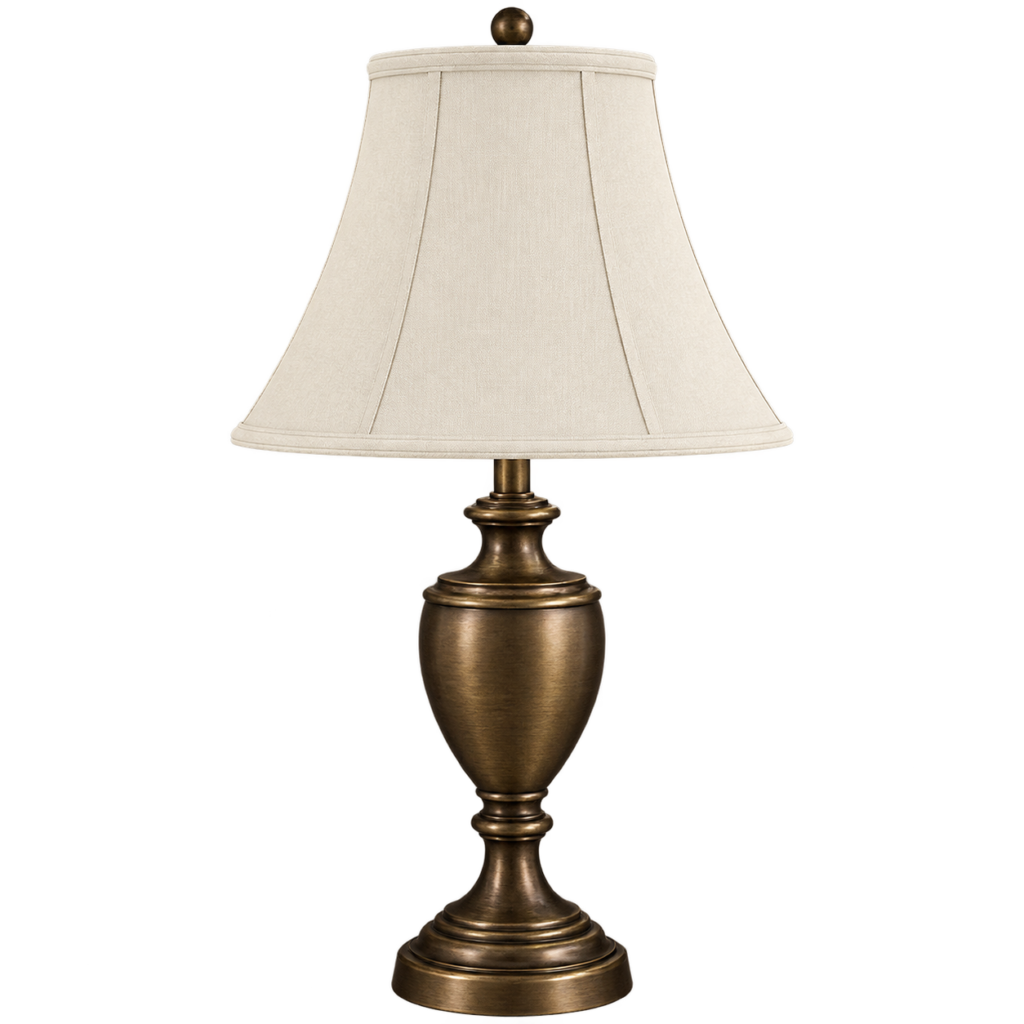
As I was writing this post (coincidentally, around the same time of the morning as my run in with Mutende occurred), the sun came up and illuminated my room. The lamp on my bedside table had been on since I got up about 4 o’clock, and as my room got brighter and sunshine started to fill it, the lamp turned itself off.
Or did it?
