
Shortly after moving in to Stonewall Gardens Assisted Living in 2015, I turned 50. A milestone. Last week, now in my eleventh year here, I turned 60. Another milestone. And thinking that a good idea for a post, I did lots of research on milestones – their origin in, where else but ancient Rome, their use in medieval times to mark trade routes, their metaphorical uses to highlight things like birthdays, graduations, and anniversaries, even their role in corporatespeak, particularly in regard to project management – but the results were as boring as this sentence. Trust me: a thousand words on soil science would have been more exciting; and I wouldn’t do that to you thoughtful reader.
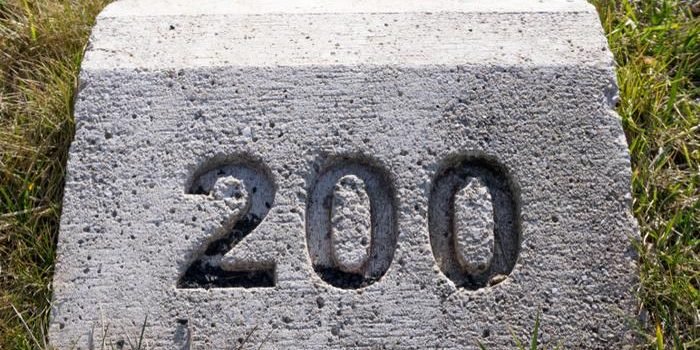
This is the 200th post to this blog – a milestone. So it feels like it should be special, significant, or just memorable. I should probably make some grand point, discuss some salient insight into life I’ve learned, dispel a myth, trace the origin of twine, comment on these early days of world war III started by our dear leader, talk about Timothée Chalamet getting snubbed by the Oscars again this year, or do what I call a “procedural” post where I talk about where I get my ideas, how I research and develop them, web site design, color palettes, fonts, and even the technical stuff like web hosting, cacheing, automation, image optimization, and speed benchmarks – the stuff you wouldn’t guess I know about just by looking at me.
But I’m not going to do any of that. Instead, I’m going to write about writing.
Writing is the slow arrangement of invisible things. You take memory, hunger, fear, boredom, weather, the taste of metal on the tongue, and compress them into marks that survive your absence. A paragraph is a small machine for transferring consciousness. The miracle is not that it works perfectly, but that it works at all.
A sentence begins as a soundless impulse, then puts on letters like borrowed clothes. Some words arrive polished and certain; others limp in half-formed, carrying the mud of thought on their shoes.
Every word drags a history behind it. “Stone” contains every stone ever lifted, thrown, carved, worshipped, skipped across water. Language is crowded with ghosts. Writers simply learn how to haunt deliberately.
Some words behave. They line up neatly and mean what they mean. Others resist capture. They split open under inspection. Try writing about love long enough and the word dissolves into gesture, inventory, weather report. Try writing about grief and grammar starts limping.
Still, we continue. We place one word beside another and hope for combustion.
A good sentence feels discovered rather than invented. It waits somewhere in the dark, fully alive, and the writer brushes against it by accident. Most writing is the sound of searching. Occasionally, searching becomes music.
There are words that hide and words that expose. Words that decorate thought and words that excavate it. Some sentences are windows. Others are mirrors. A few are knives.
And beneath all writing is the strange faith that another mind, somewhere else, will meet these symbols and reconstruct a feeling close enough to understanding. Two strangers separated by distance, time, maybe death itself, connected by arrangements of black marks on a pale surface.
Writing words about writing words is a hall of mirrors. Language turning back to inspect itself. The sentence watches itself being built. The writer becomes both architect and echo. In the end, words are temporary structures against silence. They are fragile and they are human. And somehow still capable of carrying entire worlds.
