
The 1960s were an amazing time to be born, if only for the television programs. And growing up in the 70s meant those programs found their way into syndication and were a kindof “life primer” for a young boy like me in the suburbs of Los Angeles. Flipping between channel 11 (KTTV) and channel 13 (KCOP) afforded me a steady diet of socially subversive sitcoms like Bewitched, I Dream of Jeanie, The Mary Tyler Moore Show, and That Girl, in which the patriarchy was challenged by strong, in-control women and hapless, weak, bumbling men. Then there were the cartoons.
There are too many to mention, and they are all brilliant. But two, both from Hanna-Barbera, who also gave us The Huckleberry Hound Show, Yogi Bear, and Scooby-Doo, stand out and serve as bookends for me representing both a look back and a look forward. You had The Flintstones, a “modern” reinterpretation of the stone age with machines powered by birds and dinosaurs, and you had their counterpart, The Jetsons, a modern projection of an imagined future with elaborate robotic contraptions, aliens, holograms, and whimsical inventions. Remember?
So, I turn 60 today at precisely 11:32 am Pacific time. And here’s my question: where’s my flying car?
The futuristic world imagined in The Jetsons reflects a time when people believed technological progress would rapidly transform everyday life into something effortless, automated, and almost magical. Airborne cities, flying cars, robot maids, and push-button convenience defined this vision of the future. While today’s world does not resemble that exact picture, it would be inaccurate to say that humanity failed to achieve technological advancement. Instead, the future arrived in a different form – less visible, less whimsical, but arguably more powerful and deeply integrated into daily life.
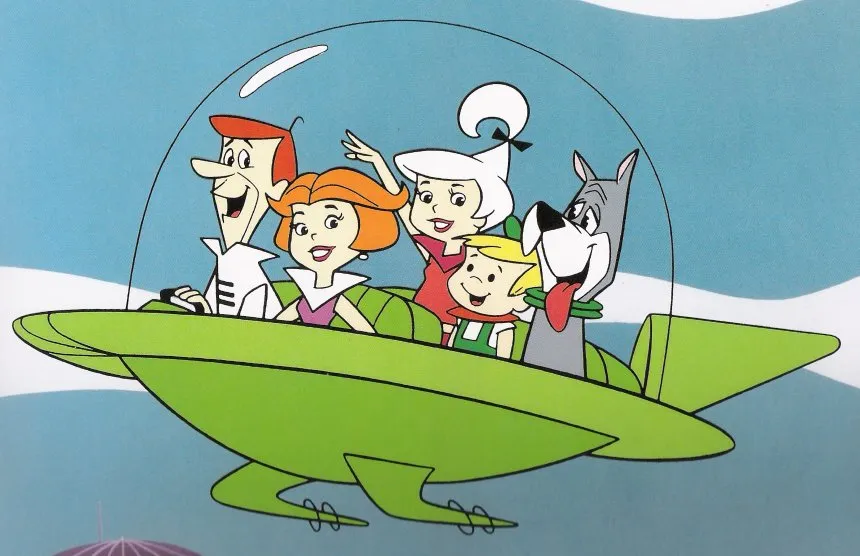
One of the most iconic elements of that imagined future was the flying car. Even now, this idea captures the public imagination as a symbol of progress. Although flying cars are not a common mode of transportation, the concept is no longer purely fictional. Engineers and companies have developed prototypes of air taxis and hybrid vehicles capable of both driving and flying. However, the widespread use of such vehicles faces significant challenges. Safety concerns, high costs, noise pollution, and the complexity of regulating crowded airspace make flying cars impractical for everyday use. The issue is not a lack of technological capability, but rather the difficulty of scaling and integrating such systems into society safely and efficiently.
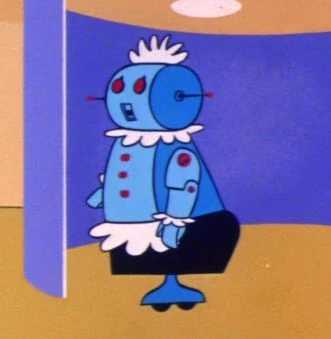
You had the maid – Rosey the Robot. While we do not yet have fully human-like robots capable of complex emotional interaction, we do have machines that perform many household tasks such as robotic vacuums, and smart assistants. These devices may lack personality and charm, but they fulfill many of the same functions in a more limited, practical way. The gap between fiction and reality here lies not in function, but in form and sophistication.
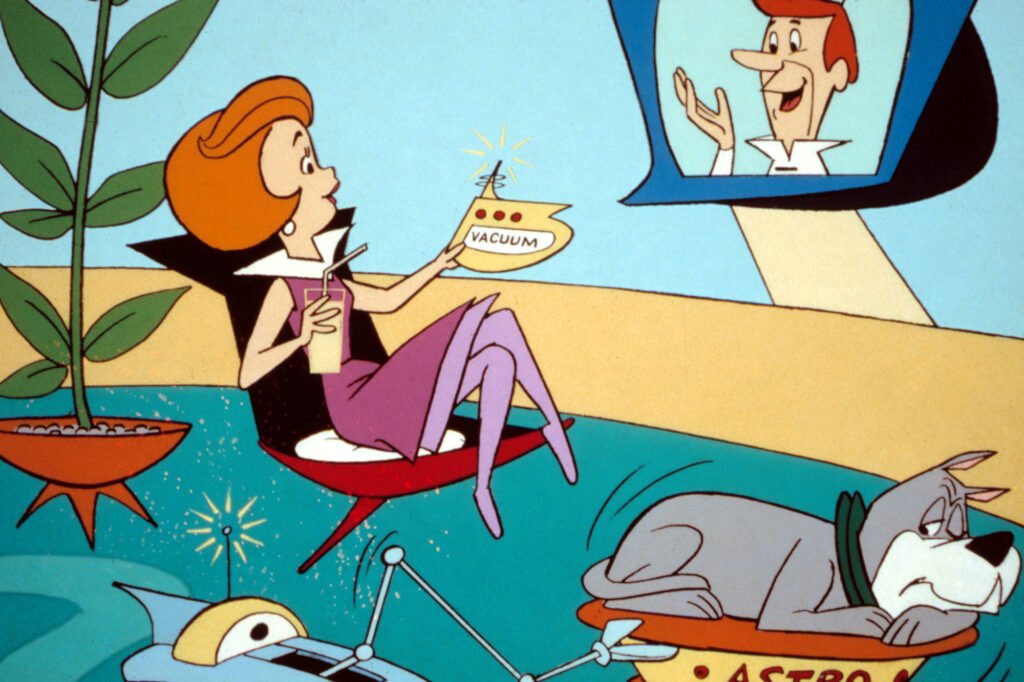
Communication technology is one area where reality has not only matched but arguably exceeded early predictions. The idea of video calling, once a futuristic concept, is now a routine part of everyday life. People can instantly connect face-to-face with others across the globe using smartphones, computers, or tablets. This development highlights an important pattern: while earlier visions of the future focused on physical inventions, many of the most transformative modern technologies are digital. The ability to share information instantly and globally has reshaped work, relationships, and culture in ways that were difficult to imagine when I was a boy on the floor in the den watching cartoons after school.
Similarly, the concept of a smart home has become increasingly common. Modern homes can be equipped with systems that control lighting, temperature, security, and entertainment with minimal effort. Voice commands or mobile apps allow users to manage their environment with ease. Although these systems may not be as visually dramatic as a fully automated house in a cartoon, they achieve the same goal of convenience and efficiency. Once again, the difference lies in presentation rather than purpose.
Wearable technology also reflects the realization of earlier futuristic ideas. Devices worn on the wrist can now perform a wide range of functions, from tracking health metrics to sending messages and making phone calls. These tools demonstrate how technology has become more personal and integrated into daily routines. Instead of relying on large, conspicuous machines, modern innovations tend to be compact, multifunctional, and constantly accessible.
Food preparation is another area where expectations and reality diverge. The idea of instantly producing a complete meal at the press of a button remains largely fictional. However, advances in kitchen appliances, food delivery services, and meal preparation have made eating more convenient than ever. While the process is not instantaneous, it is far faster and easier than in the past.
Work and lifestyle also evolved differently than expected. The imagined future suggested that automation would drastically reduce the amount of time people spend working, leaving more room for leisure and relaxation. In reality, while technology has made many tasks faster and more efficient, it has not necessarily reduced overall workloads. Cultural expectations, economic pressures, and the nature of modern jobs have kept people busy. However, one major shift has been the rise of remote work. Many individuals can now perform their jobs from home, using digital tools to communicate and collaborate. This change reflects a different kind of progress – one that emphasizes flexibility rather than reduced effort.
Ultimately, the key difference between the imagined future and the real one lies in the direction of technological development. Early visions emphasized bold, visible inventions that would dramatically change how the world looks. In contrast, modern innovation has focused on systems that enhance how the world functions. The internet, cloud computing, and artificial intelligence operate largely behind the scenes, yet they influence nearly every aspect of life. These technologies may not be as visually striking as flying cars or robot maids, but they are far more transformative in their impact.
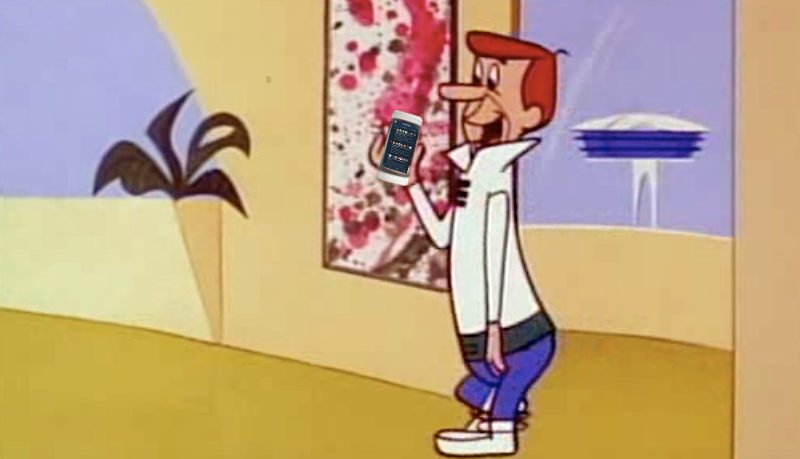
Life is not like the world imagined in The Jetsons because technological progress did not follow the path people expected. Instead of creating a future defined by spectacle and simplicity, humanity built one characterized by complexity, efficiency, and connectivity. While many of the specific inventions from that vision remain unrealized or incomplete, their underlying ideas have often been achieved in different forms. The future did arrive – it simply looks different than what was imagined when I was a boy.
