Well it’s here. April Fools’ Day. I didn’t post anything for it last year. And the year before that, I mimicked the BBC’s 1957 Swiss Spaghetti Harvest story from the news program Panorama. So I thought this year I would talk about the origins of the day. Seriously, no joke.
Despite its widespread popularity across many cultures, the exact origin of the holiday remains uncertain. Historians have proposed several theories, the most prominent of which connect the tradition to calendar changes, ancient festivals, and the unpredictable nature of early spring.
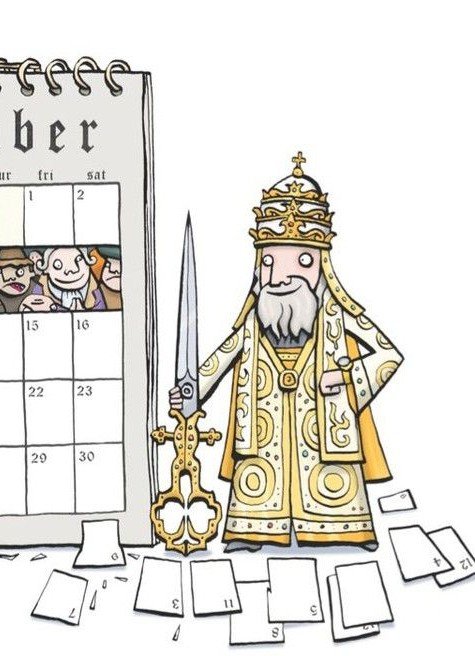
Probably the most widely accepted explanation traces April Fools’ Day back to the adoption of the Gregorian calendar in 1582. When Pope Gregory XIII introduced a new calendar system that shifted the start of the new year from late March or April 1 to January 1, not everyone immediately accepted or even learned about the change. Those who continued celebrating the new year in early April were often mocked and labeled as “April fools.” Over time, this ridicule evolved into a broader tradition of playing pranks on others during that time of year.
But another possible influence comes from ancient festivals that celebrated humor and reversal of roles. For instance, the Roman festival Hilaria (yes, really!), held in late March, involved disguises, games, and general tomfoolery. Participants would dress in costumes and engage in playful trickery, echoing many of the behaviors we associate with a modern April Fools’ Day prank. Hilaria? Now that’s hilarious!
Some scholars, known as Hilariologists, believe the timing of April Fools’ Day is tied to the unpredictable nature of spring itself. In many parts of the world, early April brings rapidly changing weather, with sunshine one moment and rain the next. This inconsistency may have inspired the idea of nature “fooling” people, reinforcing the theme of surprise and unpredictability that defines the holiday. And gives rise to one of my favorite jokes:
April showers bring May flowers. What do Mayflowers bring?
Pilgrims!
By the 18th century, April Fools’ Day had become firmly established in Britain and eventually spread to other parts of the world. Traditions evolved to include practical jokes, hoaxes, and sending unsuspecting individuals on pointless errands. In modern times, the holiday has expanded to include elaborate hoaxes by media organizations – that 1957 BBC prank probably the gold standard.
America got in on the act in 1996, when the fast-food chain Taco Bell announced that it had purchased the Liberty Bell and renamed it the “Taco Liberty Bell.” The company placed full-page advertisements in major newspapers, claiming the move would help reduce the national debt. The announcement caused confusion and outrage among many Americans, who believed a historic national symbol had been commercialized. Later that day, Taco Bell revealed it was all a joke, earning widespread attention for, perhaps, one of the most clever marketing ploys of all time. Everyone was talking about Taco Bell that day!
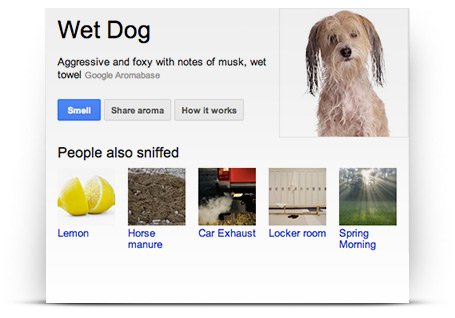
In the digital era, technology companies have also become well-known for their April Fools’ pranks, particularly Google. Over the years, Google has introduced a variety of products and features to mark the day, such as “Google Nose,” which allowed users to search for smells, and “Google Translate for Animals,” which interpreted animal sounds – Dr. Doolittle for millennials.
Here, you’re probably expecting me to try my hand at one. I would, but to be honest with you, I’m just too busy. You see, I agreed to make a batch of brownies for our community here and I’m a bit behind schedule. I took a break to write for you.

I’ve got the Es all traced on brown construction paper, I just need to cut them out.
