
At its simplest, most basic level, a calendar is a way to organize time. Now, we could take that statement and go “deep,” having a philosophical discussion of the concept of time itself. However, after last night’s cavalcade of mirth and misinformation known as the State of the Union, my inclination this morning is to keep things light. As I sat pondering what to write about after taking several days “off” to focus on my patio and garden which I’d neglected these past few months while redesigning taxpoodle.net, one thing kept turning over and over in my mind: the month ends this Saturday.
It seems short, yes? Like February just began. Well, that’s by design. Which led me to ask myself the question ‘why?’ I know it’s got something to do with astronomy – all calendars do: we get days from the Earth’s rotation, months from the moon’s phases, and years from the Earth’s orbit around the Sun. And since time immemorial humanity has used these things to plan optimal growing seasons for agriculture and religious observances (which were often designed to highlight and divinely facilitate the growing seasons).
Which is all well and good, but doesn’t answer the question of why February is such a short little stub of a month. Well, it does, but we do have to dive into the astronomy a little further. I promise to keep it light.
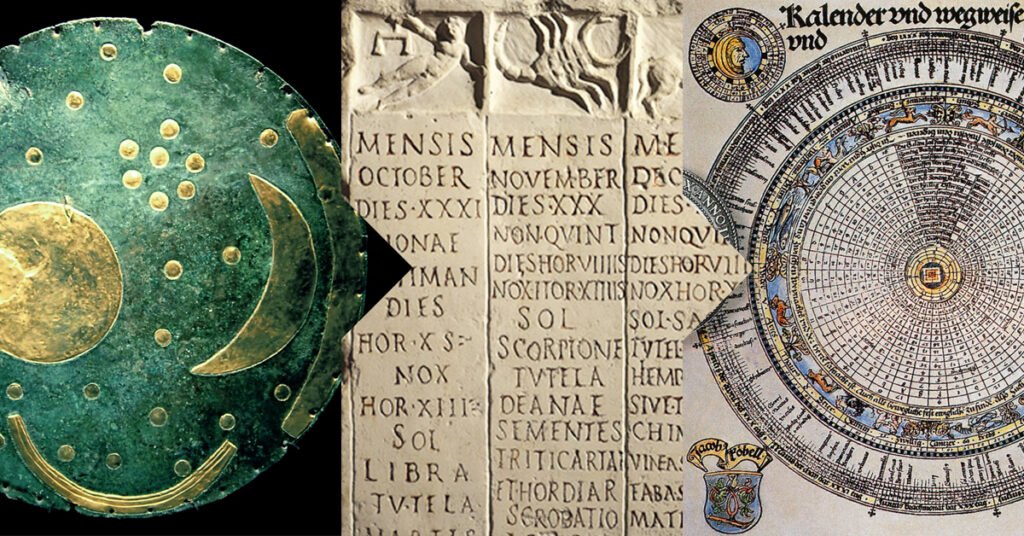
February’s short run on the calendar is a result of the astronomy – yes – but also ancient Roman practices, imperial influence, political decisions, and even the vanity (go figure!) of politicians. To get to the bottom of why February has only 28 days requires examining the Roman calendar system and the creation of leap day.
The earliest Roman calendar contained only ten months and 304 days, beginning in March and ending in December. Winter days were left uncounted. Later reforms would tack on January and February to the end of the year.
Marcus Terentius Varro was Rome’s greatest scholar. He was a prolific author whose work was intended to telegraph Roman greatness – he was a kindof Roman “nationalist.” Of his more than 600 books on jurisprudence, astronomy, geography, education, and literary history, his only complete surviving work is Res rustica or “Farm Topics,” a practical guide to agriculture and animal husbandry (now doesn’t that sound like a page turner?!).
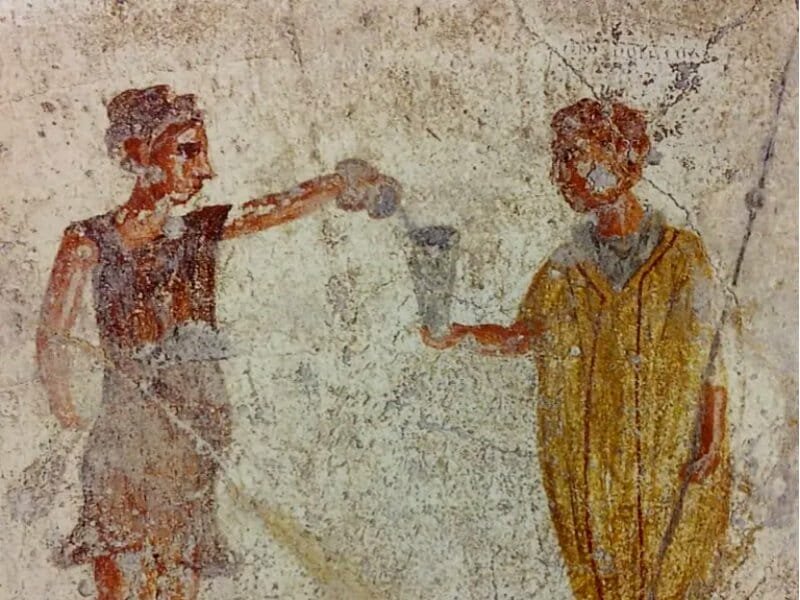
But from what survives of his De Lingua Latina (“On the Latin Language”) we know that February was set apart and associated with yearend purification rites for the city (februa) and ceremonies honoring the dead. The Romans would use any excuse for wine, women, and song. I’d quite like to have been a Roman, though I’d take a pass on the women.
And then along came Julius Caesar who, in 45 BCE, introduced his calendar, which we know as the Julian calendar. Drawing on Egyptian solar calculations (I knew there would be astronomy!), Caesar established a 365-day year with an additional day every four years to account for the fractional remainder of the solar year. Months were standardized to 30 or 31 days each, but February was left with 28 days, receiving the extra day only during leap years. This preserved February’s role as a “special” month set aside for things like rituals (and the aforementioned wine, women, and song).
Later, it would be politics that reinforced February’s shortened status. During the reign of Augustus Caesar, the month Sextilis was renamed August in his honor. Ancient writers such as Macrobius claim that August was lengthened to match July (named after Julius Caesar) in a kindof calendar-based willie measuring contest between emperors; February lost a day as a result (they had to get the extra day somewhere). I suppose it’s comforting in a way to see that our leaders have always been vain self-promoters obsessed with outdoing their predecessors. Although Orange Caesar outshined them all last night.
The calendar we use today comes, as so many things in Western civilization do, from the Catholic Church, specifically Pope Gregory XIII, who issued a papal bull known as Inter gravissimas in 1582 establishing the Gregorian calendar. It was created to correct inaccuracies in the calculation of leap-year found in the Julian calendar. However, it deliberately preserved the established month lengths to avoid disrupting religious observances and historical continuity.
But we mustn’t overlook all things “Leap.” Leap day exists to reconcile the calendar year with the astronomical year, because a solar year, or the time it takes Earth to complete one orbit around the Sun, is approximately 365.2422 days – so the Julian calendar with its measily 365 days would gradually drift out of alignment with the seasons, and over centuries this drift would cause significant errors in agriculture, religious festivals, and civil timekeeping.
The Julian calendar attempted to addressed this by adding an extra day to February every four years, producing an average year length of 365.25 days, which is slightly inaccurate, but only a little bit.
February was chosen to receive the additional day because of its traditional Roman role as a month set apart according to St. Bede, in his The Reckoning of Time, a treatise he wrote in 725, focusing on the calculation of time, particularly the date of Easter, using the Julian calendar and astronomical observations.

I am sorry to have to point out here that Bede’s “reason” for trying to come up with a date for Easter was an early sign of Christian antisemitism, as in mid-7th century Anglo-Saxon England, there was a desire to see the Easter season less closely tied to the Jewish calendar’s calculation of when to celebrate the Hebrew observance of Passover (even though Jesus was a Hebrew and crucified during Passover, Easter being the Christian celebration of him reportedly surviving that), and in 664 CE the Synod of Whitby decided to favor the Roman Julian calendar. Bede’s work on the Julian calendar a generation later sought to justify that decision.
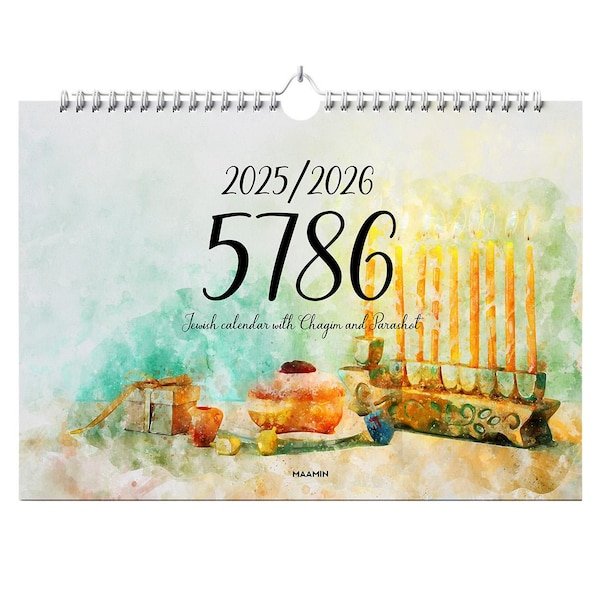
Fun fact:
In the Jewish (Hebrew) calendar, the current year is 5786.
And now for some “remnants of history” fun (I know, it’s edge of your seat stuff!). This doesn’t really have anything to do with February per se, but it came up in my research and I found it intriguing. The names of the final four months of our year preserve evidence of the earlier pre-Julian Roman calendar. September, October, November, and December derive from the Latin words septem (seven), octo (eight), novem (nine), and decem (ten). These names made sense when the Roman year began in March and had only ten months, making September the seventh month.
January and February were originally tacked on to the “end” of the Roman year, but in 153 BCE the official start of the year became January for purposes of allowing elected officials to take office earlier. This shifted the numerical order of the months (septem was now novem), but the names remained unchanged. As a result, the final four months are permanently misnumbered… but only in Latin, so I’m guessing you probably don’t even care – you can use this at parties, though, to sound kindof smart.
So to answer the question of why February stands apart from its fellow months, we can conclude it was astronomy all along with a dash of politics and a spoonful of tradition as regards religion and ritual.
