
Have you ever found yourself wondering where the name “California” for the United States’ 31st state came from? State names like Virginia, which was named for Queen Elizabeth I of England, known as the “Virgin Queen,” or Florida which was named by the explorer Ponce de León in 1513 during the Easter season, known in Spanish as Pascua Florida, meaning “Flowery Easter,” make a certain amount of sense.
Even when the mainly Spanish explorers just couldn’t be bothered and looked up and saw the Rocky Mountains and named the region Montana – the Spanish word for mountain (which is actually montaña with a tilde over the n so you add a ‘y’ sound to its pronunciation), you’re left thinking “okay, I get it.”
But not with California. You can’t point to a monarch in Europe or a linguistic connection to something Spanish (or French, or indigenous) from which the name is an obvious derivation. But fortunately you have a TaxPoodle to go and look these things up. So strap in and let’s get started.
California was named after a fictional island in a 16th century Spanish novel. Its name emerged from literature, not politics or linguistics. The story begins in 1510 with the publication of a Spanish chivalric romance entitled Las sergas de Esplandián, written by Garci Rodríguez de Montalvo. The novel was a popular sequel to a well-known medieval tale about knights and heroic quests. Like many books of its time, it featured dramatic battles, magical lands, and exotic settings. Among these imaginary places was an island called California.
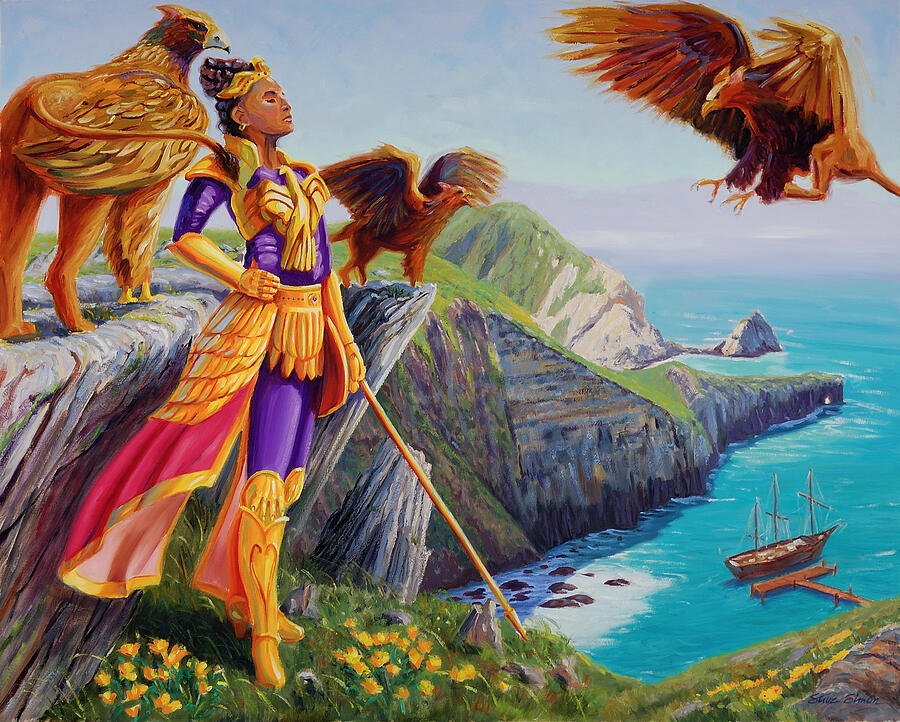
In the novel, California was described as a remote island located somewhere west of the known world. It was ruled by a powerful warrior queen named Queen Calafia. According to the story, Queen Calafia governed a land rich in gold and precious treasures. The island was inhabited only by strong, fierce women who lived like Amazons (we call them “lesbians” today); they were known for their great courage in battle and their weapons made of gold. Their land was portrayed as both beautiful and mysterious. For readers in 16th century Spain, California represented wealth, adventure, and the allure of the unknown.
At the time the novel was published, Spain was rapidly expanding its global empire. Spanish explorers were sailing westward across the Atlantic and Pacific oceans, searching for new lands, trade routes, and riches. Adventure stories like Las sergas de Esplandián were widely read and helped fuel the imagination of explorers and settlers. When these explorers encountered unfamiliar lands, it was not uncommon for them to borrow names from literature or legend to describe what they saw.
In 1533, Spanish explorers reached the Baja Peninsula, part of present-day Mexico. The rugged coastline and unfamiliar terrain made the region seem mysterious and isolated. Early expeditions mistakenly believed that the land was an island, separated from the mainland of North America. Because it appeared to match the fictional description of a distant, treasure-filled island, explorers began referring to it as California.
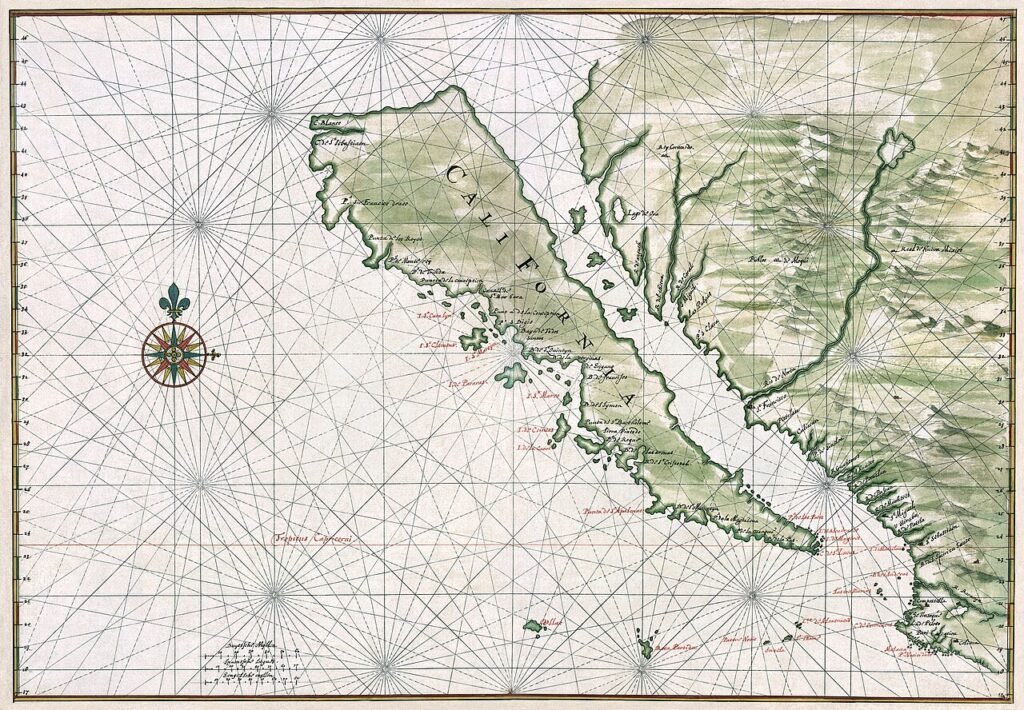
For many years, maps reflected this misunderstanding. Cartographers depicted California as a large island off the western coast of North America (see above). This error persisted well into the 17th century, even after explorers gathered evidence suggesting that the land was connected to the mainland and was, in fact, a peninsula at its southernmost tip. The persistence of the “Island of California” on maps demonstrates how powerful early assumptions and popular stories could be. Once a name appeared on influential maps, it stuck and often remained there for decades. Gulf of America anyone? Nah, let’s not go there.
As Spanish exploration continued, the name California expanded to describe a broader region. The territory was eventually divided into Alta California (Upper California) and Baja California (Lower California). Alta California included what is now the state of California, while Baja California remained part of Mexico. When the United States acquired Alta California following the Mexican-American War in 1848, the name was already well established. In 1850, California officially became the 31st state of the United States, keeping the name that had originated in a work of fiction more than three centuries earlier.
California stands apart because its name was born not from political tribute, language, or physical description, but from imagination. Scholars have debated the meaning of the name “Calafia,” the fictional queen whose island gave California its name. Some suggest that the name may have been inspired by the Arabic word “caliph,” reflecting Spain’s long history of contact with Islamic culture during the centuries of Moorish rule. In Islam, caliph means “successor” or “deputy” in Arabic, and it refers to the leader of the Muslim community, considered a political and religious successor to the Prophet Muhammad.
Today, California is known worldwide for its economic power, cultural influence, and natural beauty. Yet its name still carries echoes of fantasy and adventure. From the gold rush of 1849 to the rise of Hollywood and Silicon Valley, California has often seemed like a land of opportunity and dreams – an image not unlike the golden island imagined in a 16th century romance. And it is full of queens!
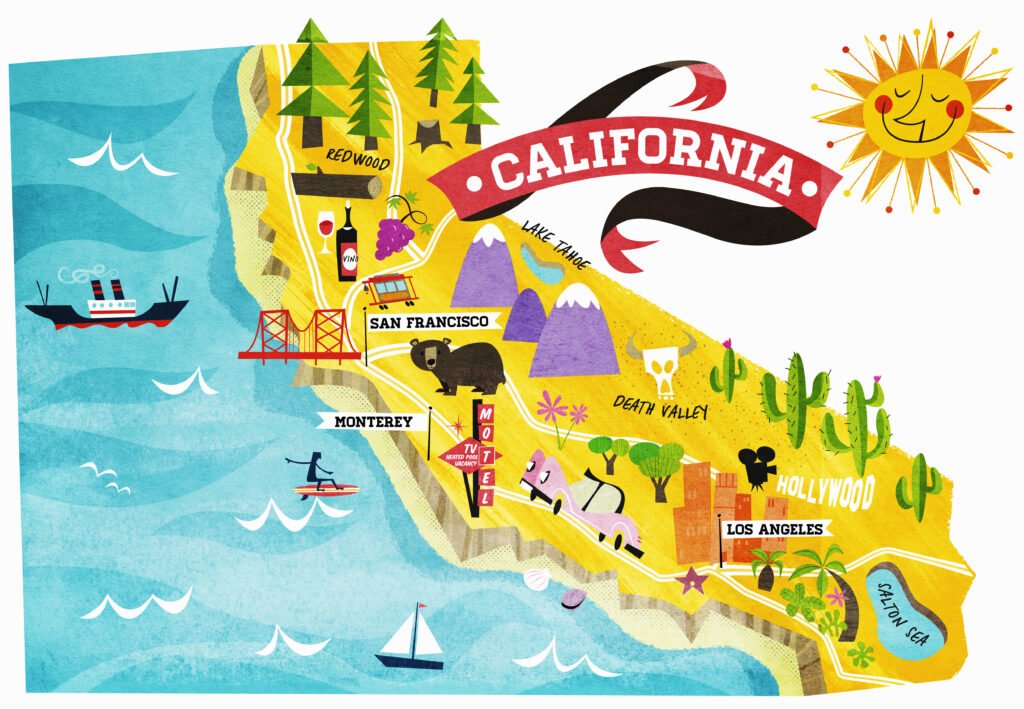
So, boys and girls, Spanish explorers reading the hot novel of the day, Las sergas de Esplandián, took a name from it for a newly encountered land they believed to be an island rich with promise. Although the geography was eventually corrected, the name endured. California remains one of the few places in the world named after a work of fiction, a reminder that imagination has played a powerful role in shaping our world.
