We had fish for lunch yesterday. To be more accurate, I should say they served fish for lunch yesterday. I had an egg salad sandwich. Around here, the kitchen always offers an alternative when seafood is the entrée. It’s usually chicken.

But yesterday the kitchen whipped up a batch of the most delicious egg salad I’ve ever had, and served it between not one, but two slices of provolone on soft white bread. It was a sumptuous feast; but my reaction to it may have more to do with the fact that I’ve been living off saltine crackers for the last week in an attempt to calm my gastrointestinal distress.
But I want to get back to fish, and tell you about Stephen Jay Gould: the man who looked at a trout and effectively said, “Excuse me, sir, but your paperwork is a mess.”
Human civilization has survived plagues, wars, economic collapses, and the invention of pineapple pizza. But in the 1970s and 1980s, it faced perhaps its greatest challenge: a Harvard paleontologist announcing that fish are not a real thing.
Stephen Jay Gould (at right) was not some random guy shouting at the ocean. He was one of the most influential evolutionary biologists of the 20th century, a professor at Harvard University, a paleontologist specializing in fossil snails, a prolific essayist, and the rare scientist who could explain complex evolutionary theory to people like you and me without making everyone feel like they had accidentally enrolled in a graduate seminar. There’s an awful lot going on with that hair and beard, but we’ll leave it alone for now.

Born in New York City in 1941, Gould reportedly became fascinated with fossils after visiting the American Museum of Natural History as a child. Most children leave museums wanting a dinosaur toy. Gould left apparently wanting to reorganize the entire tree of life. He earned his PhD from Columbia University, spent much of his career at Harvard, wrote hundreds of essays for Natural History magazine, and co-developed the famous evolutionary theory of punctuated equilibrium, which argues that species often remain unchanged for long periods and then evolve more rapidly during relatively brief geological intervals. In short, Gould was the kind of person who could ruin a Sunday brunch with a 45-minute lecture and footnotes.
At some point, Gould began emphasizing a delightful little fact of evolutionary biology: there is no such thing as a fish. Imagine being a fish and hearing this.
A salmon spends years mastering the art of swimming upstream, avoiding bears, surviving nets, and generally being a fish. Then some Harvard professor comes along and says, “Technically, you are part of a poorly defined paraphyletic assemblage.” The nerve of this guy! The salmon would probably swim directly into the bear.
Gould’s point was not that goldfish are imaginary, like unicorns or affordable beachfront property. His point was that the category “fish” is biologically awkward. Modern evolutionary classification prefers groups that contain all descendants of a common ancestor. Traditional “fish” includes sharks, tuna, trout, and eels, but excludes amphibians, reptiles, birds, and mammals – even though those groups evolved from ancient fish ancestors.
This creates a taxonomic scandal of Watergate proportions. According to evolutionary biology, a salmon is more closely related to a camel than to a hagfish. Pause for a moment thoughtful reader and appreciate the chaos this introduces. For centuries, humanity believed:
- Salmon + Hagfish = Fish Friends
- Salmon + Camel = Absolutely Not
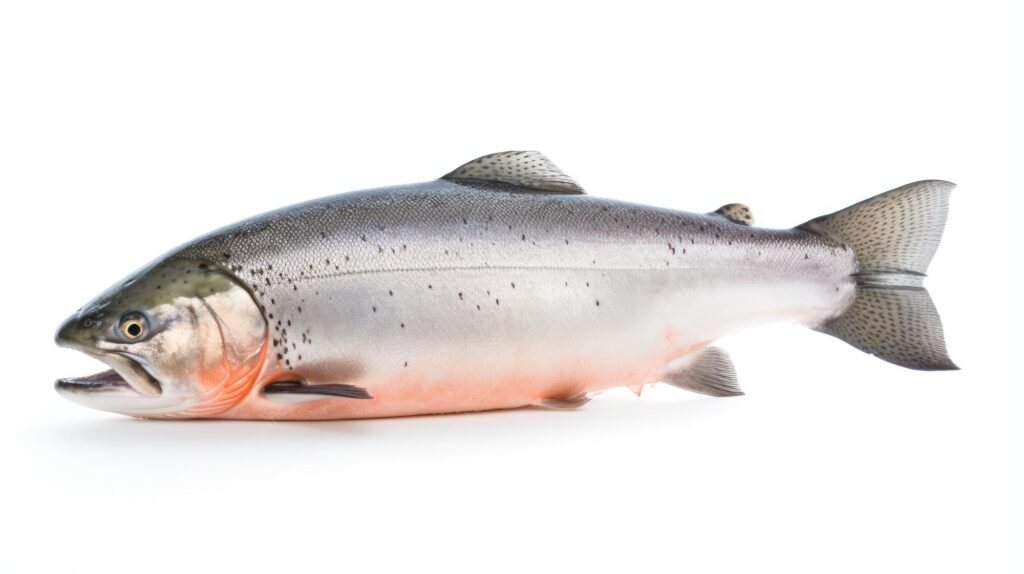
But, evolutionary biology says:
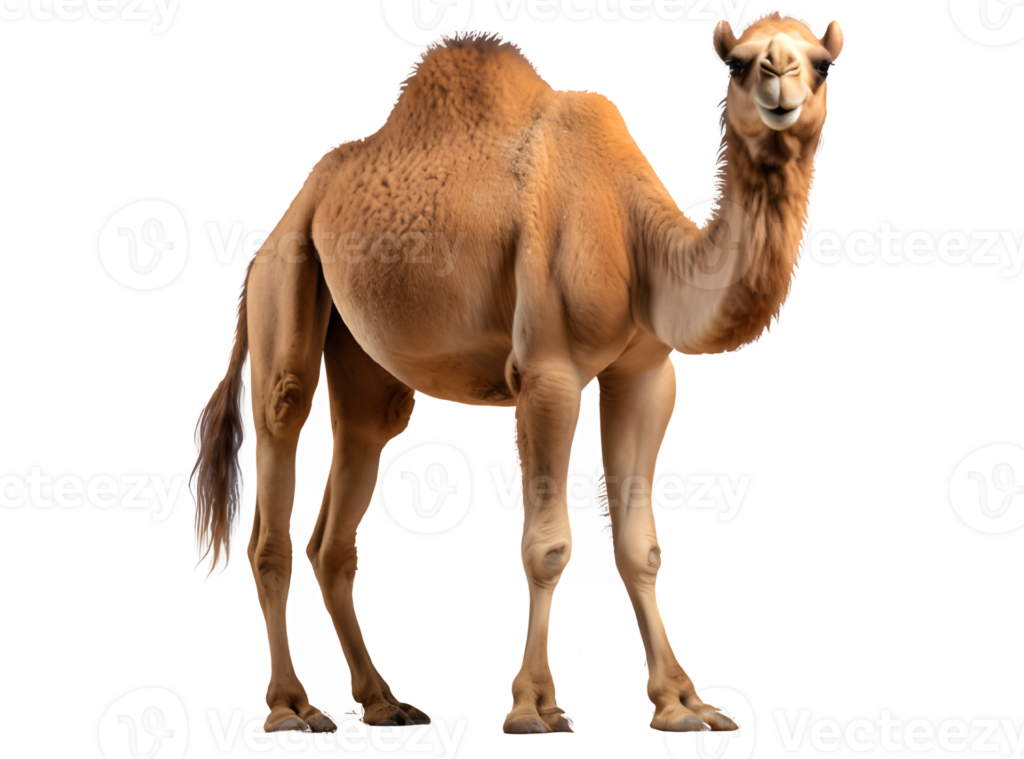
- Salmon + Camel = Close Cousins
- Salmon + Hagfish = “We should talk about this at Thanksgiving.”
Somewhere in the fossil record, a camel is technically looking at a salmon and saying, “Grandma would be disappointed that we didn’t keep in touch.”
Gould loved using examples like this because they expose how much our everyday categories are based on appearance rather than ancestry. We group animals by what they look like and where they live. If it has fins and lives in water, we call it a fish. If it has legs and complains about Trump, we call it a mammal. Or Matt.
Evolution does not care. Evolution is the world’s most committed bureaucrat. It tracks lineage, not vibes. The problem is that once you follow ancestry consistently, things get really weird really quickly. The ancestors of humans were lobe-finned fishes. The bones in your arm correspond to bones in the fins of ancient fish. Which means that every time you wave at someone, you are essentially performing an elaborate modified-fin maneuver. Gould highlighted this connection, noting that we are here because one odd group of fishes evolved fins that eventually became legs. This is both scientifically profound and emotionally unsettling. It means your distant ancestors include creatures that looked like they belong in an aquarium.
This raises practical questions.
If humans evolved from fish, should seafood restaurants technically list us under “related species?” Should family reunions include a tank? Should we feel guilty when we ignore the “Keep Off the Grass” signs, knowing our ancestors worked so hard to get onto land in the first place? Gould would probably answer these questions with a 6,000-word essay involving Darwin, baseball statistics, medieval theology, and a fossil snail from Bermuda. He had a gift for puncturing human self-importance.
“There is no such thing as a fish” is funny because it sounds like a philosophical prank, but it also reminds us that nature was not organized for our convenience. The universe did not create neat labels for fourth-grade science textbooks. We did.
And then Stephen Jay Gould arrived and started crossing them out with a red pen.
Gould died in 2002, leaving behind a vast body of scientific and popular writing. He is remembered not only for his research but for making evolution feel like a detective story filled with bizarre relatives, historical accidents, and categories that collapse under scrutiny. His legacy can be summarized as follows:
- Dinosaurs? Fascinating.
- Fossil snails? Also fascinating.
- Fish? Depends what you mean.
- Humans? Basically heavily modified fish with opinions.
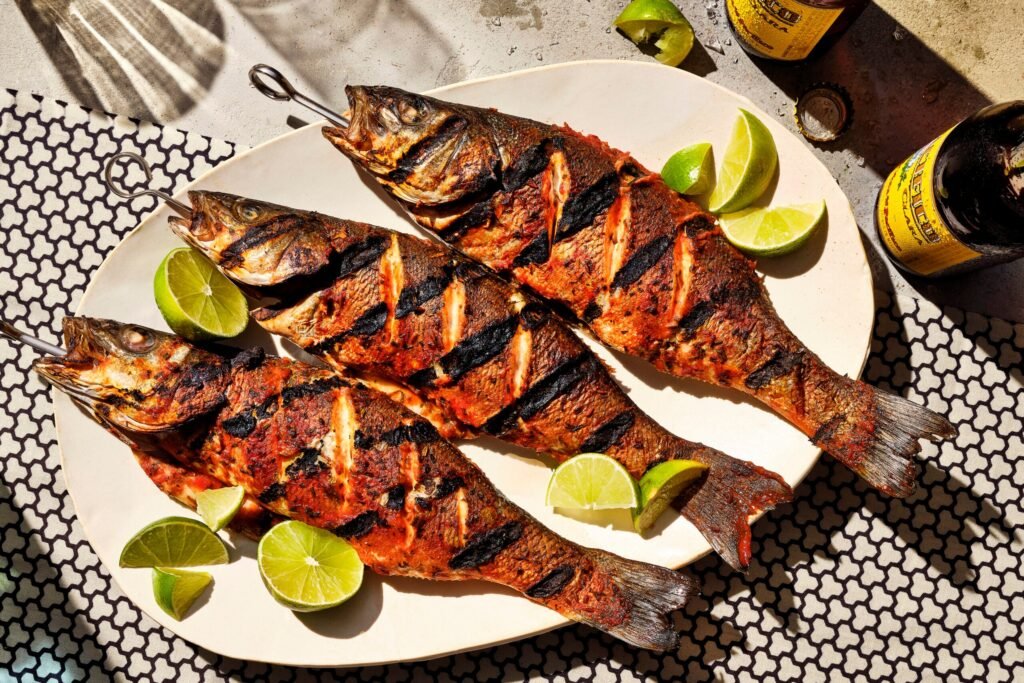
So the next time someone says they’re serving fish, remember that a Harvard paleontologist spent years explaining why that sentence is scientifically dubious.
They are not serving fish. They are serving a non-monophyletic assemblage of aquatic vertebrates.
