
Writing is one of humanity’s oldest and most transformative inventions. Long before the printing press, long before the Internet, and even long before bound books, people felt the urge to mark symbols onto stone, clay, and parchment. Those early scratches were more than just records of grain or trade; they were the first attempts to preserve thought beyond the limits of memory. Writing allowed ideas to travel across time and space. It made it possible for someone in ancient Athens to influence someone in modern Los Angeles without ever meeting them. In that sense, writing is a kind of time travel.
At its most basic level, writing is the act of translating thought into language and then into symbols. It sounds simple, but anyone who has ever tried to write something meaningful knows that it is anything but. Thoughts are often abstract, emotional, and chaotic. Writing demands order. It requires the writer to slow down and choose words carefully, to decide not only what to say but how to say it. This act of choosing is what shapes writing into an art.
In many ways, writing is the act of saying I, of imposing oneself upon other people, of saying listen to me, see it my way, change your mind. It’s an aggressive, even a hostile act. You can disguise its aggressiveness all you want with veils of subordinate clauses and qualifiers and tentative subjunctives, with ellipses and evasions—with the whole manner of intimating rather than claiming, of alluding rather than stating—but there’s no getting around the fact that setting words on paper is the tactic of a secret bully, an invasion, an imposition of the writer’s sensibility on the reader’s most private space.
from Let Me Tell You What I Mean by Joan Didion, one of America’s most celebrated writers and one of my most treasured inspirations as a writer
Writing serves many purposes. It can inform, persuade, entertain, document, confess, argue, or inspire. A scientific article seeks clarity and precision; a poem may seek ambiguity and emotional resonance. A journalist reports facts; a novelist constructs entire worlds. Yet beneath these differences lies a shared goal: connection. Writing connects writer and reader through language. When you read a diary entry from centuries ago or a contemporary blog post, you participate in someone else’s perspective. You momentarily inhabit another mind: in the case of this post – mine.
The power of writing is evident in the works that have shaped cultures. Religious texts, philosophical treatises, political manifestos, and literary classics have all influenced the direction of societies. The plays of William Shakespeare still echo in our modern lives. The speeches and sermons of Martin Luther King, Jr. continue to inspire movements for justice. The novels of Jane Austen reveal enduring truths about relationships and social expectations. These writers did more than put words on paper; they articulated ideas that resonate across generations.
But writing is not reserved for the famous. Everyday writing matters just as much. An email to a friend, a card expressing encouragement or sympathy, a reflective journal entry – these are acts of meaning-making. Writing helps individuals process experiences and emotions. Many people find clarity by writing about their struggles, goals, or dreams. When thoughts are written down, they become visible and tangible, easier to examine and understand.
The process of writing often begins with uncertainty. A blank page can feel intimidating. It represents possibility but also judgment. The writer may worry about grammar, structure, originality, or the reader’s reaction. Yet the first draft is not meant to be perfect. In fact, writing is as much about rewriting as it is about composing. Revision transforms rough ideas into coherent arguments and vivid descriptions. It is during revision that the act of writing truly takes place.
Good writing requires attention to detail. Word choice matters. Rhythm matters. Sentence length can influence how a piece feels – short sentences can create urgency; longer ones can create reflection. Imagery can make abstract concepts concrete. Consider how a description of “new” becomes more powerful when expressed through a writer’s choice of words describing a specific scene, like a deep breath taken with outstretched arms on a mountaintop as the sun rises at dawn.
Reading and writing are closely intertwined. The more you read, the more tools you acquire as a writer. Exposure to different styles expands vocabulary and deepens understanding of structure. A reader of classic literature might notice the elaborate sentences of the 19th century, while a reader of modern fiction might observe concise, sharp prose. Each style offers lessons. Writing is, in many ways, a conversation with all the texts that came before. Good writers steal (maybe “borrow” would work better here) from what they have read.
Technology has transformed writing dramatically. The invention of the printing press democratized access to written works. Centuries later, digital platforms have accelerated the speed and reach of writing even further – as this very blog post attests. Today, a single post can reach millions within minutes. Writers publish articles, stories, and opinions instantly. While this accessibility is empowering, it also presents challenges. The sheer volume of content makes it harder to stand out, and the rapid pace can discourage careful revision. Still, the essence of writing remains unchanged: thoughtful communication through language.
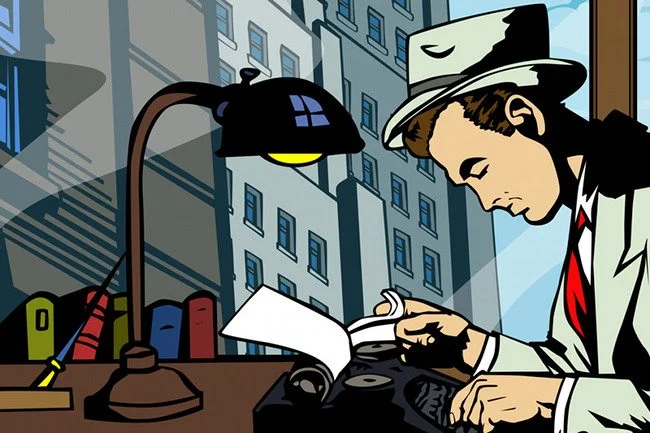
Writing also demands empathy. To write effectively, one must always consider, and above all – respect, the reader. What does the reader know? What do they need explained? What emotions might they feel? Persuasive writing, especially, requires understanding opposing viewpoints. Even fiction depends on empathy; believable characters arise from a deep understanding of human motivations and their often contradictory or self-serving nature.
There is also vulnerability in writing. Sharing words publicly can feel like exposing a part of yourself. Even academic or analytical writing carries the imprint of the writer’s reasoning and perspective. Creative writing often reveals even more – fears, hopes, questions. Yet this vulnerability is what makes writing powerful. Readers respond to authenticity. When writing feels genuine, it resonates more deeply. It’s why I always say I’m an open book, although some might accuse me of oversharing.
Writing can be disciplined or spontaneous. Some writers follow strict schedules, producing words at the same time every day. Others wait for inspiration. In reality, both discipline and inspiration play roles. Inspiration may spark an idea, but discipline carries it through to completion. Many celebrated writers, past and present, maintain rigorous routines, understanding that creativity thrives within commitment.
Perhaps the most remarkable aspect of writing is its endurance. Spoken words fade quickly, but written words can last centuries. A letter preserved in an archive can reveal intimate details of a life long past. A book can outlive its author by generations. Writing gives permanence to fleeting thoughts.
At the same time, writing evolves. Language changes. New genres emerge. Cultural contexts shift. What was once revolutionary may now seem conventional. Yet the human impulse to write – to record, to express, and to connect – remains constant. From ancient inscriptions carved into stone to digital texts stored in the cloud, writing continues to adapt to new forms while serving the same fundamental purpose.
In the end, writing is more than a skill. It is a practice of attention. To write well, one must observe the world closely, listen carefully, and think deeply. Writing encourages curiosity and reflection. It challenges assumptions and clarifies beliefs. Whether composing a novel, an academic paper, a letter, or a blog post, the act of writing shapes both the message and the messenger.

Every time someone sits down to write, they are participating in a tradition that spans thousands of years. They are joining in an ongoing conversation that stretches from ancient civilizations to the present moment. Writing is a bridge – between minds, between eras, and between inner thought and outer expression.
And so today, February 14th, I ask writing to be my valentine.
