
My first encounter with Marcel Proust was not academic, or even literary. As a teenager, I was obsessed with Monty Python, which I’d come to know through a dedicated, bordering on religious, listening to Dr. Demento every Sunday night on 94.7 KMET (“the Mighty Met”), at the time the most listened-to Sunday evening radio program in Los Angeles. Dr. Demento would spin up all sorts of offbeat comedy songs from Tom Lehrer to Felix Figueroa, whose 1947 song “Pico and Sepulveda” featuring lyrics comprised solely of the names of Los Angeles streets set to a Latin-style beat served as the show’s opening theme:
Pico and Sepulveda [continues throughout]
Doheny…
Cahuenga…
La Brea…
Tar Pits! (Tar Pits!)La Jolla…
Sequoia…
La Brea…
Tar Pits! (Tar Pits!)You can keep Alvarado
Santa Monica
Even Beverly Drive
Vine may be fine
But for mine I want to feel
Alive, and settle down in myLa Brea…
Tar Pits…
Where nobody’s dreams come truePico and Sepulveda [continues throughout]
We should note that Felix’s name was actually Freddy Martin, but that “Figueroa” is also the name of a famous Los Angeles street!
So Dr. Demento introduced me to the Pythons, and I soon found episodes of the Flying Circus on our local PBS station. And from that I surmised that some French guy named Proust had written a very long and tedious novel from the opening of one episode which featured the “All-England Summarize Proust Competition,” where each contestant must give a summary of Proust’s A La Recherche du Temps Perdu (“In Search of Lost Time” or sometimes translated as “Remembrance of Things Past”) in 15 seconds, once in a swimsuit and once in evening dress.
As an undergraduate at Cal Poly Pomona, before transferring back east to Massachusetts to study philosophy in the seminary, I encountered Proust again, this time as assigned reading (in English!) from my literature professor, Dr. Leavitt, who also introduced me to the gay French teen-aged poet Arthur Rimbaud, with whom I have had (and have) more than a passing fascination/obsession for ever since and who stopped writing, his creative energy spent, at the age of 20!
But in Proust’s novel I of course came across what is probably its most famous passage in which the narrator dips a French pastry, known as a madeleine, into a cup of tea. The taste of it triggers an intense childhood memory.
No sooner had the warm liquid mixed with the crumbs touched my palate than a shudder ran through me and I stopped, intent upon the extraordinary thing that was happening to me. An exquisite pleasure had invaded my senses, something isolated, detached, with no suggestion of its origin. And at once the vicissitudes of life had become indifferent to me, its disasters innocuous, its brevity illusory – this new sensation having had on me the effect which love has of filling me with a precious essence; or rather this essence was not in me it was me. … Whence did it come? What did it mean? How could I seize and apprehend it? … And suddenly the memory revealed itself. The taste was that of the little piece of madeleine which on Sunday mornings at Combray (because on those mornings I did not go out before mass), when I went to say good morning to her in her bedroom, my aunt Léonie used to give me, dipping it first in her own cup of tea or tisane. The sight of the little madeleine had recalled nothing to my mind before I tasted it. … all from my cup of tea.
He does tend to bang on; the novel is seven volumes long! So I’ve edited this passage down to hit his salient points.

But this is not merely a memory, like one might remember an event like getting a puppy or falling off a bike and skinning your knee. No, it’s something much more visceral, something felt and not just remembered.
The narrator describes what we might call an out-of-body experience when he says it was “something isolated, detached, with no suggestion of its origin” and, critically, this is not a thought he can isolate and point to but rather something integrated and a part of him revealing himself (“this essence was not in me it was me”). Proust is using language to describe a feeling.
This beautiful passage finds him describing the way in which our senses can unlock memories hidden deep away within our psyche. Such an experience has come to be called a “madeleine moment” or sometimes the “Proust effect.” I recently experienced my own madeleine moment.
My father was very athletic throughout his life, playing sports competitively as a boy and a teenager, and then recreationally – tennis mainly – as an adult and well into his senior years. He wanted me to follow in his footsteps, though I showed no interest in nor aptitude for athletics. So he’d take me to try-outs for literally just about everything that involved some kind of a team, and usually a ball, hoping against hope (and the odds) that someday I’d cotton to one of them. And I did, sortof, with swim team.
I mean, c’mon, boys walking around barefoot and half naked except for a skimpy little Speedo, what’s not to like?! But seriously, it was the least unpleasant of all the sports he made me try out for, and I miraculously made the team.
Practice was in the afternoons after school at a public pool set up for racing about a mile from my house. The water was never warm enough for me, and the chill was even worse when you got out of the pool – LA (Glendale) can be quite cold and damp in the fall and winter, especially in the late afternoon. I know it’s hard to imagine today with me looking like a finalist to play the Goodyear blimp in a biopic, but I was a lanky, skinny kid. I didn’t have much “insulation,” so I was always freezing and frequently shivering, but I still liked the swimming best of all the sports I’d tried because it didn’t involve catching anything. Although I was in danger of catching a cold!
Everyone thinks their mom is/was a saint, but mine actually was. It fell to her to pick me up after swim practice, even though the whole thing was my dad’s idea. She could see how miserable and cold I was.
So before she came to pick me up, she would fill the bathtub with hot water which would be just the right temp by the time I got home and cut up slices of cheddar cheese which she put atop saltine crackers that were left on a plate beside the tub as my after practice snack. My reward for enduring the cold.
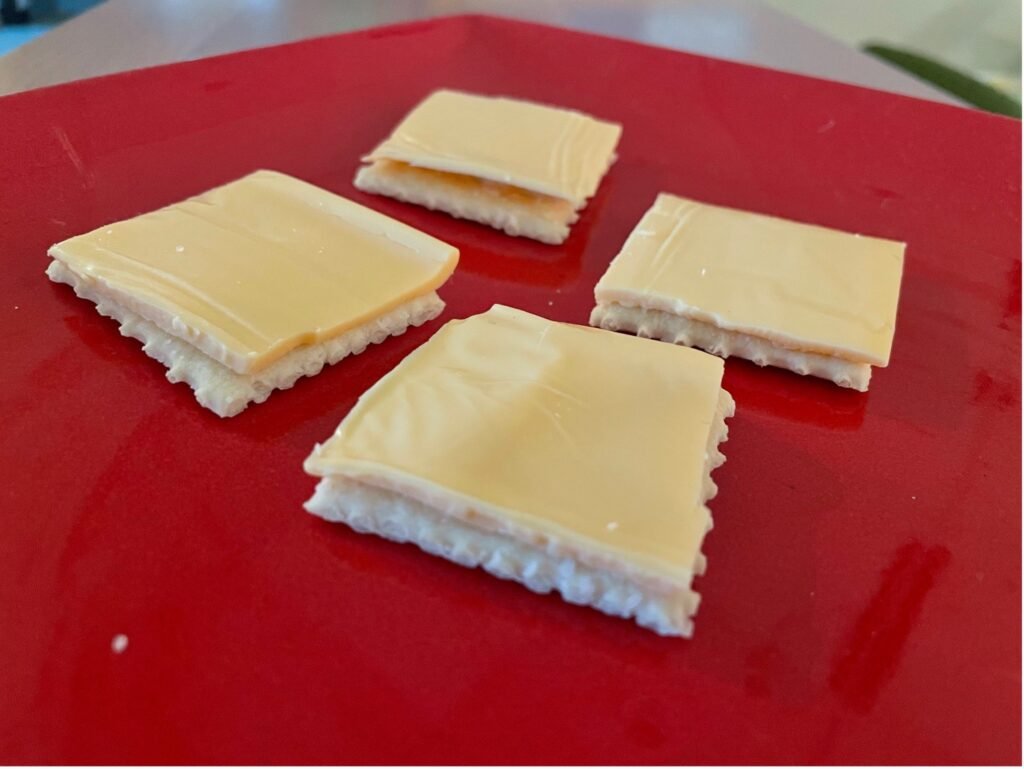
When I got home, I’d strip off my Speedo and immediately immerse myself in the steaming water of the bath. Life, and color, would slowly come back to me, as if the bath was melting a block of ice that had formed around me. Those baths are one of my fondest memories of my mom, who died four years ago.
Here in the desert, while it may seem counterintuitive it can actually get quite cold in the fall and winter months. Remember, a desert is defined by its lack of rainfall, and it is, in fact, cloudy and raining today – good for my plants, not so good for my point about what makes a desert a desert. As I was having a shower the other day, the cold air of the bathroom was giving me a chill when the hot water of the shower hit my skin.
I did not just remember those times after swim practice, I was there, in Glendale, some fifty years ago. And it wasn’t just the comforting sensation of warmth after shivering in the cold, I was reminded of my mother’s love, a love that had her drawing a bath and cutting up cheese slices in anticipation of my return home. Not just reminded. I felt her love in that moment. It was wonderful, and as real to me as a hug, or a phonecall, or a card on my birthday – all the things you take for granted until they’re gone. At the risk of sounding schmaltzy, if you’re mom’s alive, call her today and tell her you love her. There will come a time when you regret not thanking her for your hot baths and crackers.
In the closing line of the passage, Proust writes, “all from my cup of tea.” At first blush, it may sound like he’s minimizing the experience. But no, I think he means to convey that it’s often the simplest things that provoke the strongest memories. So I’ll close with…
“all from a hot shower on a cold day.”
