I don’t know how it happened. When Dennis, the little Corgi mutt who’d been by my side since I ended up in a wheelchair, died, I wanted a Beagle. I was actively looking for one (and had found one on a shelter website not too far away) the morning I came across Gordon’s picture and story – online. And that was it. From that moment on, he was my dog. Or, to hear him tell it, I was his person.
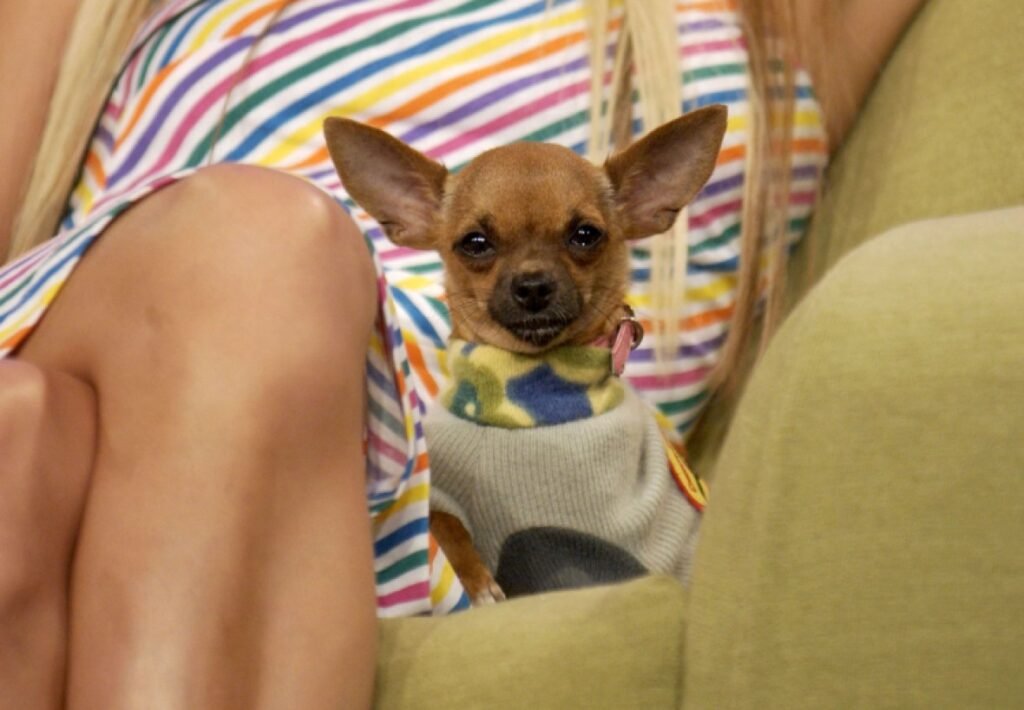
Before that, I only knew Chihuahuas from popular culture – the “yo quiero Taco Bell” commercials and Tinks, Paris Hilton’s Chihuahua Tinkerbell (at left) in her reality TV show The Simple Life. Like many people, I had concluded that they were nervous little yappers.
Or just ridiculous accessories that wealthy women carried around in Fendi handbags while shopping Rodeo Drive in Beverly Hills (or El Paseo in Palm Desert).
Little did I know.
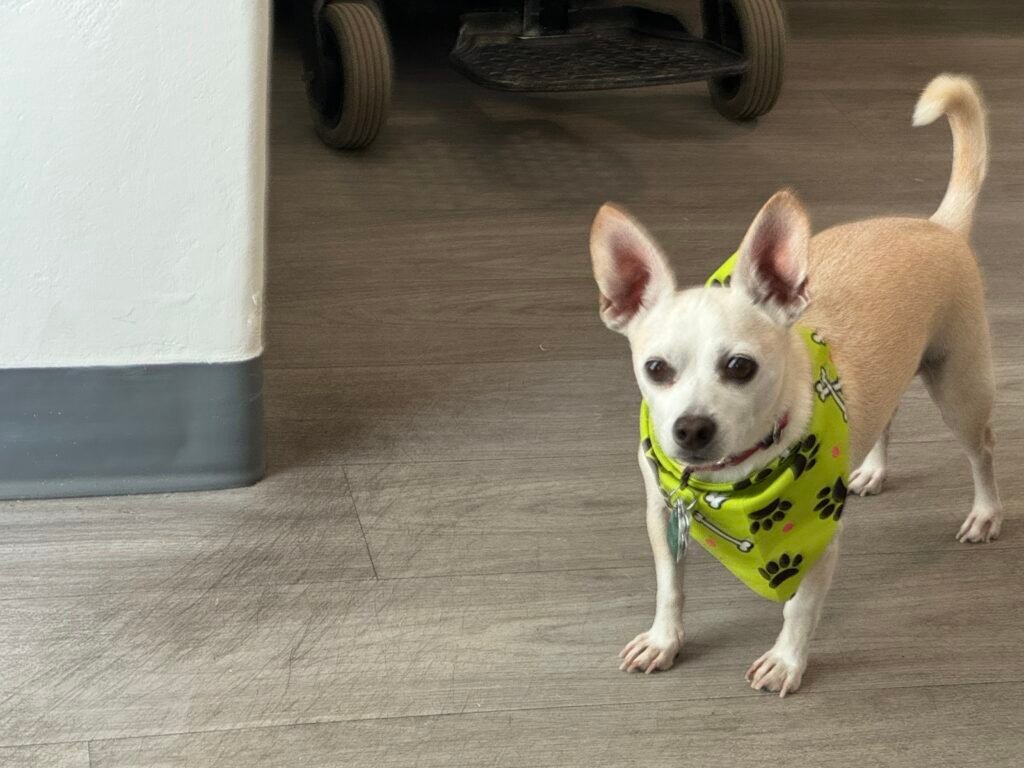
I am insanely devoted and connected to my Chihuahua, Gordon. If you had told me this would be the case three years ago when I adopted him, I would have suggested you take medicament and get some rest. What could be more cliché than a balding (okay, bald), overweight, older gay man with a little foo foo dog? But he won my heart and now I cannot imagine living without him. My lap feels naked when he’s not on it.
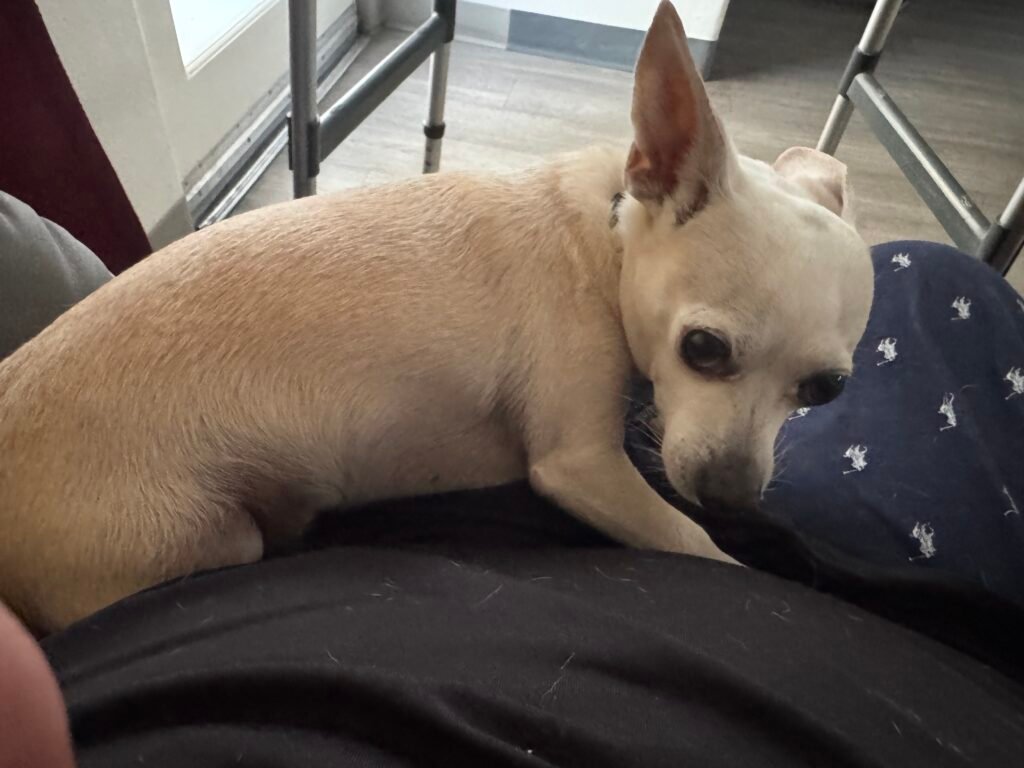
Gordon was 5 when I adopted him, which meant he had a whole other life. I wished I knew more about that beyond him being abandoned, but that’s not possible. So I made two solemn vows: one, that for the rest of his life he would never feel alone or unwanted again, and two, to find out everything I could about Chihuahuas.
I have partners in number one. Stonewall Gardens, the assisted living residence where I have resided for the past ten (eleven this November) years, treats Gordon like a four-legged resident. I have heard him called the real brains behind Apartment 6, and even “the mayor of Stonewall.” When the marketing guy gives tours, they swing through my apartment and he says, “this is where Gordon lives and that’s [pointing at me] the guy who lives with him.”
As for number two, I discovered a rich, fascinating history that begins in Mexico. Fitting. I love Mexican culture. My love affair with Mexico began as a small boy when we used to vacation there at the Bahia de San Carlos on the Sea of Cortez, seven kilometers outside the coastal city of Guaymas. Growing up in Los Angeles, I learned about the original 44 Mexican settlers of the city known as Los Pobladores. I love Mexican food. As a young man, I learned how to cumbia norteña, a style of dance associated with northern Mexico that found its way to Southern California. Amongst my friends, I was known as “The Bean Queen” because I dated Mexican or Latino men, exclusively. It is quite natural, then, that I would love Gordon as much as I do.
Long before modern Mexico existed, before highways crossed the deserts and cities rose in glass and concrete, the civilizations of Mesoamerica lived beneath a fierce and brilliant sun. Temples climbed toward the sky. Priests watched the movements of the stars. Markets filled with the sounds of voices and birds and animals. And among human beings moved small dogs.
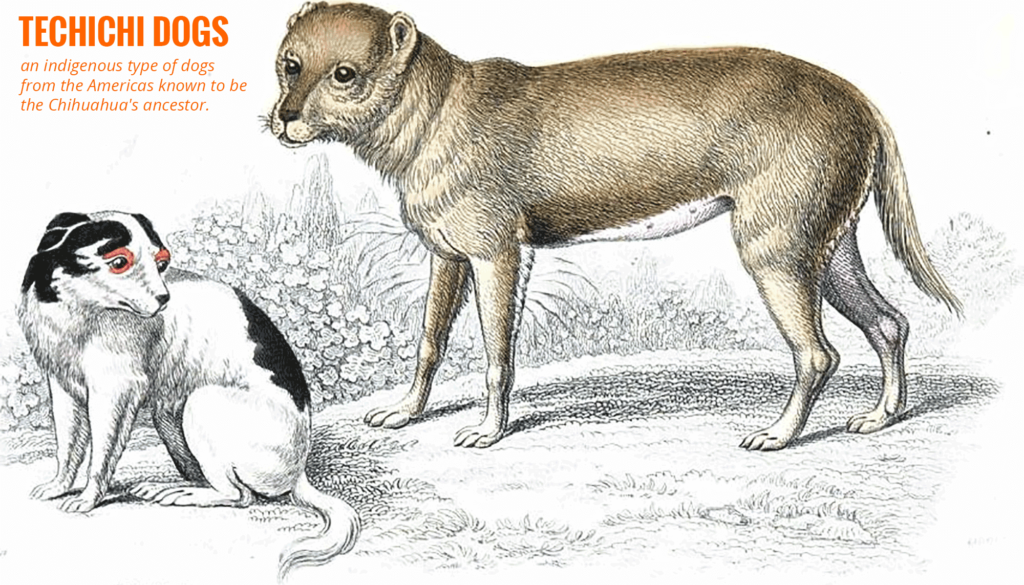
The modern Chihuahua’s ancestry can be traced back to the Techichi, a small dog associated with the ancient Toltec civilization in the 9th century CE. The exact path from those animals to the Chihuahua of today remains partly hidden, as ancient histories so often are. Time has erased much. But the living creatures that once moved through those vanished Toltec cities have left behind faint traces in fragments of stone and pottery. The legends are haunting.
Some of the ancient peoples of Mexico believed that dogs could accompany the dead. In the imagination of the living, a dog might become a guide through darkness, a companion at the edge of the known world. It is a strange image to carry into the present: a small animal, warm and breathing, leading a human soul across a river no living person could see.
Perhaps this is why Chihuahuas seem to possess an unusual atmosphere around them. Even today, underneath all the comedy of a Chihuhua’s small size and oversized personality, there is something ancient in their story. Chihuahuas belong not only to the living room and the city sidewalk, but also to ruined temples, dry hillsides, and the long shadows of civilizations that have disappeared.
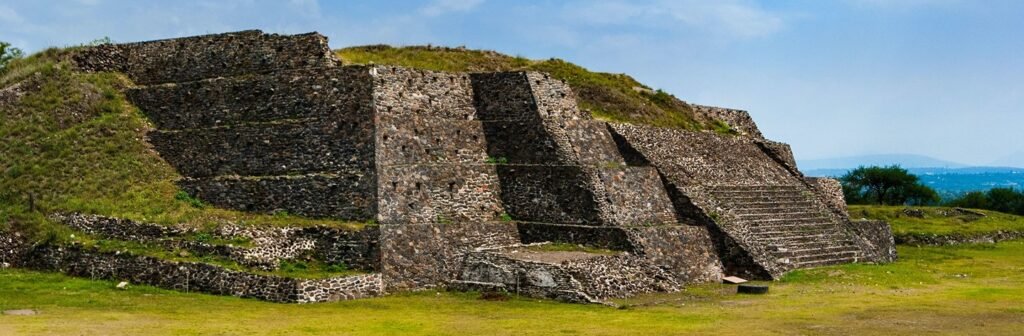
There are dogs that seem to belong entirely to the present: creatures of suburban lawns, dog parks, and afternoon walks. And then there is the Chihuahua, a dog so small it can vanish under a blanket, yet so strangely vivid that it seems to carry with it the dust of another age.
To hold a Chihuahua is to hold a paradox.
Its body is light. Its bones are delicate. A cold wind can make it shiver. Yet behind its bright, unblinking eyes lives an old and extravagant confidence. The Chihuahua does not seem to understand that the world is larger than it is. Or perhaps it understands perfectly and refuses to be intimidated.
It raises its ears toward the slightest sound. It watches the doorway. It patrols the borders of the room. And when danger – or merely a stranger – appears, it announces itself with a voice that seems to come from a much larger animal.
There is something theatrical about such courage. Something almost mythic.
When the Spanish arrived in the New World, they brought to Mesoamerica conquest, disease, war, and transformation. Ancient worlds were broken apart and remade. Languages changed. Cities changed. Animals changed. The history of Mexico’s small native dogs became uncertain, disappearing into centuries of silence.
For a long time, the ancestors of the Chihuahua seemed to exist at the edge of history, somewhere between fact and legend.
Then, in the 19th century, travelers began to encounter tiny dogs in northern Mexico. They were especially associated with the state of Chihuahua, a land of broad deserts, mountains, and immense skies. The dogs were carried across borders and into new countries. Soon, the little creature of Mexico began its journey into the wider world.
It is easy to imagine one of those early Chihuahuas traveling north: a small, nervous body in a carriage or train, moving through landscapes it could never comprehend. Outside the window, the earth unfolded endlessly. Deserts became towns. Towns became cities. The little dog entered the modern world.
And the modern world noticed.
There was no mistaking a Chihuahua.
Its head seemed almost too large for its body. Its ears rose like small sails. Its eyes appeared permanently astonished by existence. It could be elegant, ridiculous, beautiful, nervous, proud, affectionate, and furious – all within a single afternoon.
Perhaps no other breed so perfectly demonstrates the difference between size and presence. A Chihuahua may weigh only a few pounds, but it often enters a room as though it owns the place – the furniture and everyone in it. It has the confidence of a monarch in the body of a creature small enough to be carried under one arm.
Yet with their person, Chihuahuas are surprisingly gentle. Bossy, but in a kindof passive-aggressive way that leaves you feeling guilty if you let them down.
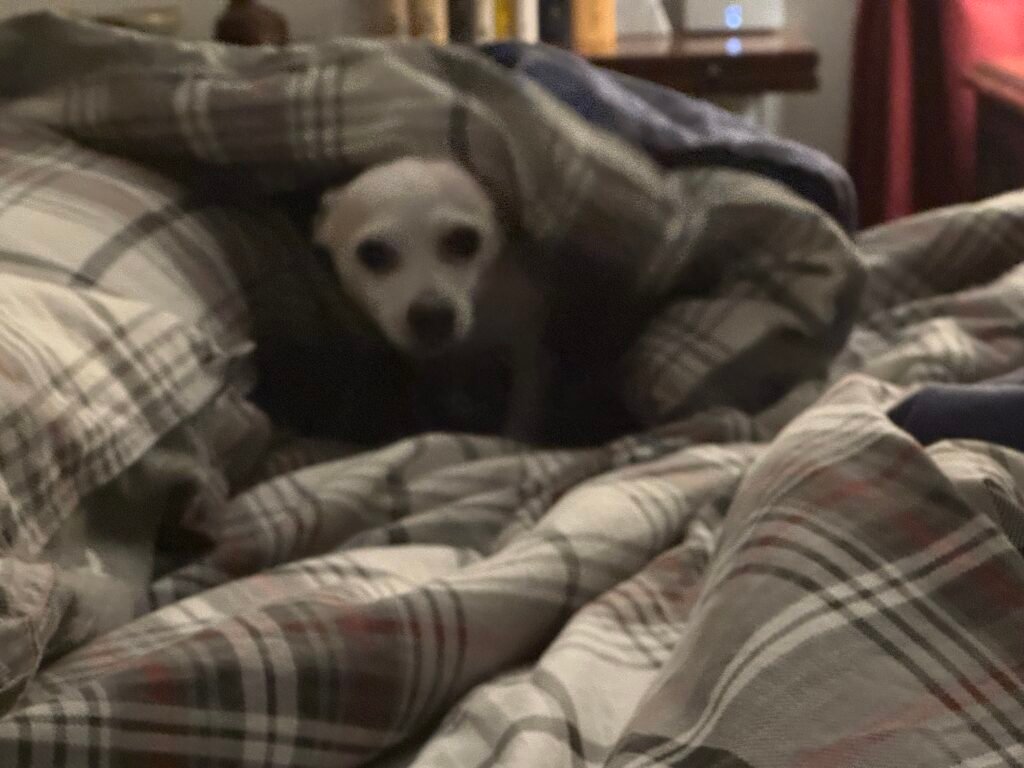
At night, Chihuahuas seek warmth with an almost ancient instinct. They disappear under blankets. They curl up against the body of their person. They turn a human lap into a safe throne upon which to relax, for heavy is the head that wears the crown. The fierce little guardian becomes, in sleep, a creature of extraordinary vulnerability.
This is the Chihuahua’s deepest contradiction: it is both warrior and child. It barks at the unknown, then burrows deep into the folds of a duvet or underneath a blanket. It challenges the enormous world around it, then trembles when the temperature falls. It possesses a pride almost comical in its intensity, yet it can love a single human being with a devotion that is absolute, unquestioning, and enduring.
The Chihuahua is not merely small. It experiences the world from smallness. Every chair is a towering structure. Every staircase is an ascent. Every stranger is a giant. The edge off the bed feels like the dizzying heights of a high cliff. The world must seem enormous and daunting when you live your life so close to the ground. Perhaps that is why Gordon’s eyes are always watching – even at rest he is en garde.
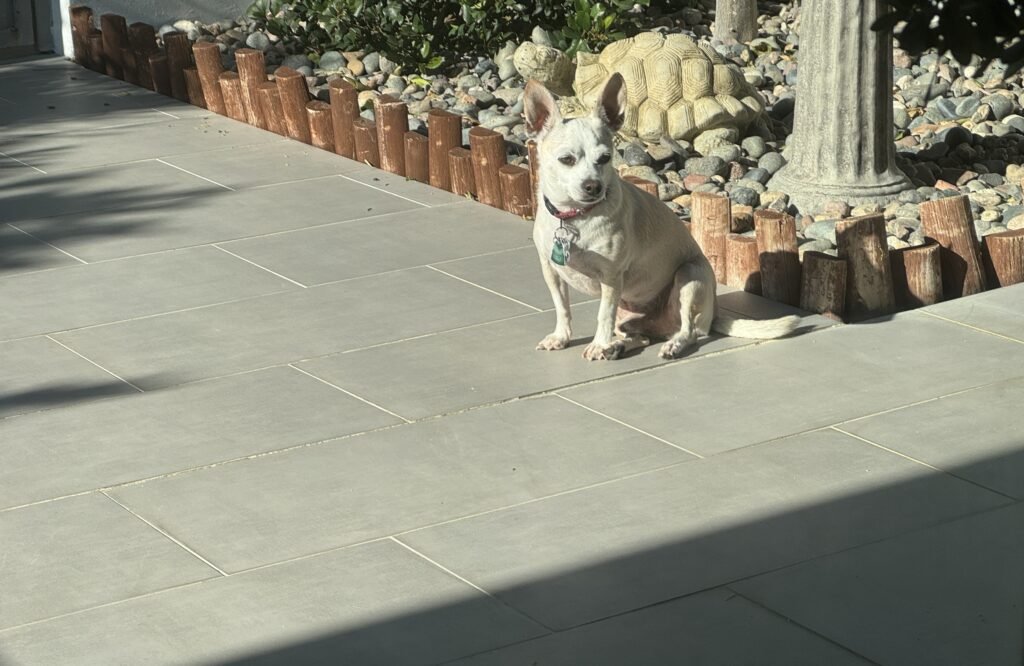
The Chihuahua is an animal that pays attention.
It notices.
It listens.
It remembers.
And when it loves, it loves with the fierce concentration of a creature that knows how fragile that emotion can be.
Over the years, the breed has become an international symbol. It has appeared in films and advertisements, in the arms of celebrities, and in the imaginations of people who have never set foot in Mexico. It has become fashionable, comic, glamorous. Sometimes it has been treated less like a living creature and more like an accessory.
But underneath the costume of popular culture, the Chihuahua remains what it has always been: a dog.
A small, intelligent, nervous, brave, stubborn, affectionate creature with instincts of its own. Its uniqueness lies in the strange distance between appearance and spirit.
Looking at a Chihuahua, you see fragility. Living with one, you discover force.
There is something almost defiant about the breed’s existence. The Chihuahua has survived by being small in a world that often favors the large. It has traveled through centuries of uncertainty, crossed borders, entered new cultures, and become known around the globe without ever losing the intensity that makes it unmistakable.
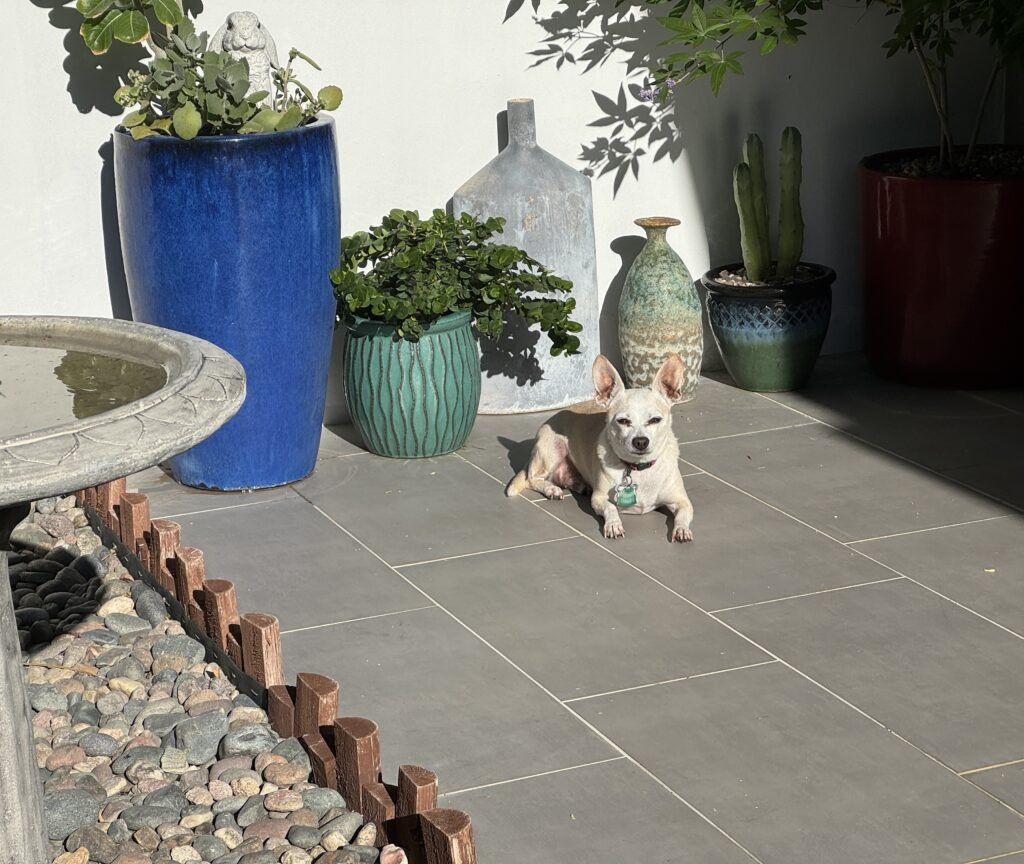
I have come to believe that somewhere in the midst of Gordon’s modern life of belly rubs, ear scratches, naps, treats, and the warmth of the tile on the patio as he basks in the sunlight of Palm Springs, there remains a faint echo of something much older.
Perhaps it is only imagination. Perhaps history has embroidered the Chihuahua’s story with more mystery than certainty. But it is difficult not to picture it.
A small dog moving through the warm dust of ancient Mexico. The afternoon sun burning white above stone walls. The distant sound of voices. A great civilization alive beneath the sky.
And there, close to the feet of human beings, alert and watchful, ears lifted toward the wind, walks a creature small enough to be overlooked. Yet impossible to forget.
The Chihuahua has always seemed to understand a secret that the world must continually relearn: that greatness does not require grandeur. A thing may be tiny and still possess a history. It may tremble and still be brave. You may carry it under your arm while it carries, somewhere within itself, the long shadow of an ancient sun.
