
I’m planning on doing a post today about the Sears Catalog. You need to be a certain age to know what that is. If you were born after 1970, you might be asking “what is the Sears Catalog?” Some of you might even ask “what is Sears?” If that’s you, ask your parents. For the rest of you, I’d like to take us back to the days before Amazon.
A simpler time. A time before the Internet. We got our porn from National Geographic. For popcorn, there was Jiffy Pop, with that amazing silver thingy that blew up as you heated it on the stove. And tick tock was something a clock did. And we spelled it with a C!
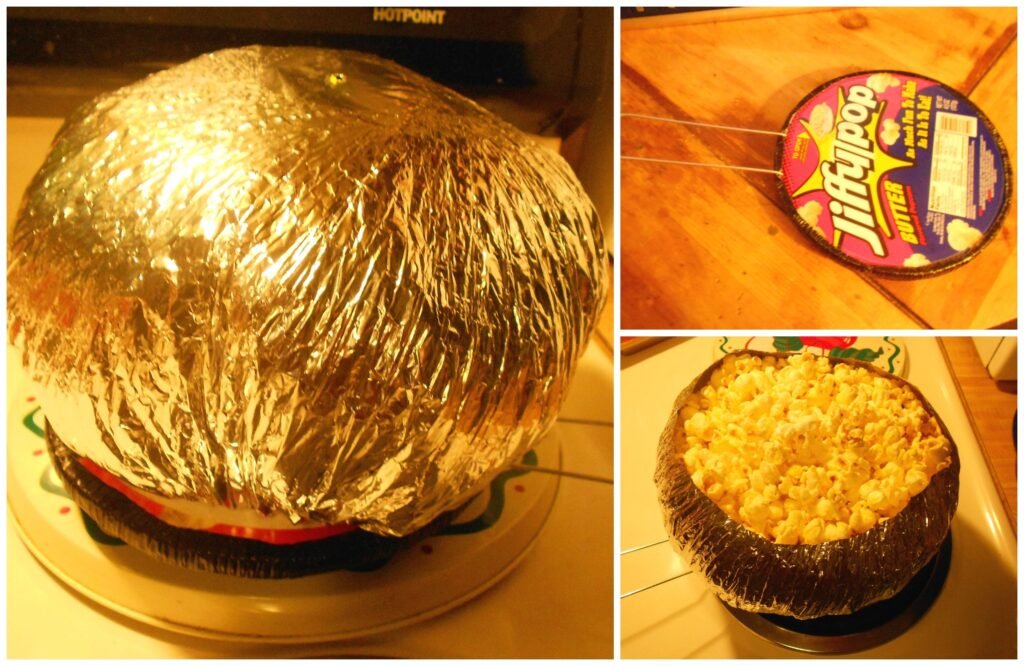
The mind reels when you consider the primitive, analog conditions we lived under.
And in the midst of it, there was the Sears & Roebuck Catalog, a.k.a. “the wishbook.” Founded in the late 19th century for the specific purpose of reaching rural farmers who had no access to city stores, it had evolved into something like a cultural touchstone. It was ubiquitous. Every home had one. It was like a bible of domesticity.
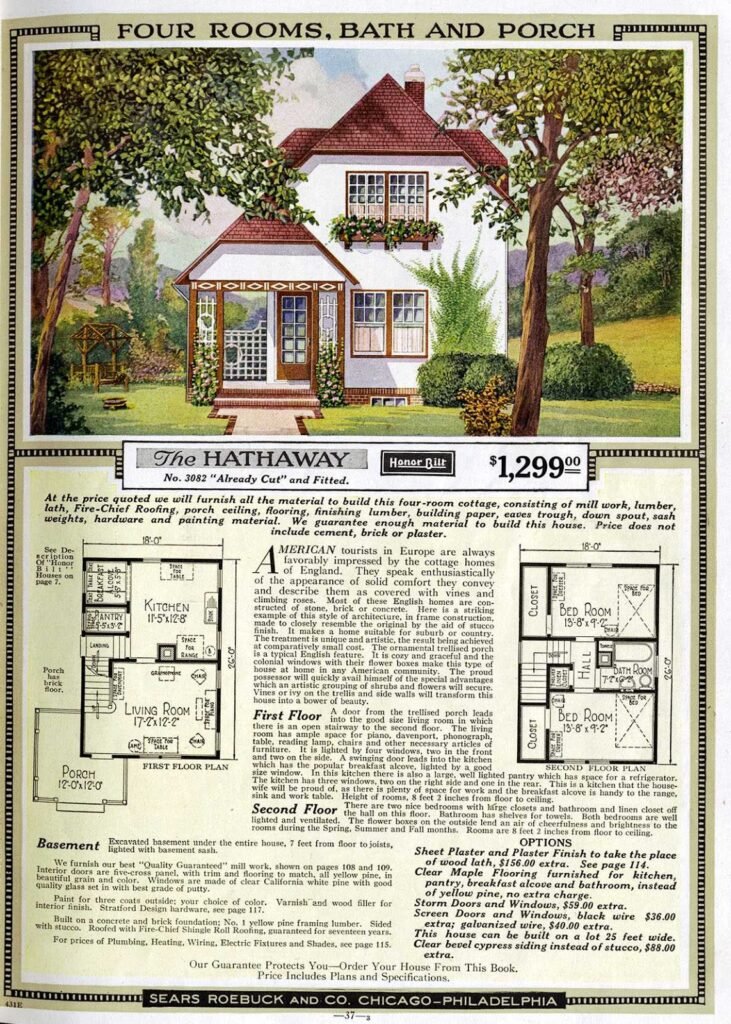
The Sears Catalog helped shape the way Americans dressed, how they furnished their living rooms, and even how they built their homes for a while through prefabricated kits – a complete set of blueprints and instructions were mailed, and supplies were shipped by rail, to the homeowner, who then used these to assemble an entire house; Sears sold more than 70,000 such homes in North America from 1908 to 1942. From the catalog. Take that, Ikea!… you think you’re a big deal because you sell build-your-own bookshelves? Maybe you should stick to Volvos.
The catalog’s pages were filled with bikes, washing machines, and umbrellas. Toasters and coffee tables. Hammers and drills. But there were also clothes, and every kind of undergarment imaginable. I know gay guys who have told me they first realized they were gay because of the men’s underwear section of the Sears Catalog!
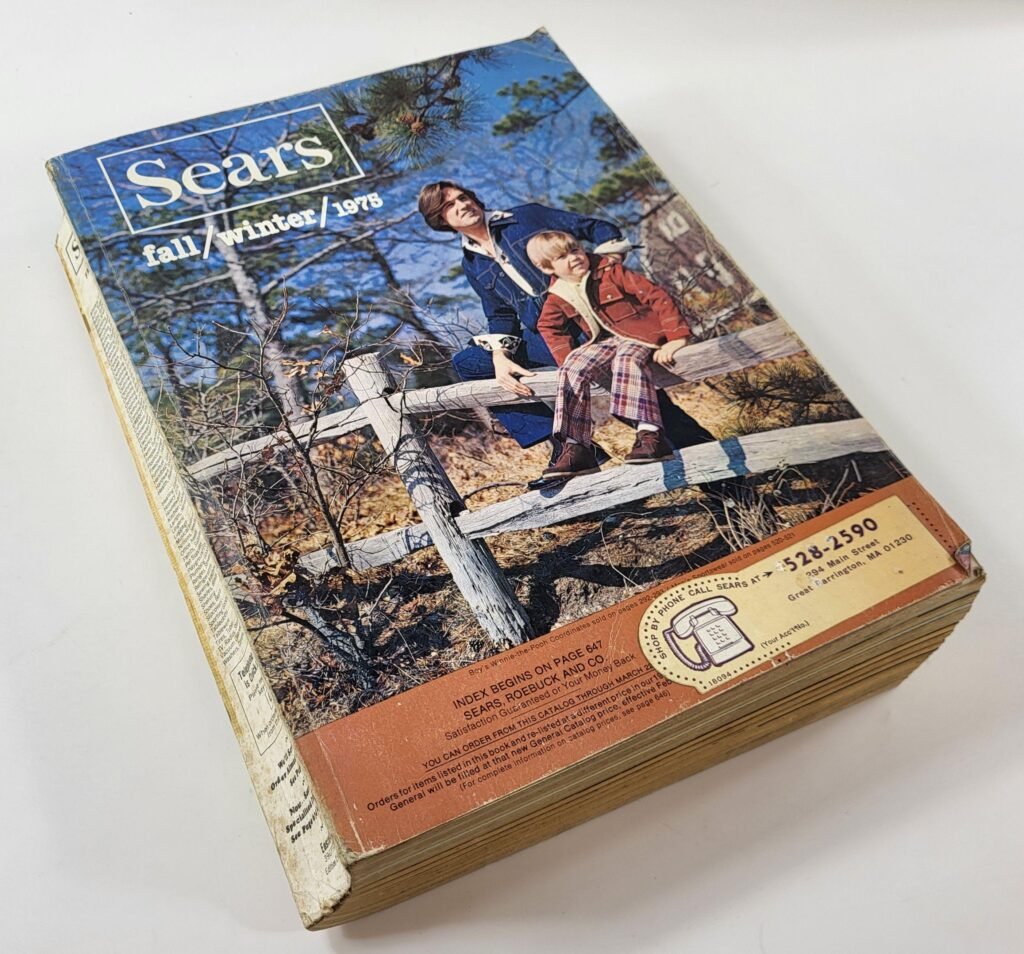
The Sears Fall/Winter Catalog of 1975 was enormous – one of those magnificent American publications that could provide everything a person needed, from refrigerators and snow tires to children’s pajamas and enough kitchenware to survive a minor nuclear incident. Millions of copies were distributed across the country.
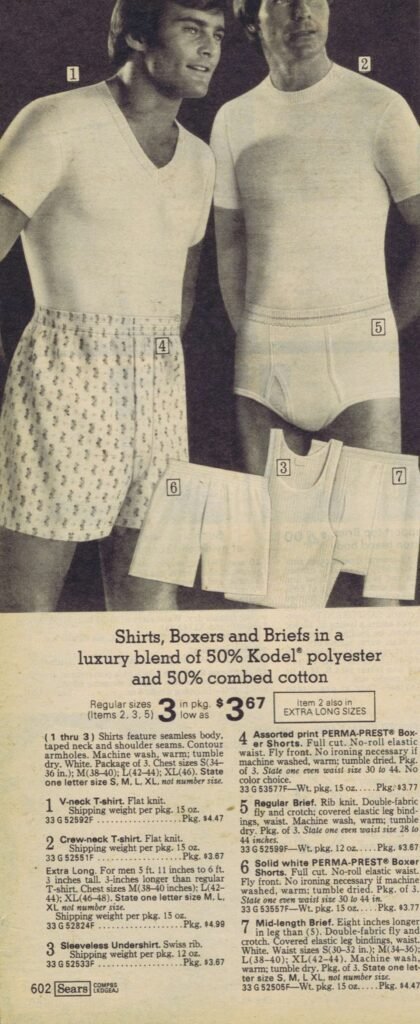
Then somebody – we will never know just who – noticed page 602.
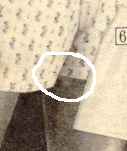
There, among the perfectly respectable offerings of 1970s men’s underwear, was a photograph of a male model named Gary Bimson wearing boxer shorts (riding a little too high on his waist if you ask me) and a t-shirt. Now, according to thousands of suddenly very interested readers (uh huh… we’ll come back to that), something appeared to be protruding from the leg of his underwear just above his left knee.
Cue the gasp… America stopped.
Well, America didn’t actually stop. People still went to work, drove their station wagons, listened to disco, and complained about the price of gas. But for a brief and gloriously inexplicable moment, a substantial portion of the United States population, both young and old, decided that determining the contents of one man’s underwear was an urgent national priority.
“Have you seen page 602?” It became a national obsession.
The catalog was passed around like a classified government document. Friends called friends. Relatives called relatives. Coworkers summoned coworkers. It was all anybody was talking about down at the diner. Someone’s mother told someone else’s mother that she really ought to take a look at page 602, although whether this was accomplished with the solemnity of a medical referral or the enthusiasm of someone recommending a particularly good casserole is lost to history.
Wilkinson Family Fun Fact
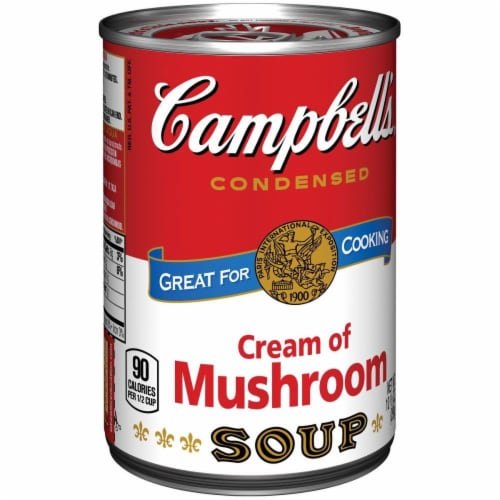
My mom was the casserole queen of Southern California. The woman could make a casserole out of anything – just add a can of Campbell’s Cream of Mushroom Soup and you’re good to go.
And remember: this was 1975.
Today, if someone sees something questionable in a photograph, they can enlarge it, sharpen it, run it through seventeen filters, ask AI to analyze it, post it on Reddit, and receive 4,000 conflicting opinions before lunch. We live in an episode of CSI.
In 1975, all you had was your copy of the Sears Catalog. Or your neighbor’s.
That was the technology.
Naturally, Sears was not amused. They had not yet come to the 21st century realization that any publicity, even bad, could be good for your brand.
The company explained that what people thought they were seeing was not a glimpse of someone’s willy but a printing defect. Something had apparently gone wrong during the printing process, creating a dark shape that looked remarkably like the tip of a penis to a population suddenly examining men’s underwear with the intensity of forensic investigators.
Which raises the most important question of all – not is it or isn’t it the gentleman’s baloney pony? but, why was everyone looking so closely in the first place?
This is where human nature enters the story. If Sears had printed a perfectly normal photograph of, hmm… let’s say a blender, with a strange black smudge or shadow on it, nobody would have cared. People would have assumed the picture of the blender had an unfortunate run-in with a printing press and turned the page. But put a mysterious dark shape protruding out the leg of a man’s underwear and suddenly everyone in America becomes an agent of the Federal Bureau of Investigation.
People stared. They tilted the catalog. They held it closer to the light. They showed it to other people.
“Do you see it?” “No.” “Look right there.” “Oh, my God… and think of the size of it!” “I know… right?”
The scientific method had been reinvented and repurposed.
There was no Facebook or X to “post” on, but there was something arguably more powerful: word of mouth combined with curiosity and absolutely nothing else to do, except maybe pop some Jiffy Pop on the stove.
The incident became one of those wonderfully peculiar pieces of pre-Internet folklore in which a mundane object suddenly acquires mythical status. The Sears Catalog was no longer merely just a catalog. Millions of copies had been printed and were in homes all across the country – we kept ours in the den, in a round wooden bucket containing magazines and the current phonebook (another 70s artifact) – yet somehow it had acquired the mysterious aura of a rare scroll with forbidden knowledge, the kind of thing Indiana Jones might go on a crusade to uncover.
And perhaps that’s the real reason the episode is so memorable.
It wasn’t really about underwear. Or penises.
It was about a simpler America – a time when a printed catalog arriving in the mail could generate a national conversation. No algorithms required. No influencers. No viral videos. No hashtags. Just one photograph, one suspicious-looking printing anomaly that might be and then again might not be, and millions of Americans thinking: “Well, obviously, I have to see this for myself.”
Looking back, the 1975 Sears Catalog scandal was perhaps the perfect cultural event for the times. It was simultaneously innocent, ridiculous, technologically primitive, and enormously entertaining. Today, the average person carries a device in their pocket or purse that gives them instant access to virtually every scandal in the news, sometimes seconds after it becomes public. In 1975, Americans had to wait for Sears to mail it to them. Or find a friend (neighbor, coworker, …) who already got their catalog and beg to see page 602. And somehow, that seems considerably more becoming.
Nothing in our culture says a thing, an event, or a place is significant like having a song written about it. So, yep… please enjoy the country music stylings of one Mr. Jack Barlow, recording under the pseudonym Zoot Fenster, with “The Man on Page 602.”
