
It is June, and that means it is LGBTQ+ Pride Month, commemorating the Stonewall Riots that took place on June 28th, 1969. The patrons at the Stonewall Inn that night had endured enough of being harassed for being “different,” so they overcame fear, they banished shame from their minds, and they fought back against the bigotry oppressing them. It was not a metaphorical fight. They were being beaten with police truncheons and arrested – their response was equal to the moment.
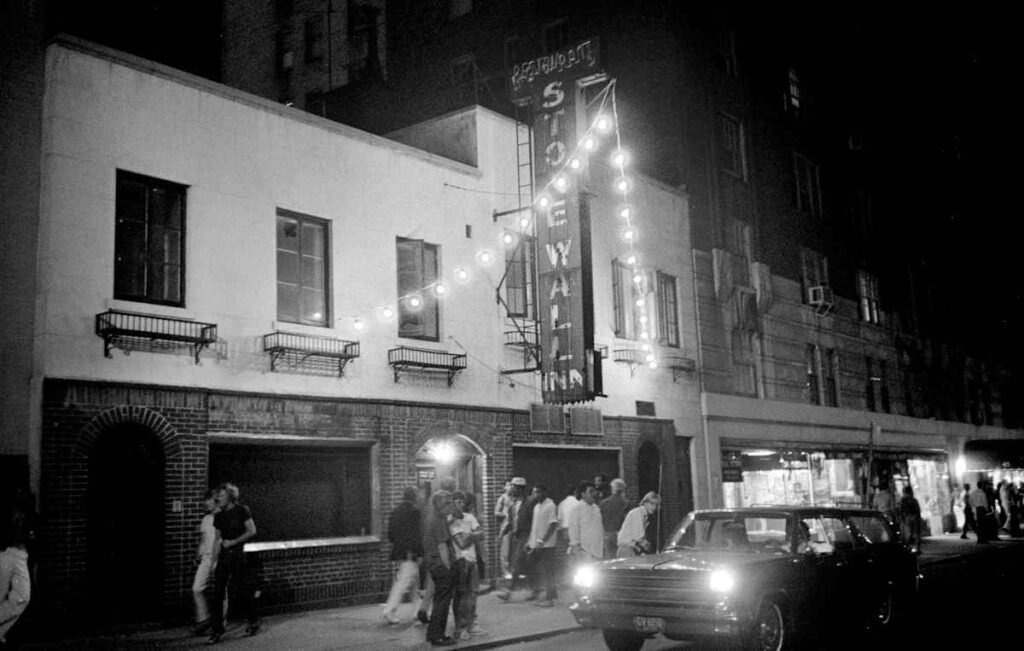
Today, we take pride in those early pioneers of what was initially called “gay liberation,” and from them we take an example – an example of resistance in the face of bigotry, of fighting when confronted with oppression, of standing your ground when small-minded prejudice would whip it out from under you. Today, thankfully, few of us are facing the business end of a police baton or the inside of a jail cell because of who we love or how we look – because of being born “different,” no better and certainly no worse than everybody else. But that does not mean oppression, harassment, and exclusion don’t still exist. Bigotry can be subtle and polite, yet it must be stamped out wherever and however it rears its ugly head. I want to tell you a story.
I am a huge fan of Freddie Mercury. It is probably obvious why – I think it has more to do with him than with his music, although I like the music too. I think all of us who are HIV+ see in him a kind of protomartyr, even though many died of AIDS before him.
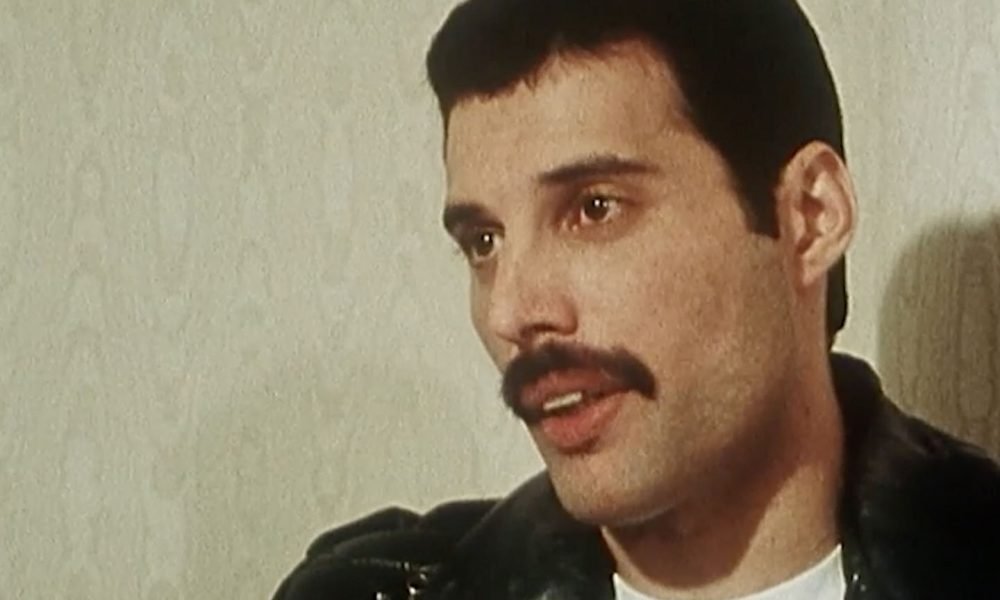
Rock Hudson may have died six years earlier, but for people of my generation that didn’t carry the emotional impact of Freddie’s death – Mr. Hudson belonged to our parents, Freddie belonged to us.
By now, everyone has seen Rami Malek’s Oscar winning performance as Freddie in Bohemian Rhapsody. It’s a decent film, riddled with holes any true fan of Freddie could drive a truck through, but decent nonetheless. However, stories about Freddie tend to focus on his tragic death from AIDS and not his life as a gay man.
That’s what I would like to call your attention to today, thoughtful reader. I want to tell you one of those stories about his life. Because for me it captures the true meaning of Pride. It’s one of those stories shared repeatedly by fans that is difficult to pin down, though, importantly, it is corroborated by an account of an incident at the Ritz in London found in Jim Hutton’s (Freddie’s partner) memoir, Mercury and Me, although Hutton’s telling is not as detailed as mine.
So my story here may not be a factual history or recounting of the event (indeed, I’ve relied on artistic license to recreate the scene and invent dialog for the characters who are, nonetheless, the ones who were there), but that doesn’t matter. The point, what we might call the “moral” of the story, is what I hope you’ll take away from it.
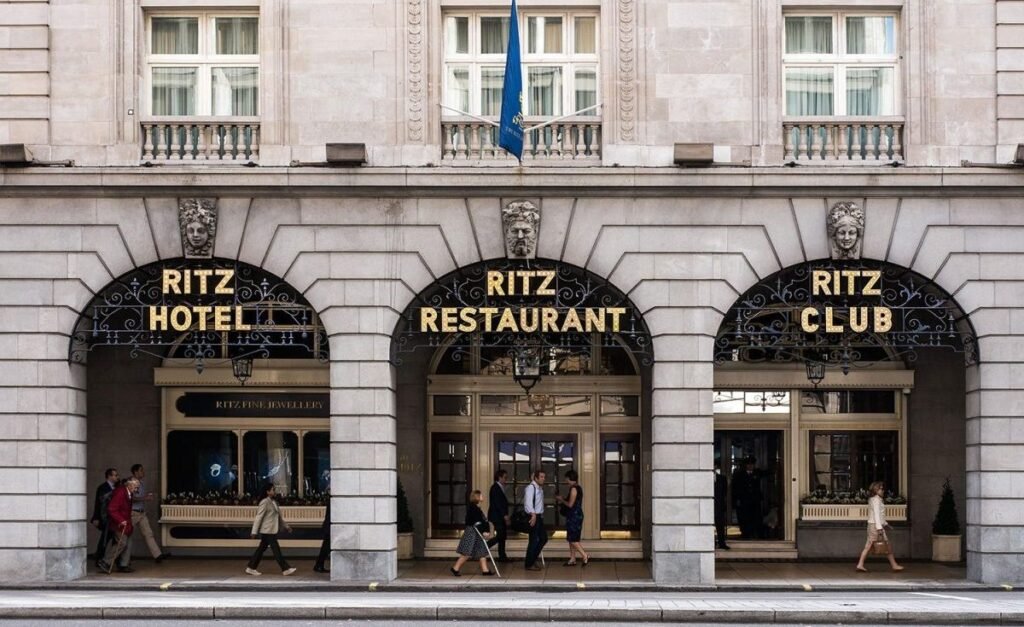
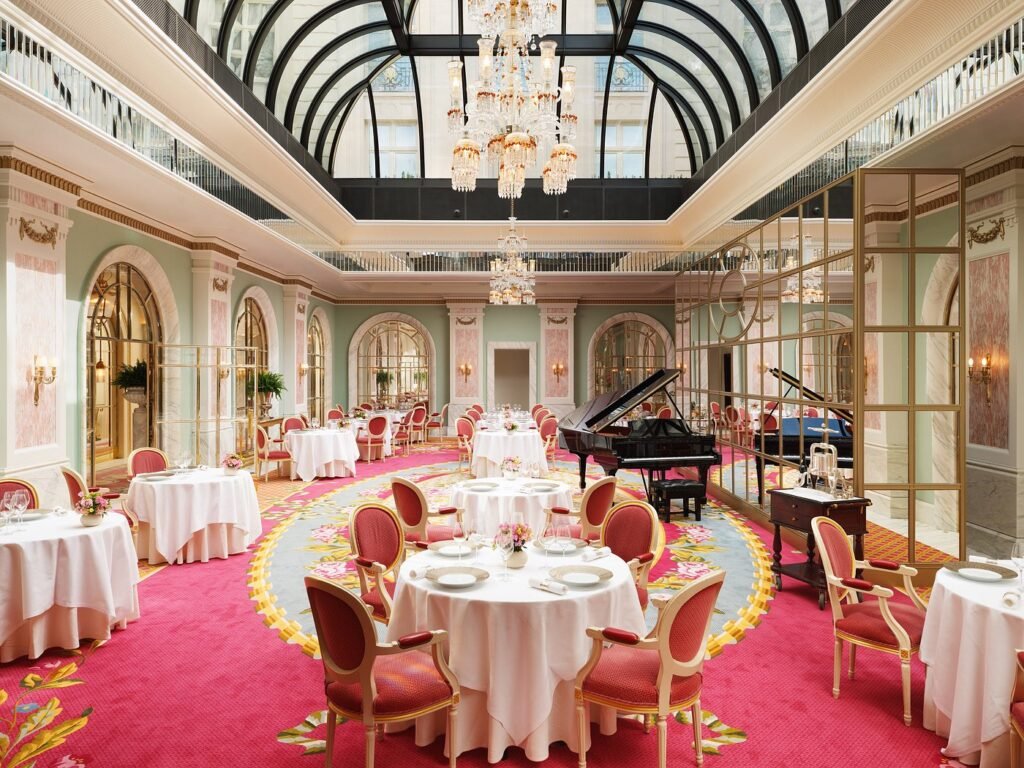
We are back in 1985. It is 8:30 on a Friday evening. We are at The Ritz Hotel in London, one of the most exclusive dining establishments in the world. Crystal chandeliers cast warm light across white tablecloths; a string quartet plays Brahms unobtrusively in the background. The dining room is full. Wealthy and prominent families, business executives, foreign dignitaries, English nobility and aristocrats – all dressed in their finest, all expecting the impeccable service the Ritz is known for. Freddie Mercury has just finished three gruelling days of recording sessions at Mountain Studios in Montreux, Switzerland, for Queen’s latest single inspired by the life of Martin Luther King Jr., “One Vision.” He flew back to London that afternoon, tired but satisfied with the work. He wanted a quiet dinner – something elegant, something peaceful – somewhere he could relax with his partner Jim Hutton and two close friends without being mobbed by fans or hounded by paparazzi. Like any of us after a hard day’s work, he just wanted to unwind.
Freddie called ahead for a reservation under his birth name, Farrokh Bulsara, hoping to avoid drawing attention to himself. The reservation clerk had been upbeat and professional: “Of course, Mr. Bulsara, 8:30 pm, table for four… we look forward to seeing you.” As Freddie walked through the front door – a black silk shirt unbuttoned at the collar, silver jewelry catching the chandelier light, leather jacket over one shoulder – he moved with the confidence of someone who’d performed before stadiums full of thousands of people and knew exactly who he was.
The head waiter, a man by the name of John Pemberton, took one look at the party coming through the door – the clothes, the jewelry, Freddie’s demeanor, the three men accompanying him, and decided this was not the kind of clientele the Ritz should serve. He’d worked at the Ritz for twelve years, rising through the ranks from bus boy to his current position; he was 38 years old, married, and a father of two. The stage was set for what is, sadly, an all-too-familiar battle. It is still being fought today.
Pemberton intercepted Freddie’s group before they could reach the maître d’ stand. His face was a practiced mask of professional courtesy, but his eyes were cold. “Good evening,” Pemberton said, positioning himself directly in Freddie’s path. “May I help you?” “Yes darling,” Freddie said with his characteristic campy warmth and a slight drawl, “reservation for four under Bulsara… 8:30.” Pemberton flipped pages and pretended to check the reservation book, though he could clearly see the name written there. He took his time, letting the silence stretch, and as he did, other diners began to notice the group standing at the entrance; Freddie Mercury was, after all, instantly recognizable to anyone who’d turned on a radio in the past decade.
“I’m sorry,” Pemberton said, looking over the rim of his glasses like a disapproving schoolmarm, not sounding sorry at all. “I’m afraid we don’t have that reservation.” Jim Hutton, standing beside Freddie, frowned and said, “We called this afternoon. They confirmed it.” Pemberton, pretending to care, replied, “Oh dear, well there must be some confusion,” his tone scolding Freddie’s party, suggesting the mistake was theirs.
Freddie pulled a small slip of paper from his jacket pocket. “I wrote down the confirmation number. Would you like to see it?” Pemberton shook his head dismissively, refusing to look at the paper. Instead, he lowered his voice just slightly, speaking in a hushed tone meant ostensibly only for their group, but loud enough that nearby tables could hear if they were intent on listening. “Sir, the Ritz maintains certain standards. We cater to a particular clientele. I’m sure you understand that this establishment may not be appropriate for your party.” The words hung in the air like a fart in church. Jim stiffened. Freddie’s two friends exchanged shocked glances. Several nearby diners had stopped their conversations and were watching now.
Freddie focused on Pemberton for a long moment with those dark, intelligent eyes that had stared down stadium crowds and music executives and every obstacle that ever stood in his way. “I’m sorry,” Freddie said in a quiet, civil tone, “I’m not sure I understand. What exactly do you mean by appropriate?”
Pemberton’s composure cracked just slightly; a hint of a sneer crossed his face. “I think you understand perfectly well, Mr. Mercury. The Ritz is a family establishment. We serve a certain type of guest, and frankly, we don’t serve your kind here.”
The words floated across the dining room like noxious fumes. All eyes were on the entrance and the real-life drama unfolding there. A woman gasped quietly, clutching her bosom as she did. A Member of Parliament stopped midbite, fork frozen halfway to his mouth. Jim Hutton took a step forward, anger flashing across his face: “How dare you?” Freddie put one hand softly on Jim’s arm. “It’s alright darling.” He was calm, almost gentle. Freddie turned to Pemberton,“You’re refusing to serve us because of what exactly? My appearance, my friends, or perhaps because you’ve made certain assumptions about who I am and who I love.”
Pemberton’s face flushed. He hadn’t expected Freddie to state it so directly, so calmly, so publicly. He played what he thought was the ace up his sleeve: “The Ritz has the right to refuse service to anyone.” “Indeed, it does,” Freddie agreed. “And I have the right to know why I’m being refused. So, I’ll ask again clearly so everyone can understand. Are you refusing to serve me because you believe I’m gay?” The dining room was completely silent, but for the chamber music being played by the string quartet which seemed wildly incongruous now, almost like the eight musicians on the deck of The Titanic who played to calm passengers during the ship’s sinking.
Every conversation had stopped. Every bus boy and waiter stood perfectly still. Every eye was on Freddie’s party at the entrance. Pemberton realized he’d made a huge mistake – not in denying Freddie’s party entrance but in doing it publicly. This should have been handled quietly and discreetly. But it was now a very public moment. Pemberton couldn’t back down now without looking weak, but he couldn’t confirm his prejudice without looking monstrous.
“I’m simply maintaining the standards of this establishment,” Pemberton floundered and said defensively. “By refusing service to someone based on who they love,” Freddie instantly clapped back, not as a question, but as a statement of fact. “I’m going to have to ask you to leave,” Pemberton said, his voice taking on a hard edge as he tried to reassert his authority. Freddie smiled a slight, wry smile.
“No,” he said.
Pemberton blinked. “Excuse me?” he said with a note of utter disbelief.
“No, I’m not leaving. I have a confirmed reservation. I called ahead. I’ve done nothing to warrant being asked to leave except exist in a way that offends your personal prejudices. So, no, I’m not leaving.”
“Then I’ll call security,” Pemberton threatened.
“Please do,” Freddie said, his voice still perfectly calm. “I’d very much like to have a security guard come here and explain to this dining room full of people why a paying customer with a confirmed reservation is being forcibly removed for no stated reason other than the head waiter doesn’t like how he lives his life.”
Pemberton was trapped. He could see it. Calling security would create an even bigger scene, but backing down now would humiliate him in front of the entire dining room and the staff watching from the sidelines. He tried one more time. “Mr. Mercury, please be reasonable…” Freddie cut him off, “I am being perfectly reasonable.”
“I’m a customer with a reservation trying to have dinner. You’re the one creating a scene. Now, are you going to seat us or would you like me to continue this conversation with your management?” Before Pemberton could answer, an older gentleman in an immaculately pressed navy blue suit with a lavender pocket square appeared, as if on cue, from the direction of the kitchen.
The restaurant manager, a Mr. Charles Whitmore, had been alerted by nervous staff members that something was happening out front. “Mr. Mercury,” Whitmore said, his voice professionally warm, but his eyes darting around to assess the situation and its impact on others dining as rapidly as he could, “I do apologize for any confusion. Your table is ready. Please… right this way.”
Pemberton’s face lost all color. “Sir, I was just…” Whitmore interrupted,“Thank you, John,” his tone making it quite clear this conversation was over. “I’ll handle this.” Whitmore personally escorted Freddie’s party to their table – not a hidden corner table, but a prominent position in the center of the dining room where everyone could see them. The message was unmistakable to all. Freddie and his party were welcome.
They were valued. They were not being hidden. “Again, apologies for the confusion,” Whitmore said as he pulled out Freddie’s chair. “Your dinner tonight is complimentary, of course, and please let me know personally if there’s anything I can do to make your evening more enjoyable.”
“Thank you, darling. That’s very kind, though I must say I’m perfectly happy to pay for excellent service. I’m just not interested in being discriminated against.” Whitmore nodded, understanding the unspoken message. “Of course, Mr. Mercury, please enjoy your evening.”
For the next two hours, Freddie and his party enjoyed a quiet, elegant dinner.
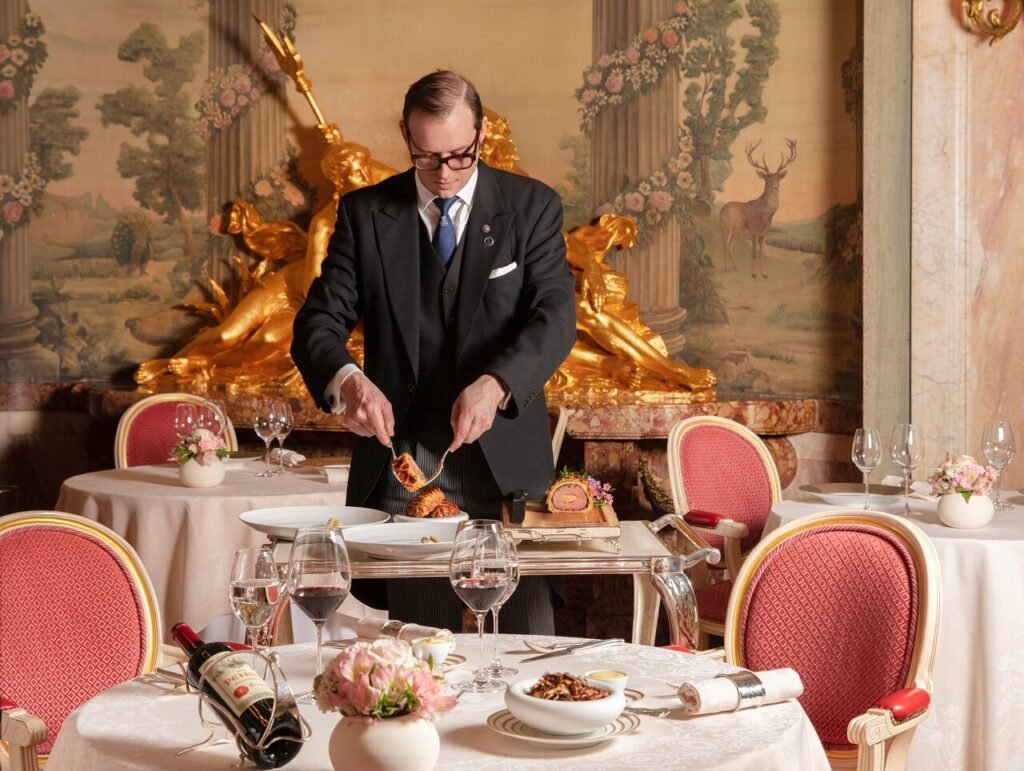
Freddie ordered champagne. They discussed the new single. They laughed. They enjoyed each course, the Dover Sole, the Beef Wellington, the Lemon Tart. Freddie was charming with the servers, touching them lightly on the shoulder and complimenting the food, flirting with the handsome ones. John Pemberton watched from across the dining room, standing stiffly at his post, knowing his career at the Ritz was probably over, but not yet understanding the gravity of the moment.
When the meal ended, Freddie asked for the bill, despite Whitmore’s offer of dinner on the house. “I pay for services rendered,” Freddie said matter-of-factly, “I only object to being denied them for no good reason.” The bill came to £247. Freddie left a £100 tip for the staff who’d served them so professionally and courteously. As Freddie and his party made their way out into a London night, they passed a sullen and defeated John Pemberton who nervously avoided making eye contact with them.
Freddie never spoke about the incident publicly. But, as I mentioned, many years later, after Freddie’s death in 1991, Jim Hutton wrote about it in his memoir. He described watching Freddie remain calm while being humiliated. Watching him refuse to leave or make a scene. He didn’t fight prejudice, with anger. He fought it with dignity.
This is the Freddie Mercury that doesn’t make it into documentaries and films about his flamboyant performances on stage, his incredible voice, or his tragic death. This is the Freddie who understood that dignity was a form of power. Who knew that staying calm in the face of hate was more effective than matching hatred with anger, however righteous it might have been.
Sometimes the most devastating response to prejudice is refusing to accept it while maintaining your dignity. The rioters at the Stonewall showed their pride by resisting a physical assault on their bodies, an assault perpetrated under color of authority. Freddie at The Ritz showed us we are still under assault – maybe not with clubs and handcuffs, but assault nonetheless. The assault of exclusion.
Freddie showed every LGBTQ+ man and woman forced by prejudice and hatred to stare down a bigot how to do so with charm, with grace, and with dignity. And pride.
