
Those of us who practice the ancient Greek philosophy of Stoicism have a saying: “the obstacle is the way.” In life, we encounter hardships, loss, disappointments, and failures, and they seem to block our path. Seeing them as “blessings” is more than just trying to put a positive spin on them. I look at it this way – when I come up against a barrier, it forces me to reconsider and re-evaluate, and in that process I look to the left and to the right which often reveals another way forward, and then I commit to that new path.
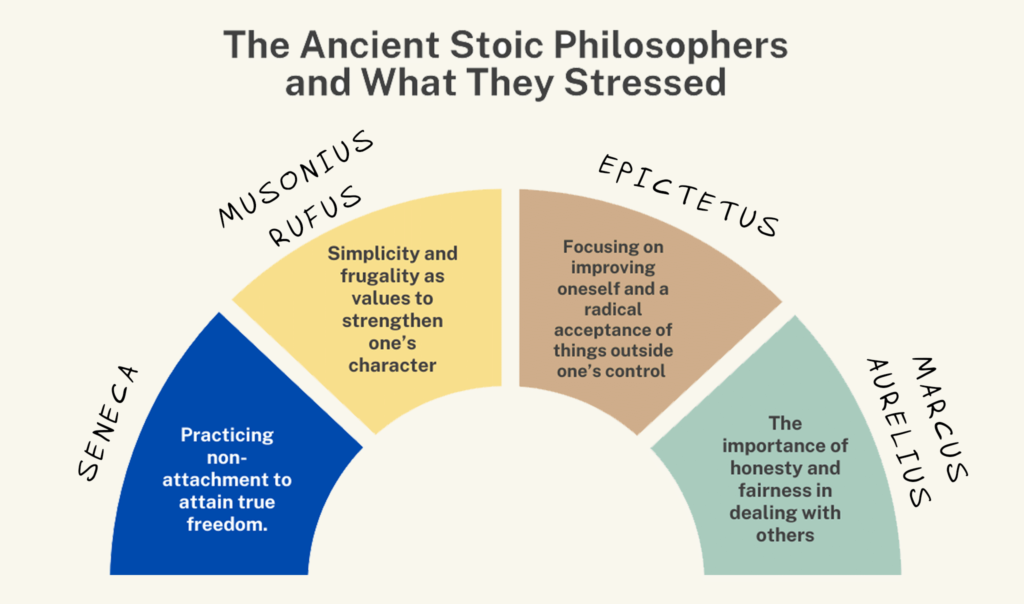
Nine times out of ten my new direction has been “better” than had I not been blocked in the first place; the other 10% of the time, while it’s not better it’s certainly not worse – in these cases, it is, I will say, merely “different.” This has been borne out by experience since I became a practicing Stoic seven years ago. It is easy in life to just push on, to march blithely forward without looking around and taking stock. When I consider the “betters” I’ve encountered after being stymied, I think of all I’d have missed were I to just take a bulldozer to the barriers. In that sense, obstacles are opportunities.
You are, no doubt, familiar with the song “My Way” by Frank Sinatra. Rather than talk about that iconic song’s triumphal celebration of living life on your own terms, this post is going to take you back to its origins, in France. The melody began as a 1967 French song called Comme d’habitude (which translates to “As Usual”), written by Claude François, Jacques Revaux, and Gilles Thibaut. The original lyrics describe a couple trapped in a loveless routine, going through the motions of daily life as their relationship falls apart.

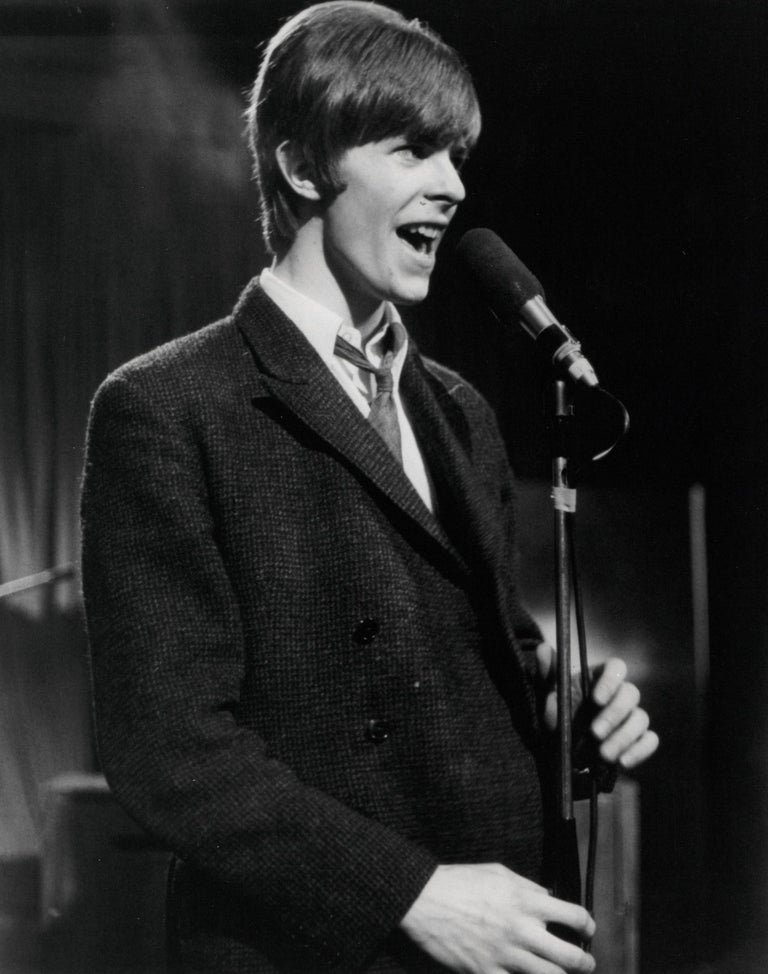
In England, the head of Essex Music, a man by the name of David Platz, wanted to adapt the song and release an English version, so he contacted a young, unknown songwriter who was under contract to his label and asked him to submit lyrics.
It was 1968, and that struggling, unknown artist was David Bowie. Bowie wrote new lyrics for the song that were true to its French theme, submitted them, and remained hopeful this would be his big break.
At the same time, while vacationing in France, Canadian singer-songwriter Paul Anka heard Comme d’habitude and thought the melody had tremendous potential. So he acquired the rights to create an English adaptation and, after hearing that Frank Sinatra was talking about retirement and feeling frustrated with show business, Anka decided to write entirely new lyrics tailored to Sinatra’s legendary career and larger-than-life personality. In composing what would become one of the most recognized songs of the 20th century, Anka didn’t translate the French words.
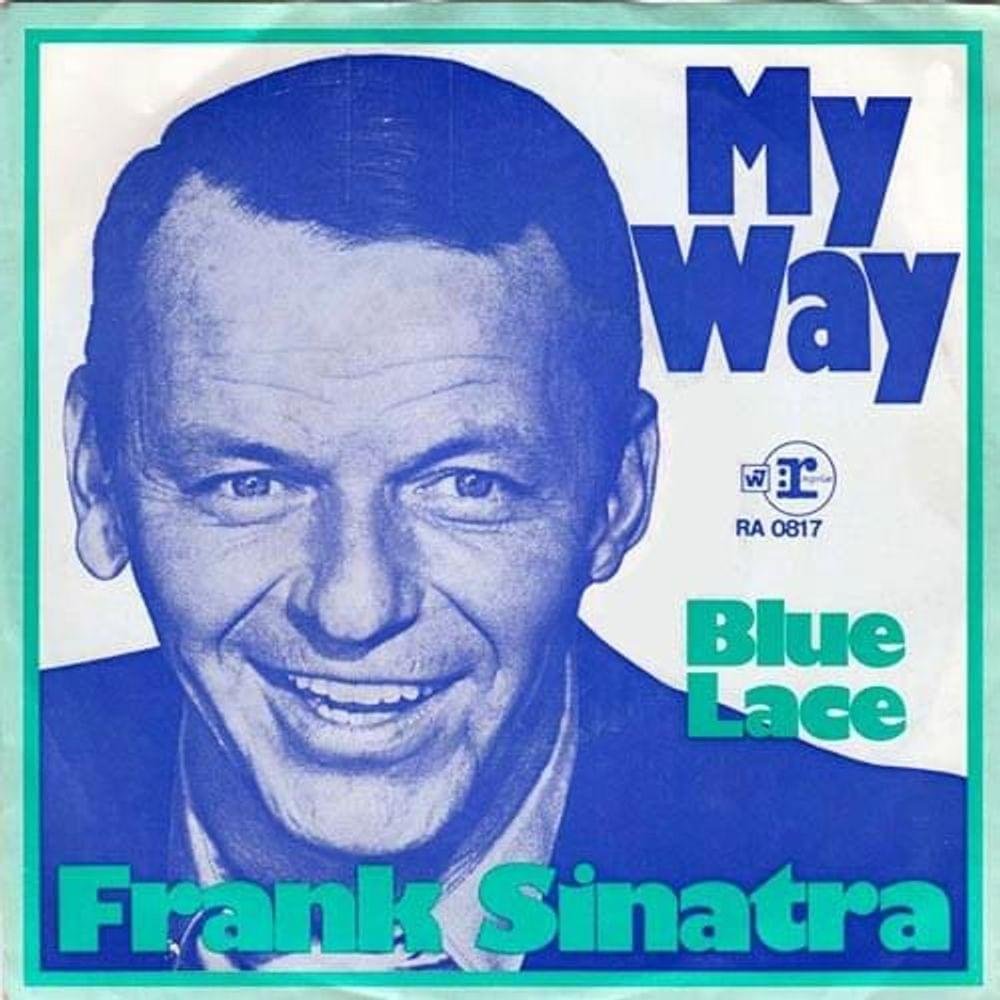
Instead, he wrote a completely different song, while remaining true to the original melody, about a man near the end of his life looking back proudly on his choices, mistakes, and accomplishments; he later recalled sitting at a typewriter in the middle of the night asking himself, “If Frank were writing this, what would he say?” Sinatra recorded Anka’s “My Way” in late 1968 and released it in 1969.
Although it was only a moderate hit in the United States, it became enormously popular in the United Kingdom where David Bowie heard it and recognized the melody instantly. In an interview with Michael Parkinson in 2002, Bowie recalled the experience:
I wrote some really terrible lyrics [to it]. I think I called it “Even A Fool Learns To Love.” I sent it back again and I thought that will be the last I hear of that. Then I hear it on the radio and I thought “That’s that tune, it must be my song… but hang on, these are different lyrics,” and it was Sinatra singing “My Way.”
Bowie would go on to tell Parkinson that hearing “My Way” and realizing both that his efforts had been rejected and the song was a huge hit, really upset him:
That really made me angry for so long – for about a year. Eventually I thought, “I can write something as big as that, and I’ll write one that sounds a bit like it.” So I did “Life On Mars?,” which was my sort of revenge trip on “My Way.”
Anka’s lyrics transformed the original melody into a statement about a life lived on one’s own terms; that concept fit Sinatra’s public persona almost perfectly and became inseparable from him. Not close to creating the cultural phenomenon that “My Way” became, Bowie’s “Life On Mars?” is a grand, hauntingly beautiful song about escapism in the face of reality, and no true music fan can call themselves that without listing it in their Top 5 greatest songs of all time. The sleeve notes for Hunky Dory, the album Bowie released the song on, referred to “Life on Mars?” as being “inspired by Frankie.”
When faced with an obstacle (rejection), Bowie used that experience to go in another direction. You could say the obstacle was his inspiration. The result was magnificent. In 2003 I spent a month’s salary on 7th row seats and heard David Bowie perform the song live – I was spellbound. This clip below is known to be his last performance, ever, before he died two days after his birthday in 2016 of cancer. He sang “Life on Mars?.”
