What do Cher, Madonna, Beyoncé, and Rihanna have in common? Besides all being mononymous? Ok, add Diana Ross and Lady Gaga. Girl singers? Well yah, thank you Captain Obvious. What if I add Elton John, Freddie Mercury, and Lil’ Nas X? Gay singers? Sure, but Cher’s not gay. I’ll throw in Divine and RuPaul. Gay celebrities? Uh huh, but they’re not all gay. Ok, you’re gonna get it this time: Judy Garland.
C’mon, think. You can do it. Geez, do I have to do everything?
Gay icons. They’re all gay icons. And no, that does not mean a rainbow colored symbol on your computer or phone screen by which you launch a gay app. To be a “gay icon” you need to resonate strongly with the LGBTQ+ community, often because of your artistry, resilience, camp appeal, or advocacy. You can be from the world of music, film, fashion, or beyond – that part’s not important, though it probably says something about me that most of mine are singers.
But there is someone missing from my list, someone often overlooked and rarely mentioned in this context. Someone as famous as the others, though with a penchant for carrots and not the spotlight. I grew up with him. He was on my TV screen every morning before school, and I watched him with a religious regularity that would put a monk to shame. He is one of my heroes, up there with Oscar Wilde, Pedro Zamora, and Gore Vidal. Ok, so he never wore pants, but that was a personal choice, and we need to respect people’s personal choices.
I am of course talking about Bugs Bunny.
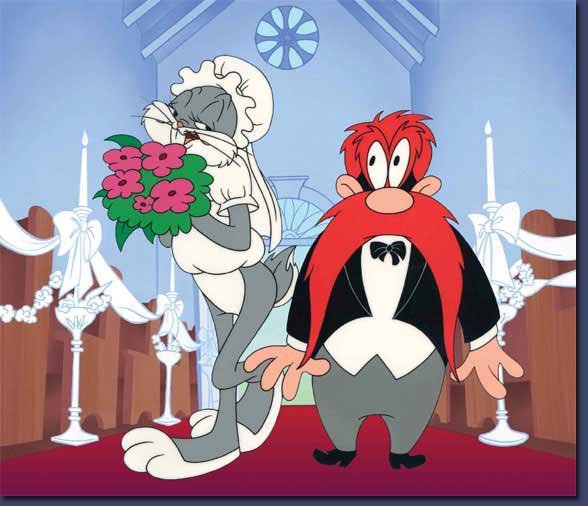
Bugs not only experimented with gender presentation (making him one of the first non-binary or gender fluid characters in TV or film) but was often depicted marrying a man at a time – the 1950s – when acknowledged homosexuality could get you fired from the State Department. With all the talk about what is and what isn’t appropriate for children to see, I thought it was about time to bring Bugs out of the closet.
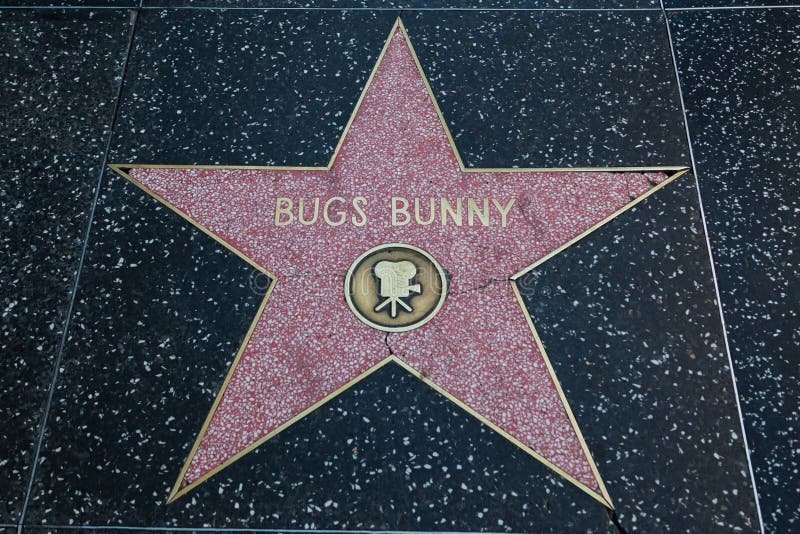
In the 1990s, animator Chuck Jones – one of the creators of the “wascally wabbit” we all know and love – said he had always thought of Bugs Bunny as “transexual,” using a term we no longer use but was common at the time to describe trans people. Bugs made his theatrical debut in the 1930s as part of Looney Tunes, quickly becoming its marquis star and mascot with his sly, quick-witted, camp persona. Today, Bugs ranks as the ninth most-portrayed film character worldwide, according to the Guinness Book of World Records. He has a star on the Hollywood Walk of Fame.
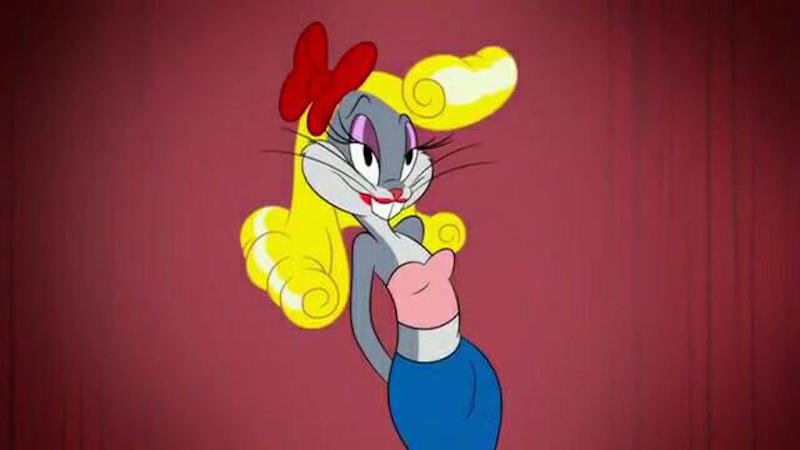
Drag was often a way for Bugs to get out of a sticky situation, but it was never just farce – his frequent and unapologetic gender-bending was as much a part of his persona as chewing on a carrot and his signature catchphrase, “Eh… what’s up, doc?”
More often than not, the drag was a tool in evading Elmer Fudd, the bumbling hunter always on his tail (so to speak) – Bugs would successfully charm his archenemy and could live to fight another day. Dressing up as everything from a mermaid to a cancan dancer to a female Viking with blond braids, Bugs was not making fun of femininity, but, in fact, showing how it was a source of power to be reckoned with, and all this at a time when the Hays Code banned “sex perversion or any inference to it.”
It is important to point out that Bugs was aware of the fact that as a woman he would be underestimated, and no one would expect his conniving plans. This is not mere hijinks, it is social commentary. It is feminism before feminism. In the 1930s, no one would have called Bugs gay, though he is a barely shielded example of what is known as queer coding.
In 1995, Eric Savoy argued in an article for The Ohio State University Press that academics needed to explore Bugs, and cartoons in general, seriously for his/their cultural impact:
I am particularly interested in recuperating Bugs Bunny as a queer cultural icon, a parodic diva, whose campy excess and canny games are profoundly though tacitly indebted to the African-American tradition of Signifyin(g), especially in the potential to short-circuit the self-congratulation of an impercipient adversary.
Savoy adds, “Bugs Bunny parodies ‘woman’ in order to insert himself into Elmer Fudd’s heterosexual fantasies and heterosexist compulsions; to sabotage this script he offers duplicitous signs of femininity, signs which are patently transparent and constructed to us, but entirely opaque to Elmer’s gendered (il)logic.”
In these days of a malignant narcissist and his cabal of sycophants waging their so-called “war on woke,” there’s something comforting, satisfying, and clearly political in holding a beloved character up as a queer icon. It is time to give Bugs his due.
I think Charles M. Young summed up Bugs best when he wrote in the Village Voice (known for being the country’s first alternative newsweekly) in 1975, “after pulling a fast one on Elmer, Bugs always had the presence of mind to put on a tutu and pirouette into the forest, or play his carrot like a fife.”
