
You all know I live in Palm Springs, and you may think you know “what” Palm Springs is. A city in the desert. Yes. Renowned as a getaway for the rich and famous. Yes. Winters like the mildest Spring in other parts of the world. Yes. Summers like the surface of the sun. Yes. A golf course or swimming pool every ten feet. Exaggerated, but yes.
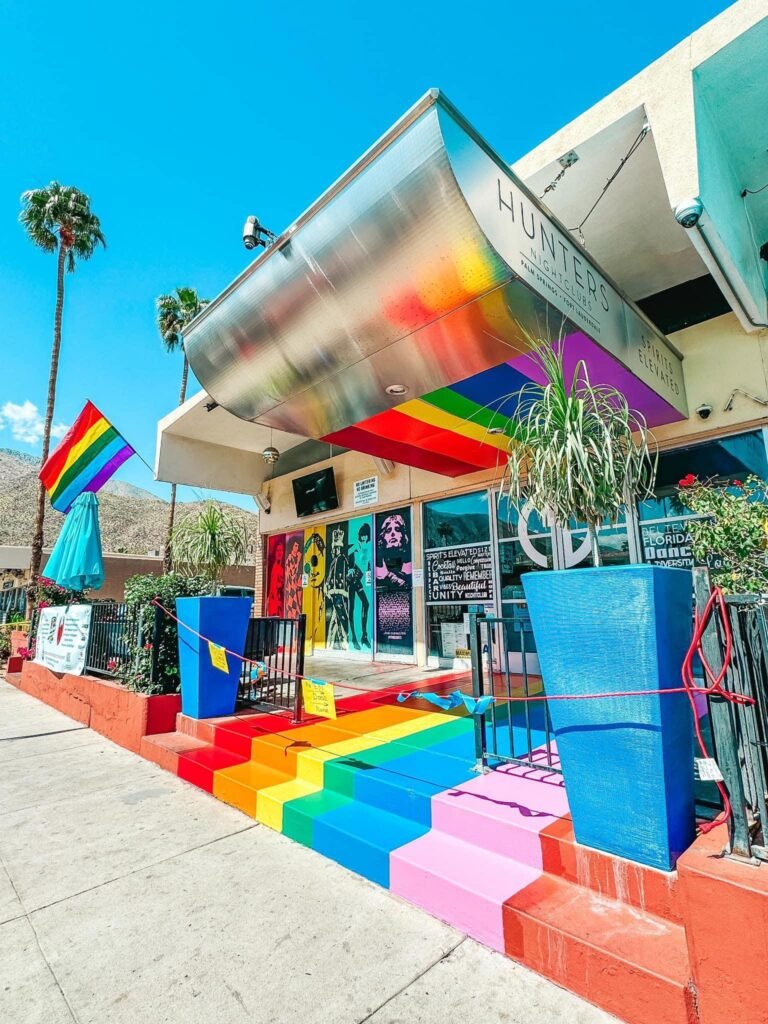
The largest LGBTQ+ population of any city in the United States. No, not exactly…
The New York metropolitan area has the largest LGBTQ+ population of US cities (somewhere around 706,000), followed by San Francisco (with 247,000). But Palm Springs is #1 when you consider the percentage of the city’s total population that identifies as members of the LGBTQ+ community: 30-50% of Palm Springs residents are LGBTQ+, compared to 5% of New Yorkers and 7% of San Franciscans.
It’s a math thing – PS has a smaller overall population than NYC or SF, so its number of LGBTQ+ residents is higher when considered in relation to total city residents. Now, wasn’t that fun? It’s about learning. This blog is all about learning.
What you may not know is Palm Springs is synonymous with mid-century modern design. Starting in the 1930s, architects and designers were drawn to the area’s sunny climate and dramatic desert landscape. The result was a distinct regional style known as Desert Modernism, characterized by clean lines, open floor plans, integration of indoor and outdoor spaces, use of novel materials, and a playful engagement with the desert environment.
In recognition of the city’s cultural value and its architectural significance, Palm Springs was named one of America’s Dozen Distinctive Destinations by the National Trust for Historic Preservation in 2006 and later was designated to be one of the United States’ Preserve America Communities.
And we celebrate all that in February each year beginning next week with Modernism Week: a festival of architecture, design, culture, and community drawing thousands of visitors from around the world. For architecture enthusiasts, design professionals, and cultural explorers alike, Modernism Week has become one of the most anticipated design events anywhere. It began in 2006, the year before I moved here, as a grassroots initiative, growing out of local programs focused on mid-century architecture, and today is run by a nonprofit organization dedicated to public education and outreach with a mission of celebrating and fostering appreciation for mid-century and modern architecture, design, and cultural heritage, while also supporting historic preservation, sustainability, and education in architecture and design fields. You can find out more at the Modernism Week website.
At the heart of Modernism Week are the architecture tours, which offer unparalleled access to some of the most significant buildings in Palm Springs. This includes “home tours” – a chance to tour private residences, many of which are seldom open to the public, including the legendary Alexander Estate, nicknamed the “House of Tomorrow,” where Elvis and Priscilla honeymooned in 1967.
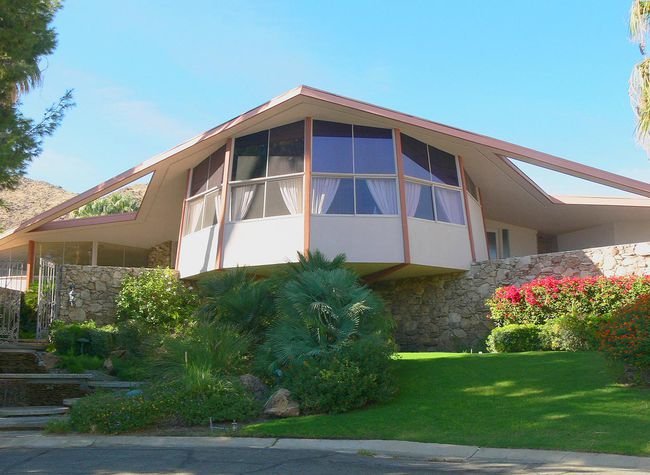
Designer Michelle Boudreau has given the home a fresh update, honoring its mid-century pedigree while making it shine anew. As someone who adores thoughtful design, it is incredibly moving to see such care taken to preserve this piece of pop culture.
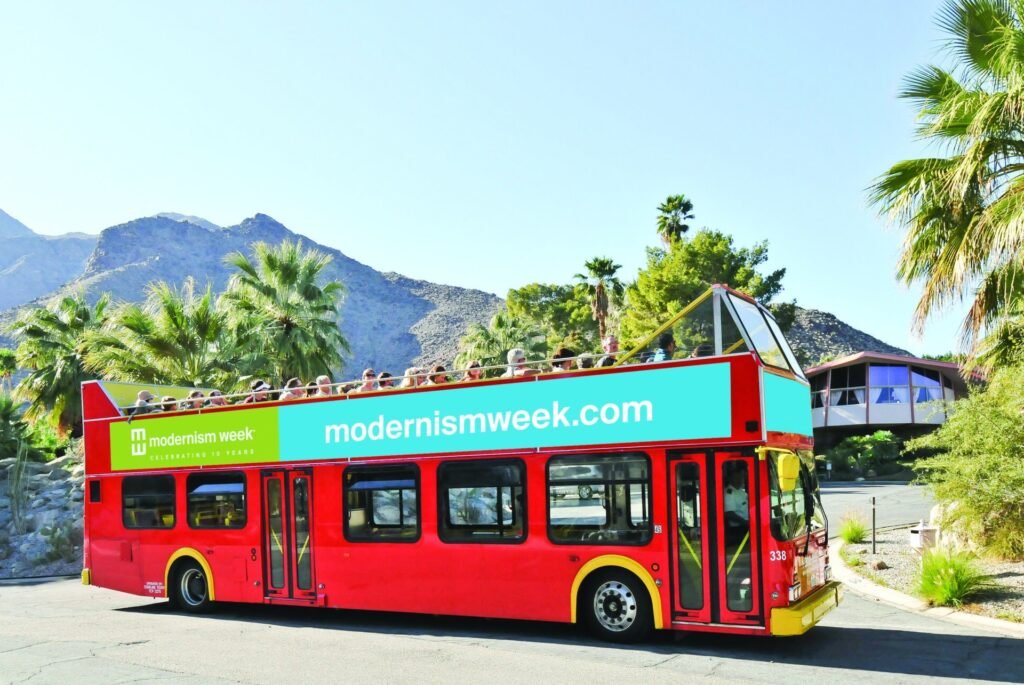
If you want a broader view of architectural history and context, the famed double-decker Modernism Week bus provides guided tours of residential and commercial areas. These tours are narrated by architectural historians and provide insight into community development and stylistic influences.
There are also guided neighborhood walking tours which take you through the city’s many historic districts, allowing for a deeper understanding of how visionary ideas were adapted to local climate, culture, and lifestyle.
So if you were afraid you’re too old (and let’s face it, you probably are if you read this blog!) for the Coachella Valley Music and Arts Festival, better known as just “Coachella,” one of the largest, most famous, and most profitable music festivals in the United States and the world held in nearby Indio every April, why not consider Modernism Week in Palm Springs for your Coachella Valley adventure?
But it’s not all about the buildings! Mid-century modern is an ethos and Modernism Week highlights that with events that showcase Palm Springs’ broader cultural engagement:
- Keynote presentations and lectures by influential architects, designers, and scholars who explore topics ranging from historical preservation and sustainability to current trends in design and urban life
- Film screenings that focus on design, architecture, and mid-century culture
- Art and design exhibits that celebrate modernist influence in graphic art, furniture, and industrial design
- Social and entertainment events such as vintage trailer shows, classic car exhibitions, live music, and cocktail parties that evoke the atmosphere of 1950s and 1960s Palm Springs
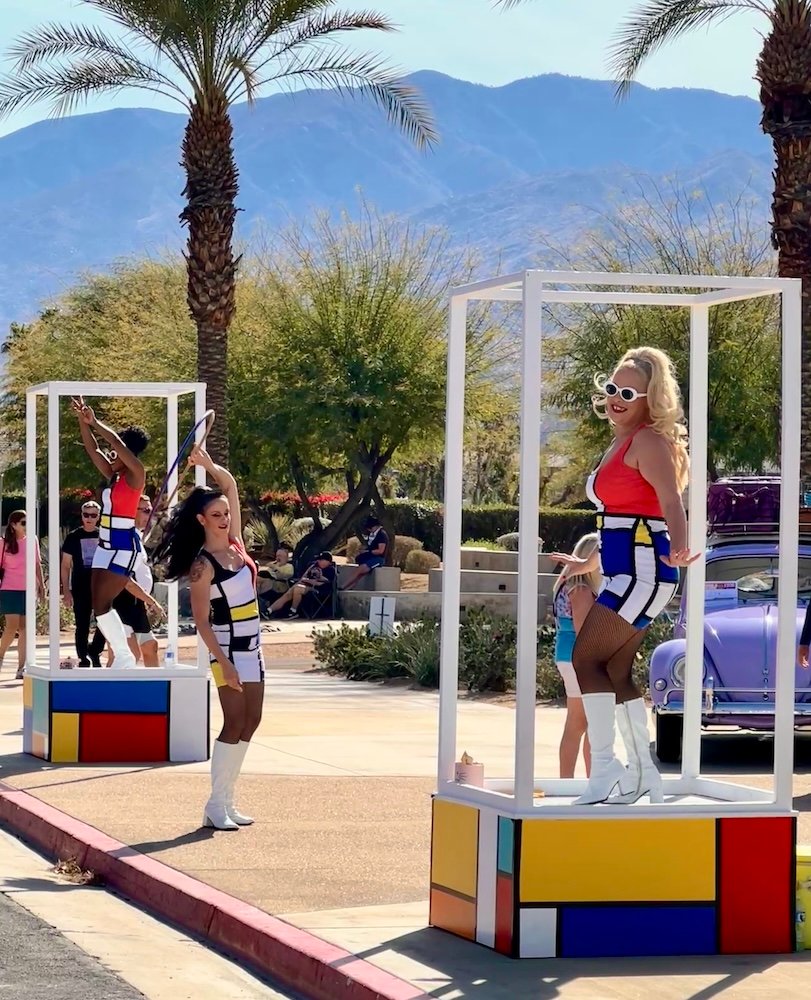
These cultural components allow attendees to not only observe but experience the lifestyle and social culture associated with modernism, from fashion and furnishings to film and nightlife. Like these retro go-go dancers along Palm Canyon Drive in Piet Mondrian miniskirts (at left). Modernism Week also places a strong emphasis on education and preservation, offering scholarships for students pursuing careers in architecture and design, helping to cultivate the next generation of creative thinkers and leaders.
Mid-century modernism was a design movement that emphasized clarity of form, integration of environment, and innovative use of materials. Palm Springs’ Modernism Week is more than just a showcase for that; it is a celebration of design, culture, community, and history. So come and experience one of the most influential design movements of the 20th century, set in the heart of the California low desert (there’s a “high” one further north – it’s a big state folks!)
Outside of Modernism Week, Palm Springs has endless ways to make you fall in love with it. Take a ride on the Palm Springs Aerial Tramway, which whisks you in a rotating glass car from the desert floor to an alpine forest 8500 feet above on Mount San Jacinto in just ten minutes. Once you reach the top, the air is cool, the view will take your breath away, and you didn’t even have to hike up a mountain to see it! Plus the lodge (called “Mountain Station”) offers fine dining and drinks to go with the view.
The view from San Jacinto is the most sublime spectacle to be found anywhere on this earth!
John Muir
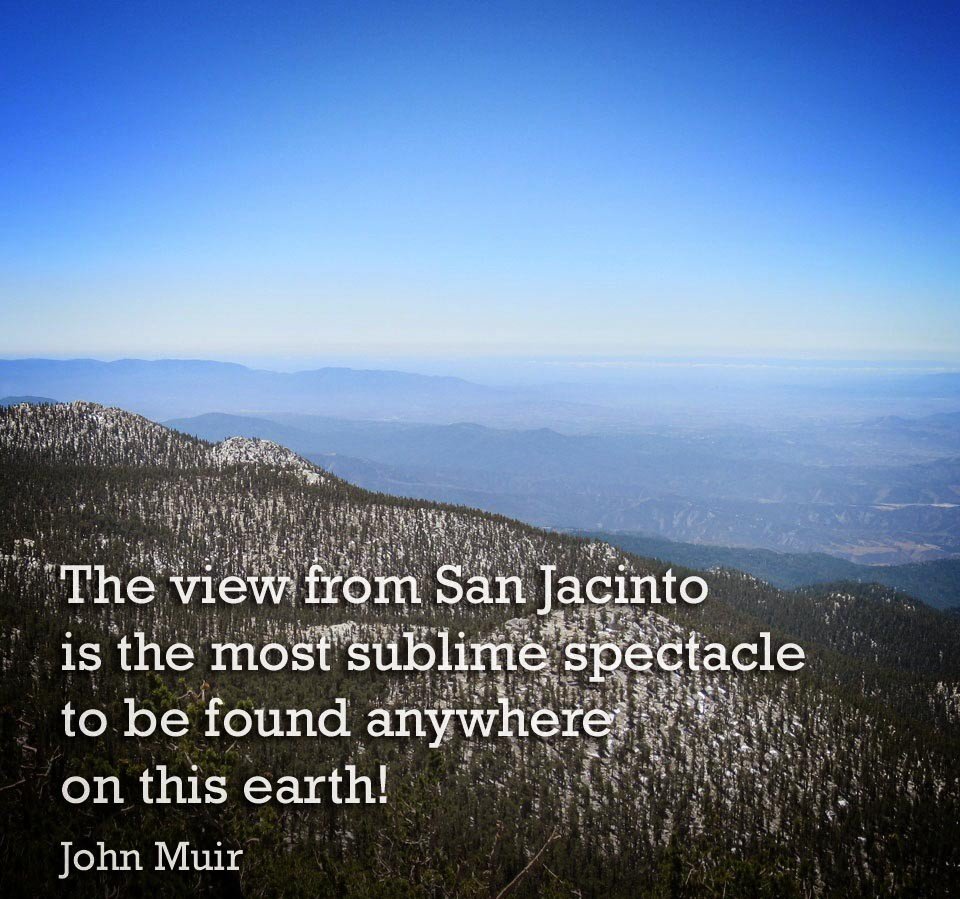
That from John Muir, the American naturalist, author, environmental philosopher, botanist, zoologist, glaciologist, and early advocate for the preservation of wilderness in the United States. But don’t take my, or John Muir’s, word for it… see above. Better yet, come and see the view from atop Mount San Jacinto for yourself.
The food scene is, well, let’s just say there’s a reason I now weigh a whopping 250 pounds! I’m a foodie! From places like Truss & Twine, a cocktail bar that celebrates the history of drinks in America from the Golden Age through to today’s modern classics with food sourced from the region’s farmers markets and prepared before guests in a small open kitchen at the bar, to Copley’s – a fine dining venue built in Cary Grant’s former guesthouse, to ordering Sinatra’s favorite – Steak Diane – at one of his hangouts, Melvyn’s at the Ingleside Estate, or bumping into Barry Manilow while ordering a Flat White at Koffi, our local version of Starbucks, Palm Springs has it all.
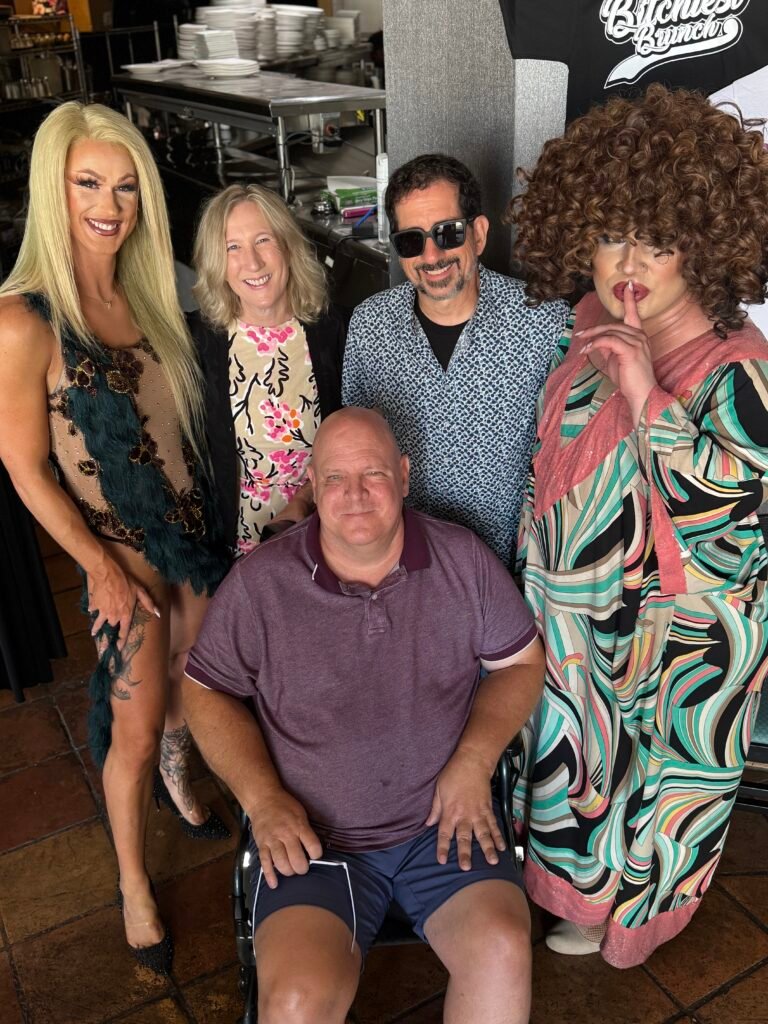
We’ve even got “drag brunches” like Bitches Who Brunch (held at Oscar’s downtown every Sunday).
At left: Sharon Needles, my friends Amiee and Mike, Anita Mann, and me seated at Bitches Who Brunch.
Do you know your drag name?
Take the name of your first pet, and the name of the first street you lived on as a child, combine them, and voilà! Mine is TAFFY LOUISE.
And don’t forget Tiki culture: not just a novelty in Palm Springs, but part of the city’s DNA. Originating in the United States during the 1930s, Tiki culture blended Polynesian-inspired décor, escapist fantasy, and rum-forward cocktails into an immersive experience that transported guests far from the humdrum of everyday life. After World War II, the movement exploded as returning servicemen brought home memories of the South Pacific, beginning a nationwide fascination with all things tropical..
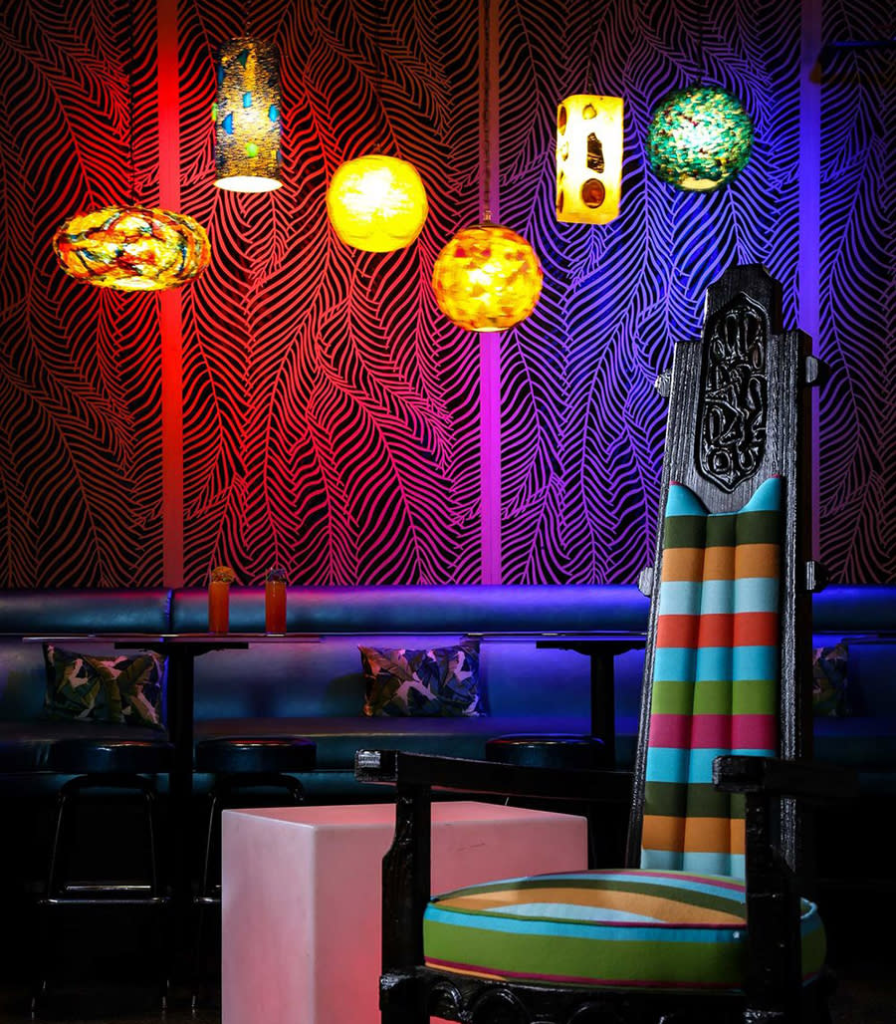
Palm Springs embraced Tiki wholeheartedly, becoming one of the phenomenon’s most important desert outposts. So be sure to stop into Toucan’s Tiki Lounge (literally nextdoor to my residence), Bootlegger Tiki, Tonga Hut, or The Reef at Caliente Tropics, to name but four.
When I read about the evils of drinking, I gave up reading.
Henny Youngman
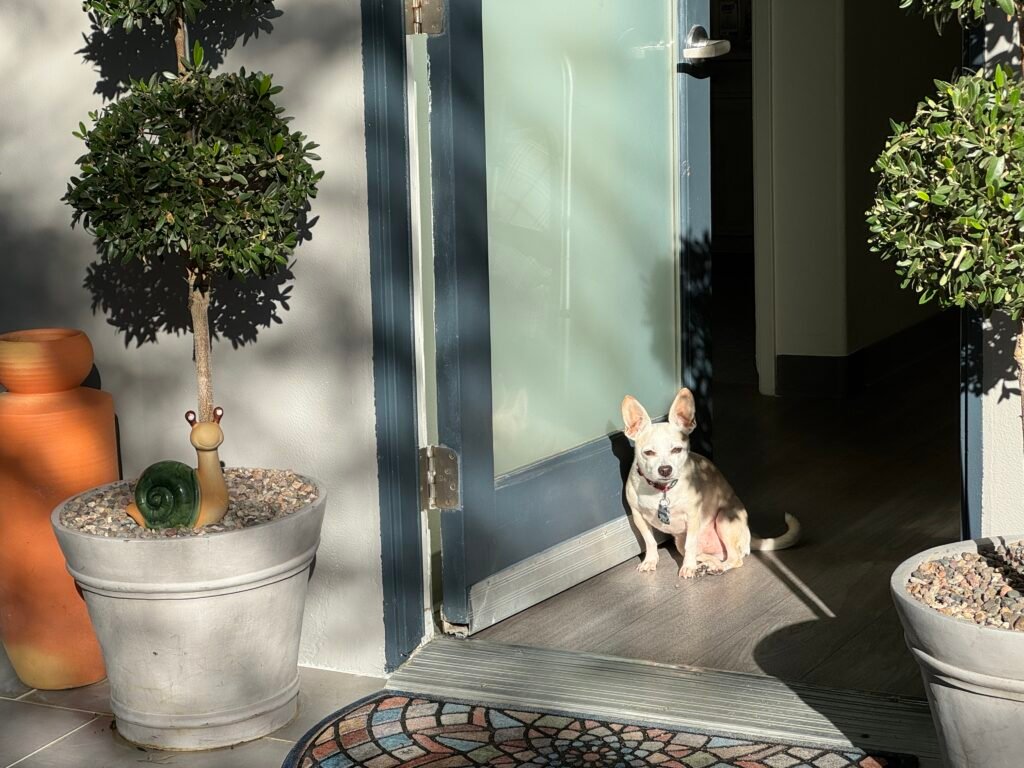
And let’s not forget the number one reason to visit Palm Springs: my dog Gordon. But bring treats with you. He doesn’t just roll over on his back with his legs in the air for a pat on the head and a “good boy” …
although I might!
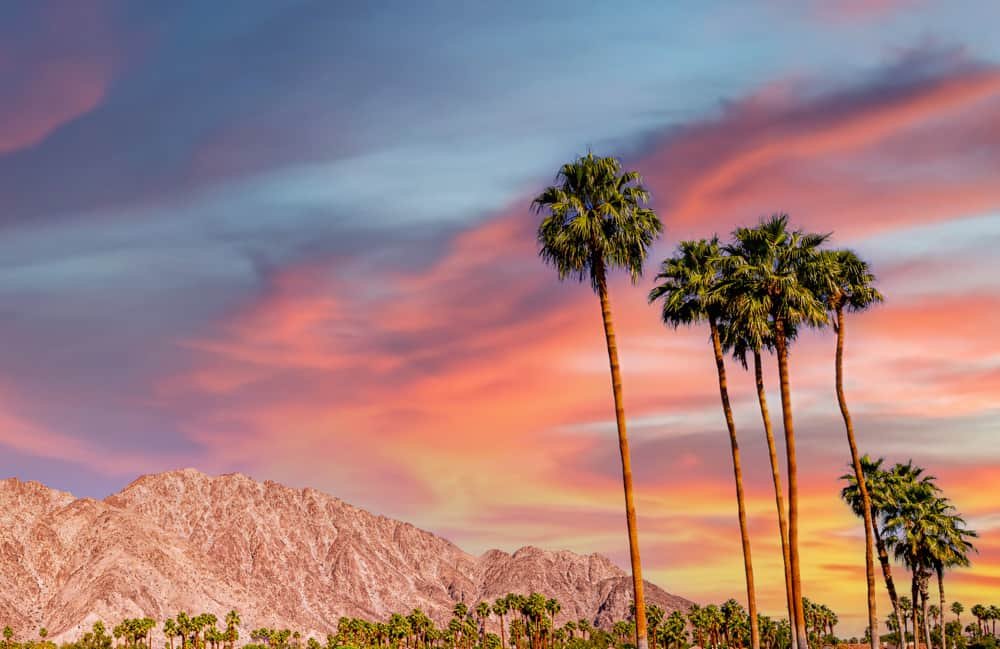
I love my city. I love its people. I love the desert. I love Mount San Jacinto. I consider myself very fortunate to live here. Where else on the planet can you wake up to this?…
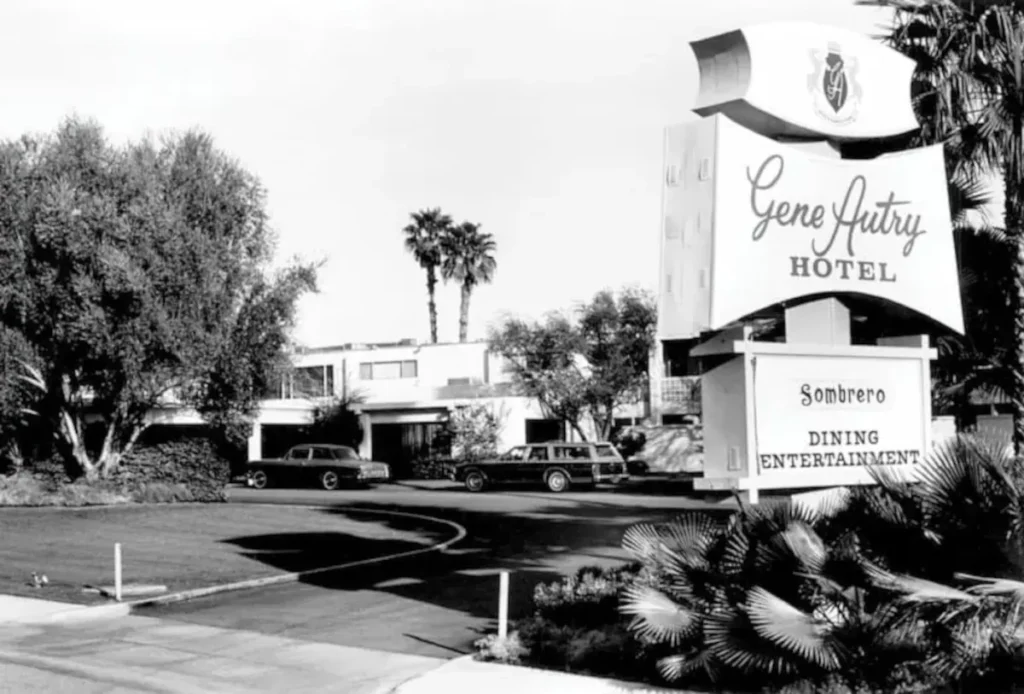
My roots here are deep and date back to when I was a small boy and my parents would bring me to Palm Springs for weekend getaways since it was a quick two-hour drive in our Pontiac LeMans from the LA suburb of Glendale where we lived. The place we used to stay, the Gene Autry Hotel, became the Givenchy Spa, then Merv Griffin’s Resort Hotel, and today is The Parker Palm Springs (that place I took you, Peter, with the $1000 caviar omelette) at 4200 E. Palm Canyon Drive – I now live six miles up the same road. And after graduation from high school, a friend and I spent a week at the historic Palm Springs Tennis Club, established in 1937, complete with courts, lodging, and a palm-fringed pool, learning how to play a game with balls. No, not that one!
And I’d love to share Palm Springs with you and show you what it’s really all about if you’d like to come visit. But remember, bring treats for Gordon.
