
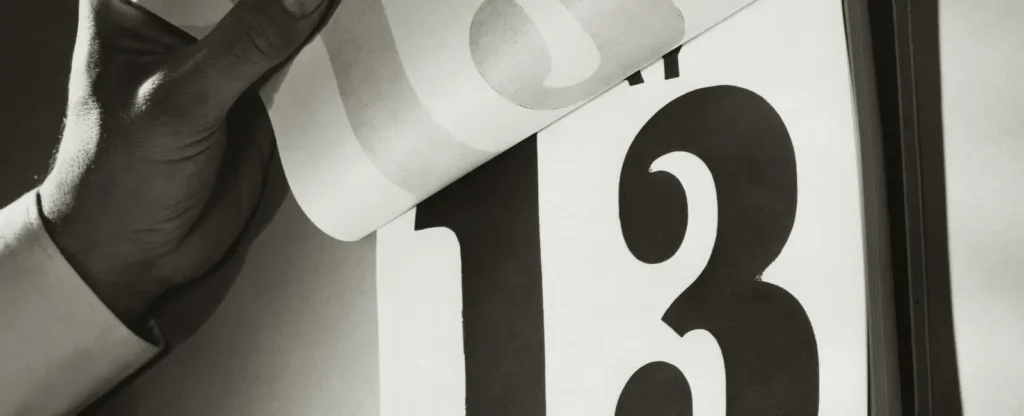
This post has thirteen paragraphs; the thirteenth word of every paragraph is 13. I undertook this task partly because today is Friday the 13th, and partly because for all my education (in Philosophy, logic, and rhetoric no less) I am still afraid of the number 13. I have written about this before (here), and triumphantly declared I was over this irrational, nonsensical fear known as triskaidekaphobia – that may have been overstating a fact, because while I am no longer paralyzed by the number I still find it upsetting and go out of my way to avoid it. I am not alone. Many people around the world harbor a deep fear of the number 13 and this anxiety shapes architecture, travel, their decisions, and private rituals in ways that are sometimes subtle and sometimes dramatic.
Across many centuries and diverse cultures ordinary people deeply feared the number 13 and passed stories down through generations to justify their caution. In some traditions, a thirteenth guest at a feast was said to invite betrayal or death, reinforcing the idea that imbalance followed the addition of one more seat at the table. Oral histories embroidered coincidences into cautionary tales, turning accidents into omens. Over time, repetition hardened these narratives into assumed truths. What began as scattered myths gradually solidified into shared expectations, teaching children to flinch at the number before they could even explain why.
Not convinced? All you have to do is consider how the number 13 manifested in the life of Arnold Schoenberg, a prominent figure in the world of music who revolutionized classical composition with his unique atonal and twelve-tone techniques. Born on September 13, 1874, in Vienna, Austria, Schoenberg’s life became intricately intertwined with the number that caused him great distress. Like me, he suffered from triskaidekaphobia; he was known to skip over the thirteenth step on a staircase and refused to sit in the thirteenth row of a concert hall. This fear of the number extended to his opus numbering system, where he deliberately numbered his compositions 12, then 14, 15, and so on. Still think I’m nuts? Well, on a seemingly ordinary summer’s day, Friday, July 13, 1951, Schoenberg died at the age of 76 (7+6=13). Explain that with all your science and your logic and your AI!
In many tall modern office buildings architects often omit floors labeled as 13 and tenants rarely question the jump in numbering. Elevators glide from twelve to fourteen as if nothing is missing, quietly affirming the superstition through design. By erasing the number from public view, builders symbolically banish bad luck, even though the physical level still exists between its neighbors. Many airlines skip certain cabin rows to avoid the number 13. Builders and flight crews may privately dismiss the superstition, yet corporate policies often defer to customer comfort. The absence becomes a marketing gesture, signaling sensitivity to unease. Such accommodations illustrate how business balances empirical knowledge with consumer psychology, recognizing that fear, however unfounded, can influence purchasing decisions and brand loyalty.
Psychologists describe the persistent dread of unlucky outcomes tied to the number 13 as a specific phobia shaped by conditioning and expectation. A single negative event occurring on a thirteenth day can become a powerful anchor in memory, convincing someone that the date itself caused the harm. Confirmation bias then filters future experiences, highlighting every inconvenience that coincides with the number while ignoring countless neutral moments. Over time, avoidance behaviors strengthen the fear by preventing corrective experiences. Without opportunities to disconfirm the belief, anxiety calcifies, making the superstition feel increasingly justified and real.
Some researchers link heightened anxiety responses specifically to expectations surrounding the number 13 suggesting that anticipation alone can trigger stress hormones. When individuals brace for disaster, their bodies react as though a threat is imminent, tightening muscles and sharpening attention. This physiological arousal can impair judgment, increasing the likelihood of mistakes that then appear to validate the fear. In this way, prophecy becomes self-fulfilling. The mind, primed to detect danger, interprets ambiguity as evidence, weaving ordinary setbacks into a narrative of numerical malevolence.
Folklore often tells cautionary tales about gatherings that include exactly the number 13 portraying the final arrival as a harbinger of chaos. These stories rely on dramatic tension, inviting listeners to anticipate the moment when harmony fractures. By assigning blame to a number rather than to human choices, communities externalize misfortune and preserve social bonds. The mythic pattern repeats across regions, adapting to local customs while retaining its central warning. Through repetition at festivals, firesides, and family dinners, the narrative lodges in collective memory, ready to surface whenever thirteen chairs surround a table.
Religious traditions sometimes interpret sacred texts as warning believers about the number 13 though theological scholars debate such readings intensely. Symbolic numerology has long fascinated commentators who search scriptures for hidden patterns and divine messages. In some interpretations, twelve represents completeness, making thirteen appear excessive or disruptive by contrast. Yet other faith perspectives assign no negative meaning at all, emphasizing context over arithmetic. The diversity of views underscores how interpretation shapes belief; numbers themselves remain neutral, while communities project spiritual significance onto their orderly sequences.
In popular culture horror films repeatedly exploit audience fears of the number 13 using ominous music and shadowed calendars to heighten suspense. Screenwriters understand that a familiar superstition provides instant atmosphere, requiring little explanation. When a plot unfolds on a foreboding date, viewers anticipate calamity before the first startling scene. This shared expectation amplifies tension, proving that cultural myths can function as efficient storytelling tools. By dramatizing the fear, entertainment both reinforces and satirizes it, allowing audiences to confront their anxieties from the safety of a theater seat.
Economists have even studied market behavior during dates marked by the number 13 searching for anomalies in trading patterns. Some analyses suggest minor dips in consumer activity, while others find no statistically significant effect. The mixed results reveal how difficult it is to isolate superstition from broader economic forces. Nevertheless, the very act of investigation acknowledges that belief can influence financial choices. If enough participants hesitate simultaneously, their collective caution may briefly ripple through markets, demonstrating that perception, not just policy, shapes economic reality.
Despite skepticism many otherwise rational individuals still avoid encounters with the number 13 adjusting travel plans or rescheduling important meetings. Friends may tease them gently, yet the discomfort feels authentic and immediate. Rational arguments often falter against visceral unease, because phobias operate beneath deliberate reasoning. The conflict between intellect and emotion can produce embarrassment, prompting sufferers to hide their avoidance strategies. Such secrecy perpetuates the illusion that the fear is rare, when in fact many quietly share it. Social silence allows the superstition to persist unchallenged in everyday life.
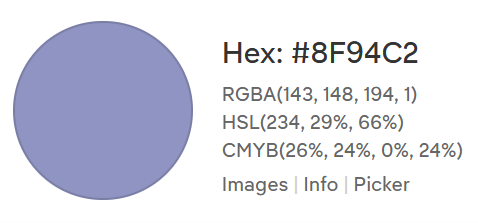
For me, I made one change to my website this Friday the 13th and I am now convinced it will bring the whole thing crashing down! All I did was change the icon color to the muted periwinkle at right, but I’m certain that something truly terrible is going to happen to the site.
Ultimately confronting irrational beliefs can transform attitudes toward the once feared number 13 turning a symbol of dread into a neutral or even empowering sign. When individuals examine the origins of their anxiety, they often discover a patchwork of stories, coincidences, and cultural cues rather than concrete evidence. Recognizing this foundation allows space for curiosity instead of panic. Some people even reclaim the number, choosing it deliberately for jerseys, addresses, or celebrations as a declaration of resilience. In doing so, they reveal that meaning is not fixed within digits but created within the human mind. For my part, I’ll probably just sit in my apartment all day and worry about my website. By the way, this morning’s post has exactly 1300 words in it!
