
In case you’ve forgotten, Donald Trump descended his golden elevator in Trump Tower to announce his first candidacy on June 16, 2015. His announcement was a masterpiece of the meandering Trump nonsense we’ve come to know so well that included a joke comparing ISIS to inadequate air conditioning, and this assessment of Mexican immigrants:

When Mexico sends its people, they’re not sending their best. They’re sending people that have lots of problems. And they’re bringing those problems with us. They’re bringing drugs, they’re bringing crime, they’re rapists, and some, I assume, are good people.
Now, depending on how you parse that last sentence, Trump is either saying that Mexican immigrants are drug addled criminals and rapists, with some good people as exceptions, or that he assumes that Mexican rapists are good people. Maybe a little rapey, but good eggs (or huevos) on the whole.
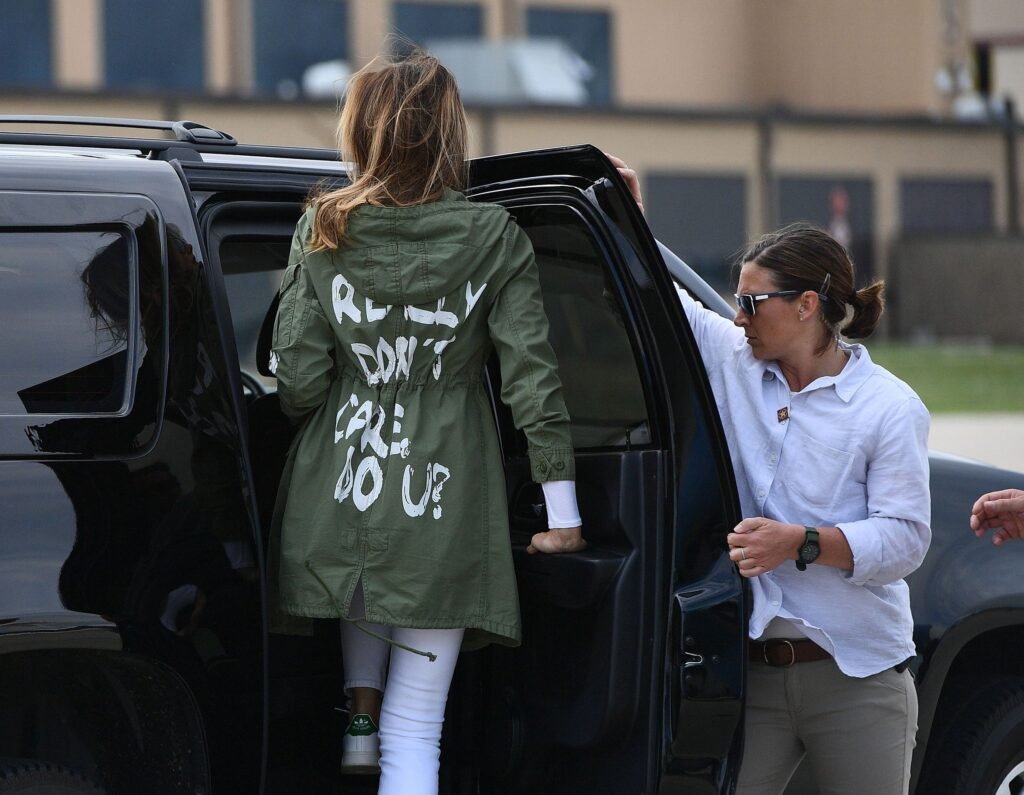
It was a harbinger of things to come. Remember “very fine people on both sides” in August 2017, after a deadly white nationalist rally in Charlottesville, Virginia? How about January 2018’s “shithole countries?” And let’s not forget Melania Trump’s “I really don’t care, do you?” jacket she wore during a visit to a migrant child detention center in June 2018.
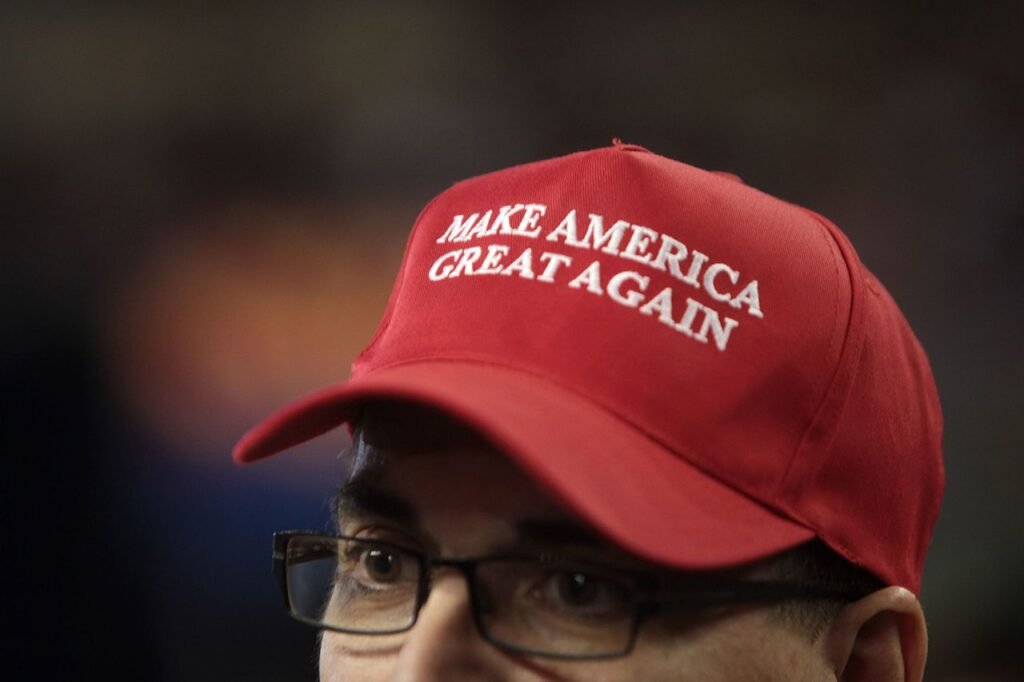
The question that many of us struggle with is how Trump, his family, and his MAGA movement garners such loyalty in his supporters, especially when many of them have yet to see any personal benefit (such as an improvement in their economic situation, unless your name is Bezos). Electing a president is a self-centered endeavor, as it should be. I vote for the guy (or gal) that aligns with my values and promises to promote them. So Trump’s two victories speak volumes.
People aren’t drawn to authoritarian dictators by the utopian promises they make, such as “jobs,” “law and order,” or “a restoration of American greatness,” but rather the promise of punishment for some other group(s) that will be humiliated, excluded, silenced, or destroyed. The appeal isn’t hope, it’s vengeance. Hannah Arendt, Erich Fromm, and modern researchers all point to this: authoritarian movements thrive less on love of the leader than on permission to hate with legitimacy.
When life feels chaotic or unfair, a dictator who comes along and offers a simple story – you are good; they are the problem – provides a simplistic moral clarity that is emotionally comforting. The idea of justice is replaced with a thirst for schadenfreude: supporters may feel wronged, ignored, or culturally displaced, but seeing an “enemy” suffer feels like balance being restored, even if their own lives don’t materially improve. And a feeling of powerlessness is supplanted by what I might call “power by proxy” – people with little real power can feel powerful when the state acts violently (against their perceived enemy) on their behalf. You could almost summarize it as “misery loves company” – “I may still be struggling, but at least someone I despise will suffer.”
This seems to be the playbook in use by not just Trump in America, but Orbán in Hungary, Modi in India, Erdoğan in Turkey, and others like Bolsonaro in Brazil and even Putin in Russia (where “the West” and/or NATO are cast as the enemy).
Trump is a particularly archetypal case of this because he made punishment explicit, performative, and entertaining, often more central than policy itself. When people say of this administration, “the cruelty is the point,” they are hitting on this very dynamic. Trump’s hardcore supporters – the so-called MAGA movement – really don’t expect him to govern well, they expect him to hurt the right people loudly. His “norm busting” wrecking ball is seen by his supporters as a kindof purity test: anyone who could break norms so freely must be outside the corrupt system which is, they perceive, harming them.
Trump’s genius, if you can call it that without throwing up in your mouth a little, is understanding something many politicians avoid saying out loud: for a large segment of the electorate, politics is not aspirational; it is retributive. That’s why his support has proven so durable. Even when promises fail, scandals pile up, or institutions push back, he provides moral license:
- to hate openly
- to enjoy humiliation of opponents
- to feel powerful without structural change
In Strangers in Their Own Land, sociologist Arlie Russell Hochschild describes her experience spending five years living amongst conservative white working-class voters in Louisiana, many of them Tea Party, and later Trump, supporters.

Importantly, she didn’t debate them: she listened, trying to understand how politics feels to them emotionally. And in so doing she identifies what she calls a “deep story” (not facts, not ideology, but emotional logic):
- You’ve been waiting in line for the American Dream
- You’ve followed the rules
- And now you’re watching others – immigrants, minorities, women, elites – cut ahead, helped by the government and cultural institutions
- And you’re told you’re a bad person for being angry about it
Trump comes along and tells you:
- The line is real
- The cutters are real
- I will stop them, shame them, and push them back
So the appeal of Trump and MAGA isn’t “My life will get better,” it’s “Someone finally admits I’ve been wronged, and will punish the people who did it.”
This is the part in the post where, having diagnosed the ailment, I offer my prescription to treat it. But I do not have one. I only hope that mentioning it will make it top of mind for people who still care about decency and civil rights, and someone will come up with an antidote before it goes too far.
Hmmm, “goes too far.” I think it already has.
