
As a joke, I texted my friend and his wife a clip I saw on YouTube over the weekend. The clip begins with a Tammy Faye Bakker-esque woman with her hand on the shoulder of a young boy who looks to be about eleven or twelve. The boy is totally kitted-out in late 80s gear: MC Hammer pants, puffy then tapered and gathered at the ankles, white, hi-top leather sneakers (that were worn and dirty – you’d think if you were going to be videoed you’d make an effort and at least put on a clean pair of shoes!), and he was sportin’ a mullet. Yes, mullets happened and we are all to blame because no one said anything. His t-shirt is a pale blue and declares his love for the son of the almighty alongside an image of the Jesus fish (actually called an Ichthys).
The Tammy Faye lady says a few nice words about God and then hands a microphone to the boy. Some really punchy, bouncy, bass-heavy music starts playing and the boy starts rapping to it while gyrating about in what I’m sure he thought was dancing but actually looks like he’s having an epileptic seizure. He is so out of breath from his rhythmic exertions that he has to occasionally stop to inhale. His signature move appears to be spinning around 360 degrees on one foot before he launches into the chorus:
God is doing a new thing… God is doing a new thing. You know he’s doing it… What? A new thing.
I only watched about a minute of it before forwarding it to my friends; since we are all products of that decade I thought they’d get a kick out of the heavy 80s vibe.
Mike, like me, is a recovering Catholic, and his wife was raised in a very strict Jehovah’s Witness community which she rejected long ago. The three of us have talked religion over tacos many times; we religiously observe our annual holiday tradition of going out for tacos at Christmas, which we call “Navidad Tacos.” We’ve even had shirts made! This is mine (at right).

So I sent along the video. Mike responded, “Awesome! Find out where he’s preaching now and we’ll go hear him,” to which I responded, “oh I’m sure by now he’s stowed away in a secured facility somewhere, heavily sedated and under constant supervision.” And that was the end of it, or it should have been.
That was Saturday. It is now Wednesday. My plan, good people, was to write this morning about the history and cultural relevance of the classic PB&J (peanut butter and jelly sandwich). But no. Every time I pause, every time I take a sip of coffee, every time I’m sitting on the toilet, yesterday while playing Microsoft Solitaire on my laptop, even right now as I am typing this, I get…
God is doing a new thing… God is doing a new thing. You know he’s doing it… What? A new thing.
in my head. It’s relentless. The syncopated bass line, the breathless vocalizing, even the squeaky sound of the boy’s sneakers on the floor. I’m about ready to poke my eardrums with an awl. But of course doing violence to my inner ear wouldn’t stop it, because I’m not actually “hearing” it.
I am experiencing what is commonly referred to as an “earworm.” Earworms are a fascinating psychological and neurological phenomenon, bridging the worlds of music, memory, and cognition. They have nothing to do with sound.
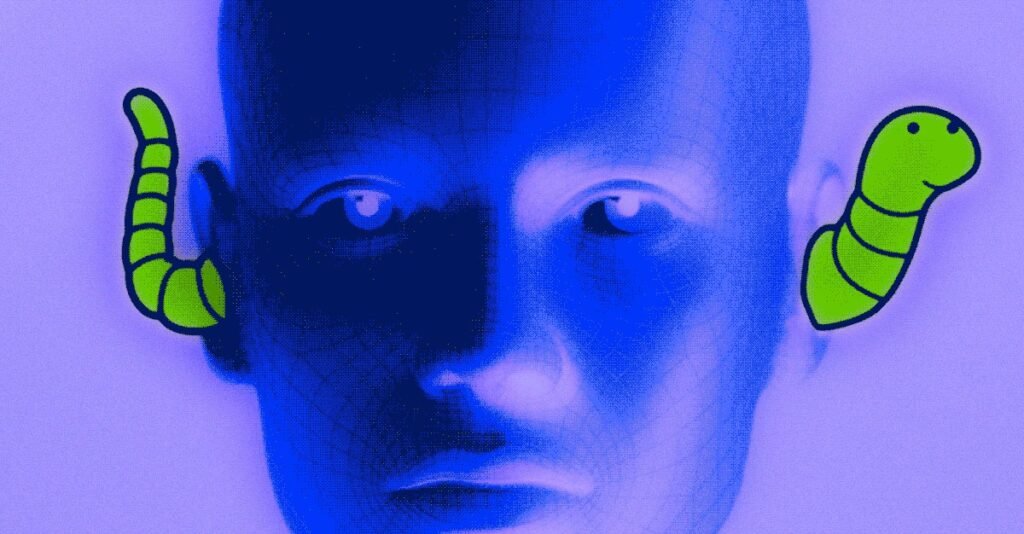
An earworm, also known as “involuntary musical imagery,” or INMI, in scientific terms, is a segment of music that continually repeats in a person’s mind without conscious effort. The term “earworm” comes from the German word ohrwurm, literally translated as “ear-worm,” and it usually involves short, repetitive sections of a song, such as God doing his new thing.
The phenomenon of earworms has been the subject of extensive research in neuroscience and psychology. One widely accepted theory relates to “incomplete cognitive processing;” when the brain is exposed to a melody but does not “resolve” it (perhaps because the song was interrupted or only partially heard) the mind may replay it repeatedly to finish processing it – essentially, your brain is trying to “complete the loop.”
Another widely-held explanation involves the brain’s memory and reward systems. Catchy songs often contain patterns that are easy for the brain to encode: repetition, simple rhythms, predictable melodies, and strong hooks. The brain recognizes these patterns and enjoys mentally rehearsing them, creating a pleasurable loop. Neuroimaging studies suggest that the auditory cortex, motor planning regions, and emotional centers of the brain are all activated when earworms occur – this overlap of memory, motor imagery, and emotion may explain why some songs feel as though they are exerting a physical force over you, coercing you to tap your foot or hum.
Research has identified several traits that make a song particularly likely to become an earworm:
- Repetition: Songs with repeated phrases or choruses are more “stickable.”
- Rhythmic and melodic simplicity: Simple, predictable melodies are easier to mentally rehearse.
- Distinctive hooks: A unique or surprising musical element catches attention and lodges in memory.
- Emotional resonance: Songs linked to strong emotional experiences are more likely to replay involuntarily.
- Short length: Short, compact musical phrases are easier to loop in your head.
A classic example is the chorus of “Baby Shark” or the main riff from Queen’s “We Will Rock You” – they are repetitive, simple, and rhythmically engaging, making them prime candidates for earworms.
Studies show that earworms are extremely common. Surveys indicate that up to 98% of people experience earworms, with most experiencing them several times a week. Interestingly, certain personality traits and cognitive styles correlate with earworm frequency: people who are neurotic, highly imaginative, or musically inclined tend to report more frequent earworms. I’m not sure what that says about me. Who are they calling neurotic!?! Age also plays a role, with young people reporting more frequent earworms than older ones; this could relate to both neurological plasticity and lifestyle differences, as exposure to repetitive pop music is more common in younger generations.
People have developed coping strategies to manage unwanted earworms; some common techniques include:
- Listening to the song in full: Completing the musical loop can satisfy the brain’s need for closure.
- Replacing the song with another song: A technique called “cognitive substitution.”
- Engaging in mentally absorbing tasks: Reading, solving puzzles, or other activities that demand cognitive resources can help dislodge the tune. I tried Microsoft Solitaire yesterday… I got to Level 7!
- Chewing gum: Yes, really! Studies suggest that engaging the motor system used in articulation can disrupt the subvocal replay of a tune.
In rare cases, earworms can be associated with “musical hallucinations” in neurological disorders, such as in certain types of hearing loss or after brain injury. This suggests that the line between ordinary earworms and pathological auditory experiences is a thin one, relying heavily on context and individual brain function.
Earworms burrowing into your mind are more than just an annoyance – they are a window into the brain’s interaction with music, memory, and emotion. They illustrate how repetition, predictability, and emotional resonance can make certain melodies “stick” and how our brains attempt to process and complete patterns involuntarily.

They also reveal the power of music in human existence, showing that even a short melody (or a video on YouTube) can leave a lasting impression.
I just want it to stop. Anyone got any gum?
