
Few things in life are more satisfying than bread. And when it comes to bread, there really is only one choice: the baguette. The baguette is one of the simplest breads in the world, yet it is also one of the most beloved. Made from only a few basic ingredients — flour, water, yeast, and salt — the baguette demonstrates how simplicity can produce extraordinary results.

One of the most important features of a baguette is its texture. A well-made baguette has a crisp, golden crust on the outside and a soft, airy interior on the inside. This contrast creates a satisfying eating experience. The crust crackles when bitten, while the inside remains light and chewy. Many foods are enjoyable because of texture alone, and the baguette achieves a balance that feels both rustic and refined. The long, thin shape of the bread also helps maximize the amount of crust, which many people consider the best part.
If you find yourself in Paris at one of its boulangeries (bakeries), which I am reliably informed are on almost every corner (so, like Starbucks here in the US), the thing to do is order a baguette de tradition, or simply ask for une tradition. A baguette can only be called a baguette de tradition if it follows specific rules set by law. The Frenchies are not messing around when it comes to their bread! The law, known as Loi Pain (“Bread Law”), stipulates that a baguette de tradition must be mixed, shaped, and baked on site using just four ingredients: flour, water, yeast, and salt.

I don’t get to Paris often, or ever, but rarely a day goes by that I don’t crave a baguette. Fortunately, there is one American fast-food chain that offers them, Panera Bread, and they deliver! Whether paired with one of their delicious soups (I recommend the Cream of Chicken and Wild Rice or the Mexican Street Corn Chowder) or purchased on its own, a baguette is enough to make my day; I’ve been known to order an extra one for a snack “later.” Panera’s baguettes have just a hint of rosemary in them, so they may have strayed slightly from the baguette de tradition, but I’m not about to argue with them like some kind of purist, because their baguettes are so damn good.
And now the controversy. While bread has been a staple food for thousands of years, in recent decades many people have become cautious about eating it. Some avoid bread for health reasons, others because of dieting trends, and some because of medical conditions or personal preferences. Although bread remains an important part of diets around the world, it has increasingly been viewed with suspicion in modern nutrition culture. The reasons people avoid bread are complex and involve science, marketing, lifestyle changes, and cultural attitudes toward food.
One major reason people avoid bread is its association with carbohydrates and weight gain. Many modern diets emphasize reducing carbohydrates in order to lose weight, and bread is often seen as one of the most obvious sources of them. Popular eating plans such as low-carb or ketogenic diets encourage people to limit foods like bread, pasta, and rice because carbohydrates can contribute to higher calorie intake and temporary spikes in blood sugar. As these diets became popular, bread began to develop a reputation as something unhealthy or fattening, even though not all bread affects the body in the same way.

Another reason is the rise of concern about processed foods. Many commercially produced breads contain preservatives, added sugars, refined flour, and artificial ingredients designed to extend shelf life or improve texture. White bread in particular is often criticized because refining flour removes much of the grain’s fiber and nutrients. Compared to whole grain breads, heavily processed bread may be less filling and can digest quickly, causing rapid increases in blood sugar.
Because of this, some people avoid bread not because they dislike bread itself, but because they distrust industrially processed versions of it. Medical conditions also can play a role. Some people cannot tolerate gluten, a protein found in wheat and several other grains. Individuals with Celiac Disease must avoid gluten entirely because it damages the small intestine and can cause serious health problems. Others may have wheat allergies or gluten sensitivities that make eating bread uncomfortable. As awareness of these conditions increased, gluten-free diets became more visible and sometimes expanded beyond those with medical necessity.
Cultural trends and social media have also influenced attitudes toward bread. Nutrition advice online often simplifies complicated science into easy rules such as “carbs are bad” or “bread causes inflammation.” These claims can spread quickly, even when the evidence behind them is incomplete or exaggerated. In wellness culture, avoiding bread is sometimes associated with discipline, fitness, or “clean eating.” As a result, some people stop eating bread because it has become symbolically connected to unhealthy habits, regardless of whether moderate bread consumption would actually harm them. At the same time, not all bread deserves the same criticism. This suggests that the “problem” with bread may lie less with bread itself and more with overprocessing and broader eating habits.
Traditional breads made with whole grains, long fermentation, or simple ingredients can provide fiber, vitamins, and sustained energy. In places like France, home of my beloved baguette, or Italy (with its pastas), bread is still commonly eaten as part of balanced diets and strong culinary traditions.

People avoid bread for different reasons, including dieting trends, concerns about processed foods, medical conditions, and changing cultural attitudes about health, but remember the hoopla about eggs? Concerns about eggs in the last century centered on them as a source of cholesterol and cholesterol’s role in heart disease. It was not uncommon to see restaurant menus offering “egg-white” omelets and the like because the egg’s yummy yellow-orange yolk, despite containing many nutrients, became associated with danger as the source of most of the egg’s cholesterol.

However, research complicated the simplistic “eggs bad” picture being painted by Nutrition Nazis. Scientists discovered that dietary cholesterol does not affect blood cholesterol in the same way for all people. For many individuals, the body regulates cholesterol production internally, meaning that eating eggs has only a modest effect on overall cholesterol levels. Researchers also found that saturated and trans fats play a larger role in heart disease risk than dietary cholesterol alone. As nutritional science became more nuanced, attitudes toward eggs began to change – they came to be recognized as nutrient-dense foods containing high-quality protein, vitamins, minerals, and healthy fats.
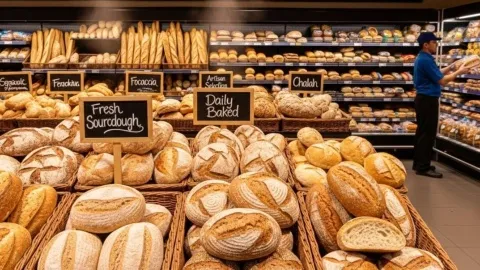
The debate over eggs illustrates how public attitudes toward food can change dramatically as nutrition research develops and society reevaluates earlier beliefs. Bread is now the boogeyman eggs once were; “GF” (gluten-free) labels next to dishes on menus have replaced the mania about egg-whites! Bread has become a symbol in modern nutrition debates, often representing larger fears about carbohydrates and unhealthy eating. However, bread is not a single uniform food, and its effects depend greatly on the type of bread, the quantity consumed, and the overall diet. While some people benefit from limiting or eliminating bread consumption, others continue to turn to it as a nutritious and meaningful and enjoyable part of everyday life.

I do, and you’ll have to pry my baguette from my cold dead hands.
