As we’ve established, this month’s name – March – comes from Martius, the first month of the earliest Roman calendar, named after Mars, the Roman god of war, and an ancestor of the Roman people through his sons Romulus and Remus. His month Martius was the beginning of the season for warfare; ironic, yes, given current events?
It’s true what they say: March comes in like a lion and goes out like a lamb, though the lamb has yet to make an appearance. Even the Israeli name for the conflict with Iran underscores this: they are calling it “Operation Roaring Lion.” Here in the US, we’ve gone with the slightly more subtle “Operation Epic Fury.” But make no mistake. No matter what you call it, we are involved in a philosophical conundrum: on one side, the apparent imperative to aggressively confront a state sponsor of terrorism; on the other, the grave ethical ramifications of assassination and widening warfare.
Those who would support President Trump and his administration in taking military action against Iran will justify their position as one of self-defense and deterrence, given Iran’s open hostility toward the United States, dating back decades, its support for terrorist organizations in the region and throughout the world that endanger US citizens, and its menacing nuclear ambitions that, without a doubt, threaten not only world peace but the world order of nations coexisting with other nations.
From this perspective, eliminating a brutal, violent leader like Iranian Supreme Leader Ayatollah Ali Khamenei is more than a geopolitical maneuver – it’s an ethical stance aimed at preventing future atrocities. This is the position the administration has taken when it touts “peace through strength.” Yet this view invites critical scrutiny on multiple fronts, including:
- International law and sovereignty: the targeted killing of high-level leaders – especially without clear evidence of imminent threat – violates principles of state sovereignty and the UN Charter’s prohibition on the unlawful use of force; absent a case for unmistakable self-defense, the so-called “imminent threat” argument, Trump’s aggression is illegal
- Rule of law and executive power: US law prohibits assassination; Trump’s actions undermine domestic legal frameworks that restrain executive use of force, especially absent a congressional declaration of war
- Ethics of targeted killing: even if a figure is morally reprehensible, and I have no doubt that Khamenei was, the intentional killing of an individual – particularly one inside another sovereign state – raises profound ethical questions about legitimacy, state violence, and norms governing life and death decisions in international politics
Beyond the complicated moral calculus of an individual act like the targeted killing of the leader of a sovereign nation lies the broader reality of how war has a proven track record: it tends to expand and exact costs far beyond its intended target.
We can already see this in Donald Trump’s Middle East adventure, now only 3 days old. Iranian retaliation has extended conflict throughout the Middle East. Strikes and counter-strikes have occurred in countries like Saudi Arabia and Bahrain, threatening global energy infrastructure and regional stability. The AP reports mounting civilian deaths in multiple locations, including Iranian population centers, as well as casualties among noncombatants in Lebanon and Israel. The near closure of critical chokepoints like the Strait of Hormuz threatens global commerce and energy supplies, demonstrating how localized conflict can ripple outward with global consequences. Meanwhile, Arab states and global powers alike, among them allies of the United States, are voicing their concern that US actions risk enflaming a wider war, and that military escalation may harden opposition rather than promote negotiation.
Taken as a whole, these developments show how a targeted military decision, even one framed narrowly, can interact with complex geopolitical networks, dragging multiple nations into conflict.
At the core of this debate is a fundamental philosophical tension between achieving just ends and choosing just means:
- Consequentialism (the ends justify the means): from a consequentialist standpoint, if removing a dangerous leader prevents greater suffering in the long run, it might be morally defensible. Yet this reasoning assumes control over outcomes that history shows are unpredictable. Trump’s war can provoke retaliation, empower hardliners, and destabilize the region – outcomes (ends) that nullify the presumed moral justification (means)
- Deontological ethics (means-based morality): from this perspective, certain actions, such as assassinating a world leader and a country’s leadership without clear legal justification, are inherently wrong, regardless of the outcome. Targeted killing as policy breaks moral codes about the sanctity of life and the rule of law, even if the targets themselves were brutal and harmful
The nature of the Middle East complicates the moral question even further. Once war spreads, noncombatants, infrastructure, and regional politics become entangled, making it nearly impossible to isolate moral responsibility in neat terms.
Donald Trump’s Middle East adventure, including the assassination of Iran’s supreme leader, forces a reckoning with deep ethical and legal questions, namely:
- Can morality ever justify assassination as foreign policy?
- Does the moral imperative to prevent terror outweigh the moral cost of war?
- Is there a pathway that combines accountability for violent actors with restraint that prevents wider conflict?
History suggests that simplistic answers – whether unyielding opposition to the use of force or uncritical and unthinking support of it – fail to grasp the full human cost of war. The current conflict not only pits nations against each other but also tests global norms about how states wield force, how power is constrained by law, and how moral imperatives are reconciled with geopolitical realities.
In my humble, poodle-y opinion, while I do not suggest the conundrum is easily solved, I do believe a truly ethical foreign policy should strive not merely to punish villains but to build conditions where violence is less likely, where diplomacy is not discarded, and where human life – across all societies and nations – is genuinely protected. An American president once said:
We will measure our success not only by the battles we win but also by the wars that we end — and perhaps most importantly, the wars we never get into.
Some namby-pamby, wishy-washy, pinko, woke, Birkenstock-wearing, kale-eating, immigrant-loving, abortion-facilitating Democrat? No, a Republican:
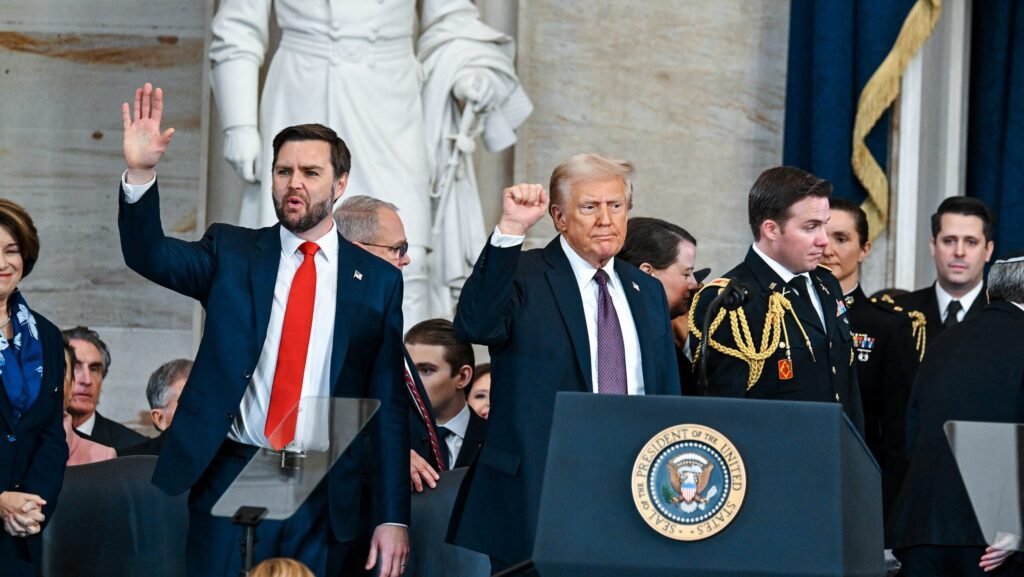
Donald J. Trump in his 2nd inaugural address.