
Labor Day is one of America’s great mysteries. It arrives every year on the first Monday of September, carrying with it the promise of a three-day weekend, backyard barbecues, mattress sales, and the vague feeling that summer is over even though the thermometer (and the calendar, for that matter) strongly disagrees.
Officially, Labor Day is a holiday honoring American workers and the contributions they have made to the country. Unofficially, it is the day when millions of Americans honor workers by refusing to do any work whatsoever.
And honestly, who could blame them?
Labor Day has an interesting history. It grew out of the labor movement of the late 19th century, when workers looked at their plight and began to demand such radical things as reasonable hours, decent pay, and the revolutionary idea that perhaps a person should not have to spend fourteen hours a day inside a factory before being allowed to see their family.
Back then, working conditions could be brutal. There were few protections for the workforce and very little concept of the wokey, namby-pamby “work-life balance.” Today, of course, things are much better.
Now we have email. Lots and lots of email.
The modern worker may not be dodging industrial machinery for a pittance all day, but s/he can certainly spend the better part of the day answering messages that begin with, “Just circling back…”
The phrase “just circling back” is one of the great achievements of modern civilization. Nobody knows exactly where we are supposed to be circling back to, but apparently we are all doing it.
Labor Day is supposed to remind us of the importance of workers, and workers are indeed important. Without workers, civilization would collapse almost immediately.
Consider what happens when the person who stocks the grocery store shelves doesn’t show up. Suddenly, society is in crisis. You walk into the supermarket and discover there is no toilet paper. Then no salt and vinegar flavored potato chips. Then, somehow, there are only three bananas left. People begin looking at one another suspiciously. Someone whispers, “I guy at my gym says Costco still has some.”
This is why Labor Day deserves respect. It is a celebration of the people who make everything work while the rest of us wander around complaining about how things were better “in the good ol’ days” – ah, the long hours, low pay, dangerous conditions, and child labor… good times!
Inexplicably, and ironically, the holiday has become one of the greatest symbols of American consumerism. Labor Day sales are everywhere.
LABOR DAY BLOWOUT!
EVERYTHING MUST GO!
60% OFF!
Apparently, the best way to celebrate the American worker is to buy a new mattress. This is the true purpose of the Labor Day weekend, because for 362 days a year, mattress stores sit empty, waiting… longing for the first weekend in September. After all, nothing says “tribute to labor” quite like financing a rectangle of foam (which may or may not remember things depending on if it is “memory foam”) for 72 months.
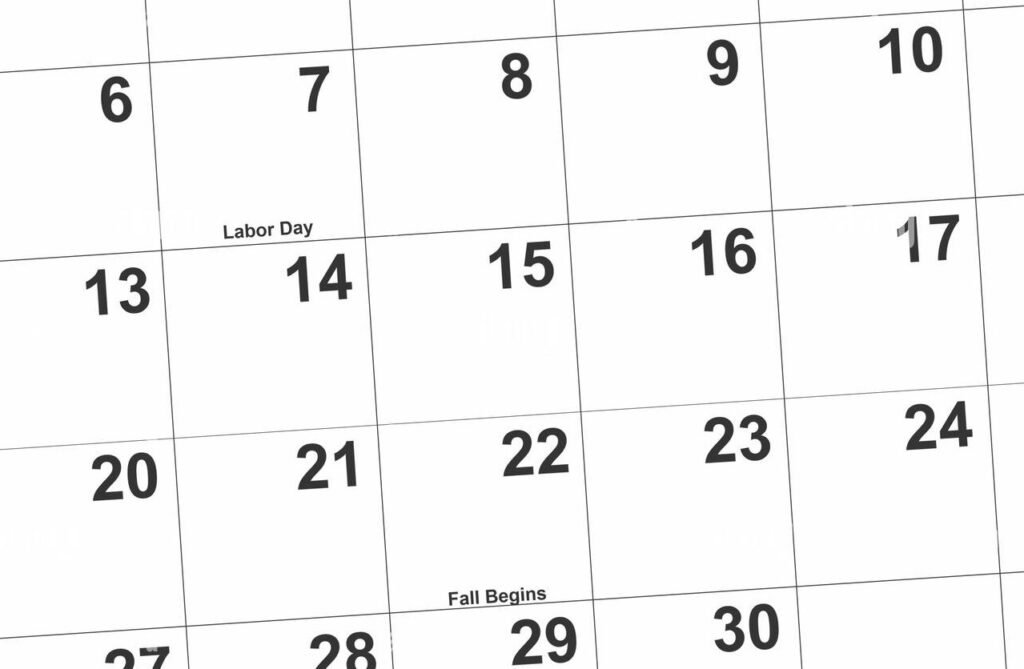
Labor Day also marks the unofficial end of summer. This is particularly confusing because summer doesn’t actually end until the 22nd of September astronomically. Apparently, the calendar has one opinion, the thermometer another, and the retail industry has yet a third – can’t we all just get along?
After Labor Day, stores begin quietly replacing beach towels with Halloween decorations. By October, Christmas merchandise starts appearing. By Thanksgiving, Christmas music is everywhere. And by December 26th, the entire country has moved-on and apparently decided that Valentine’s Day is just around the corner.
But Labor Day remains the great dividing line.
Before Labor Day, it is acceptable to wear white. After Labor Day? The Fashion Police will kick down your door. At least it’s not ICE! Nobody is entirely sure where this rule came from. Some people claim it originated as a class distinction, when wealthy Americans used clothing to demonstrate that they were rich enough to spend the summer somewhere other than the city.
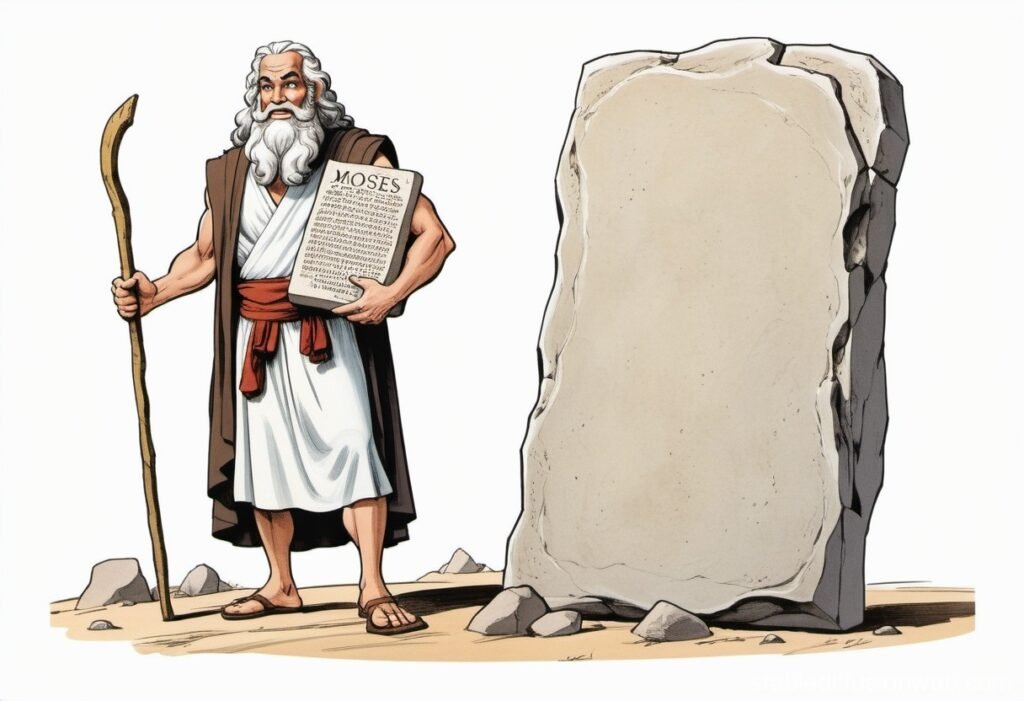
Other people simply say, “You don’t wear white after Labor Day,” as if Moses himself came down from Mount Sinai carrying a stone tablet on which this commandment was inscribed along with all the stuff about not coveting your neighbors ass.
Personally, if you ask me, I suspect the rule exists because somebody somewhere really hated white pants. I know I do.
Labor Day is also famous for backyard barbecues. This is where Americans gather around a grill and demonstrate our national inability to estimate how much food people will eat. Someone buys enough hamburgers to feed 40 people. There are 11 guests. By the end of the afternoon, there are still 27 hamburger buns, six pounds of potato salad, and enough hot dogs to survive a minor economic collapse. The host looks at the leftovers and says, “We’ll freeze it.”

We will not freeze it.
We will cover it in cling film or aluminum foil, put it in the refrigerator, forget about it, discover it three weeks later, sniff it cautiously, and throw it away while wondering what that mysterious green growth on the edges is.
Labor Day gatherings also provide a wonderful opportunity to observe the American worker in his or her natural habitat: complaining about work.
Someone inevitably says, “I can’t believe I have to go back tomorrow.” Nobody says, “Yes, but isn’t it wonderful to live in a society where we can all enjoy a holiday celebrating the contributions made by labor?”
No. Instead, someone says, “I have 146 emails waiting for me, a Powerpoint to prepare on 3rd quarter revenue streams, and a Zoom call with the Seattle office.” Everyone downs another swig of lukewarm beer. They nod knowingly. Their minds begin to wander as they remember all the things they need to circle back to.
Perhaps that is the real spirit of Labor Day. It is not merely about work. It is about recognizing that work is a strange and necessary part of life. We work to pay for houses, cars, food, clothes, televisions, refrigerators, leaf blowers, smartphones, and occasionally for mattresses.
Work gives us money, purpose, routine, stress, coworkers, office birthday cakes (in the break room at 3 for Margaret from accounting), and passwords that must contain at least one capital letter, one number, one symbol, and the blood of your firstborn child.
And for one Monday in September, we are allowed to step away from all of it.
We can sleep late. We can grill hamburgers. We can watch football, or golf (the most boring sport, second only to NASCAR, which is basically a bunch of cars going left turn… left turn… left turn… left turn). We can sit in traffic for four hours because apparently everyone in America had the exact same idea of where to go for a relaxing weekend. We can enjoy the final unofficial days of summer before autumn arrives with pumpkin-spice-flavored everything.
Most importantly, we can appreciate the people whose labor keeps the country running – people in factories, teachers, nurses, construction workers, truck drivers, farmers, mechanics, cooks, cleaners, office workers, programmers, delivery drivers, and many others whose efforts often go unnoticed until something doesn’t get done.
So Labor Day is a little contradictory. It is a holiday about work that encourages us not to work. It honors workers by giving them a day off. It marks the end of summer even though summer isn’t technically over. It celebrates labor with enormous sales encouraging us to spend money we earned through labor. And it warns us not to wear white while giving us absolutely no clear explanation of why.
But perhaps that’s what makes Labor Day so perfectly American.
We take something complicated, give everyone the day off, put hamburgers on a grill, add a sale on mattresses, and call it a tradition.
So enjoy your Labor Day.
Sleep late. Eat too much. Avoid checking your work email. Thank a worker. And if someone asks what Labor Day is really about, you can give them the official answer. Or you can simply say:

“It’s the three-day weekend before everyone starts pretending they’re excited about pumpkin spice.”
Tales of Work
Before my health forced me to retire, my swan song was to oversee the building of a new facility to house the New Media division of my employer, Technicolor. Aside from all the practical aspects of design (electrical, plumbing, HVAC, floorplan, landscaping, etc.), there was incorporating the needs of eight different departments, each with their own wish list. One day I had a meeting with HR to address their concerns. Shannon Black, the head of HR, said, “of course, you’ll need to provide a private room for a pumping station.” I was clueless. So I said, “what is a pumping station?” Shannon explained to me that new mothers who were lactating would collect their milk, refrigerate it, then feed their newborns with it later, and the place where they would do this at work was called a “pumping station.” I said, “fine, but we treat the sexes the same according to our corporate charter, so if the women get one, the men get a pumping station too.”
Your Labor Day Matt-ism
