
I was born and raised in Los Angeles, and I spent my career in Hollywood. Both of those things are true, but they are not literal. I was born in Santa Monica, on the coast about 16 miles west of downtown Los Angeles, and raised in Glendale, a suburb of the city located about 10 miles northeast. My office was located in Burbank, roughly 8 miles north of Hollywood, which actually isn’t even a city; it’s a neighborhood of LA.

if you look closely you can see the high rises of LA proper in the distance through what is called by locals “Coastal Eddy” – a localized weather phenomenon that creates cool, moist air and low clouds in the mornings this time of year which meteorologists technically call “the marine layer” and is sometimes referred to as “May Gray” or “June Gloom” – and you thought it was all sunshine and palm trees!
So, if we wanted to be 100% accurate, that first sentence should read: I was born in Santa Monica and raised in Glendale, and I spent my career in Burbank. Why the inaccuracies? You might be aware of Santa Monica because of its famous pier, of Glendale as the burial place of Michael Jackson, and Burbank as the place from which Johnny Carson and then Jay Leno broadcast The Tonight Show for over 40 years. But when I tell you where I’m from and what I did for a living, I am using metonyms, because they are more recognizable and, arguably, descriptive.
Metonyms are among the most subtle and powerful devices in language. They appear constantly in literature, journalism, politics, advertising, and everyday speech, often without speakers realizing they are using them. A metonym is a figure of speech in which one thing is referred to by the name of something closely associated with it. Instead of describing something directly, metonymy relies on connection and association. This technique allows language to become more vivid, efficient, and symbolic. A major metropolitan center’s name (such as Los Angeles) is often used to describe the cities around it, and industries are often referred to by a location where that industry takes place – when you think of the US auto industry, you say “Detroit.”

The word “metonym” comes from the Greek phrase meaning “change of name.” In a metonymic expression, the substitute term is not random. It has a meaningful relationship with the thing it represents. For example, when people say “The White House announced a new policy,” they do not mean the physical building itself made the announcement – because that would be silly. Instead, “The White House” stands for the president or the presidential administration. The building is closely associated with the people who work there, so the substitution feels natural and understandable.
Metonyms differ from metaphors, though the two are sometimes confused. A metaphor draws a comparison between unrelated things by suggesting one thing is another. Saying “time is a thief” compares time to a thief because both take things away. Metonymy, however, is based not on similarity but on association. When I say “I worked in Hollywood,” “Hollywood” refers to the American film and television industry because the place is associated with entertainment. No comparison is involved; instead, there is a connection between the location and the industry. Although, ironically, only one major film studio (Paramount) and two television networks (CBS and CNN) are located in Hollywood proper.

Metonymy also differs from synecdoche, which is another related figure of speech. Synecdoche occurs when a part stands for the whole or the whole stands for a part. Calling cars “wheels” is not just hip hop slang, it is synecdoche because wheels are literally part of the car. Metonymy involves association rather than physical inclusion (as demonstrated above with Hollywood). Although the distinction can blur, scholars generally separate the two concepts to better analyze language.
Metonyms are deeply rooted in human thought. People naturally connect ideas through experience and context. Certain objects, places, or symbols become shorthand for larger systems or concepts. Governments are often represented by capitals or buildings. “Washington” refers to the United States government, “Moscow” may refer to the Russian government, and “Wall Street” represents the financial industry. These substitutions simplify communication while adding emotional or cultural resonance.
In literature, metonyms enrich description and symbolism. Writers use them to condense meaning into a single image or phrase. In poetry, a crown may symbolize monarchy, while the pen may symbolize writing or intellectual power. One famous expression is “the pen is mightier than the sword.” Here, “pen” represents ideas, communication, and diplomacy, while “sword” represents military force. The phrase gains power because of the associations attached to the objects.
Shakespeare frequently used metonymy in his plays. In Julius Caesar, references to “Rome” often signify not merely the city but the political system, culture, and identity of the Roman people. Such language allows dramatic ideas to feel larger and more symbolic. Rather than explaining concepts directly, Shakespeare lets associations carry emotional weight.
Modern journalism relies heavily on metonyms because they make headlines shorter and more impactful. Newspapers often write statements such as “Downing Street denied the accusation” or “Silicon Valley is investing in artificial intelligence.” Readers instantly recognize the associated meanings. These expressions save space while also creating a sense of authority and familiarity.

Advertising also uses metonymy effectively. Brands become associated with entire categories of products or experiences. Sometimes a company name even replaces the generic term for an item. People may say “Google it” instead of “search for it online” – and again I ask should it be capitalized when using it as a verb and not a proper noun?… these are the things that keep me up at night. Think of Kleenex for tissues and Band-Aid for bandages; in these cases, the brand becomes a linguistic stand-in for a broader category of items. Advertisers encourage these associations because they strengthen cultural recognition and consumer loyalty.
Politics depends especially on metonymic language. Political speeches frequently invoke symbolic places, objects, or institutions. “The Oval Office,” “Capitol Hill,” and “the Crown” all operate as metonyms. Such language creates emotional resonance and simplifies complex institutions into recognizable symbols. Political rhetoric often depends on these associations to shape public perception quickly and effectively.
Metonymy is not limited to English. Nearly every language uses metonyms because human cognition naturally forms associations. Across cultures, people use familiar symbols to stand in for complicated ideas or structures. This universality suggests that metonymy reflects fundamental patterns in human thinking.
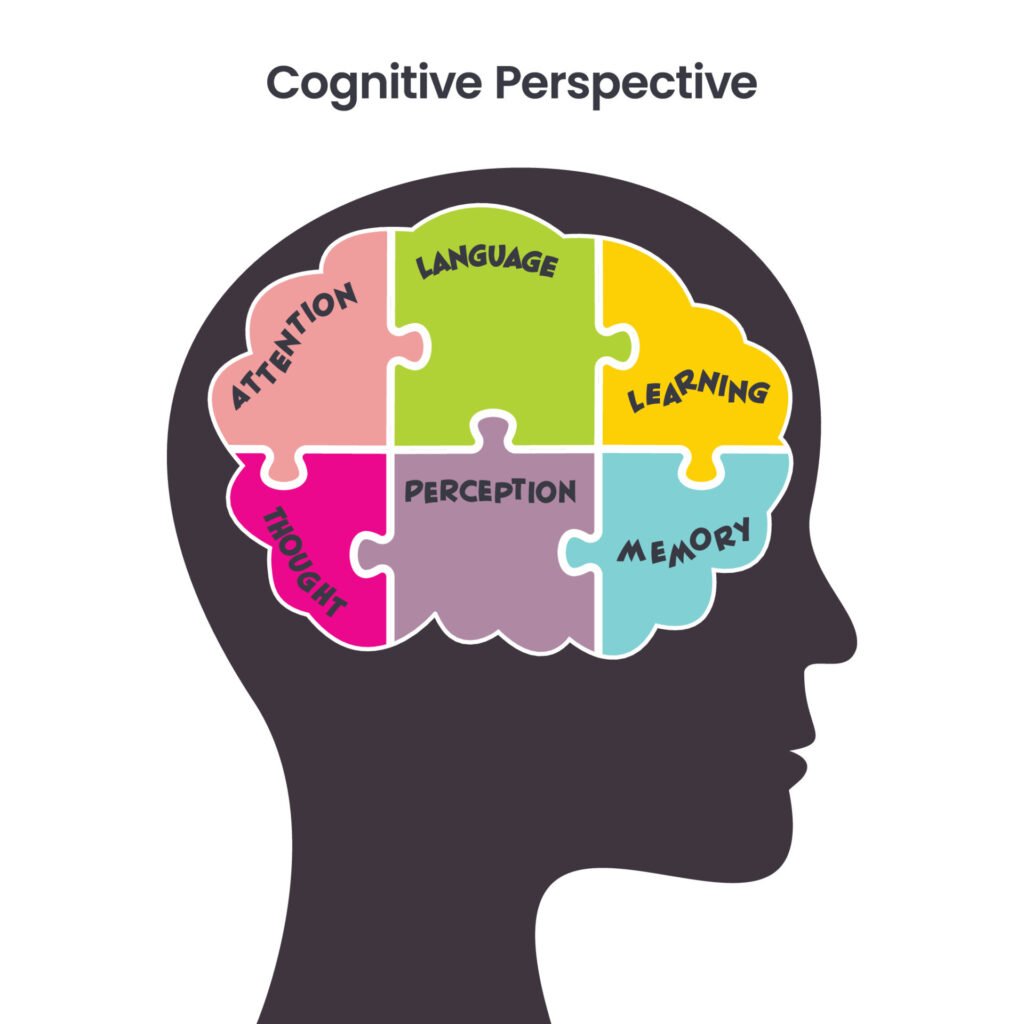
Cognitive linguists argue that metonymy is more than a decorative literary device; it is a basic mechanism of thought. Humans understand abstract concepts through concrete experiences and associations. A place can represent a government because people repeatedly connect the location with political authority. Over time, the association becomes automatic. According to this view, metonymy shapes how people organize and interpret reality itself.
Metonyms can also influence emotion and ideology. The words chosen to represent institutions or groups affect how audiences perceive them. Saying “the Pentagon” instead of “the Department of Defense” may create a more military or imposing image. Referring to business leaders as “Wall Street” can evoke ideas of wealth, power, or greed. Because metonyms condense meaning into symbolic language, they often carry emotional and political implications.
However, metonymy can sometimes create confusion or oversimplification. Reducing large systems to a single symbol may hide complexity. For instance, saying “America believes” suggests a unified national opinion even though citizens hold diverse views. Metonyms can therefore shape narratives in ways that obscure disagreement or nuance. Writers and speakers must use them carefully to avoid misleading audiences.
Despite these risks, metonyms remain essential to effective communication. They make language more dynamic, memorable, and efficient. Without metonymy, speech and writing would become repetitive and overly literal. Everyday conversation would lose much of its richness and symbolism. People instinctively rely on association to communicate quickly and vividly. In academic studies of rhetoric and linguistics, metonymy continues to attract attention because it reveals the relationship between language and thought. Scholars analyze how societies create symbolic connections and how those connections evolve over time. As cultures change, new metonyms emerge.
Technology has introduced us to terms like “the cloud” to represent online data storage systems. The metonym (cloud) simplifies a very complex technical thing, making it more understandable.

You could argue “Internet” or “World-Wide-Web” are metonyms, as like “the cloud” they are not a specific location but rather a concept brought about by technology. The text you are reading right now is stored on a server in Arizona; unless you are my cousin Jim, I’d imagine you are not in Arizona – you are on the Internet.
Quod erat demonstrandum.
Ultimately, metonyms demonstrate the creativity and flexibility of human language. They allow simple words to carry layers of meaning far beyond their literal definitions. By linking objects, places, and symbols to broader ideas, metonymy transforms ordinary speech into something more expressive and powerful. Whether appearing in poetry, politics, journalism, this blog, or casual conversation, metonyms shape the way people think, communicate, and understand the world around them.
