
Mirth is one of those words that sounds like it ought to be wearing a waistcoat. It has a polite little lilt to it, like it might tip its hat as it passes you on the street. “Good day! I am Mirth. I brought a chuckle and perhaps a mildly undignified snort.” It’s not quite as rowdy as laughter, not as explosive as cackling, and certainly not as alarming as guffawing (which sounds like something a goose does after a strong espresso). No, mirth is the friendly middle ground – the warm glow of amusement that sneaks up on you and settles in like a Chihuahua who has decided your lap is now legally theirs.
At its core, mirth is joy that has discovered its sense of humor. It’s what happens when happiness loosens its tie and says, “You know what? Let’s not take ourselves so seriously.” It’s the grin you can’t quite suppress when someone trips over absolutely nothing but recovers with a flourish like they meant to do it. It’s the shared look between friends when something mildly absurd happens, and no words are needed because your eyebrows have already delivered the punchline.

I discovered mirth in a somewhat indirect way. I have lesions on my brain caused by demyelination – a condition known as progressive multifocal leukoencephalopathy, referred to as PML.
It’s the result of a neurological virus (which activates because of a malfunctioning immune system brought on by HIV) and not something like a blow to the head or even a stroke, but it is nonetheless considered a TBI or “traumatic brain injury.”
My “sense of humor” (if you can call it that) has less to do with outright jokes and more to do with absurdity or farce. As an example, here at Stonewall Gardens, the assisted living facility where I live, breakfast is a fairly straightforward affair: eggs, sausage or bacon, pancakes, toast or muffin (with butter or jelly), and a fruit cup.
The other day, I decided to have a little fun. When the caregiver asked me what I’d like for breakfast, I said, “you know, today I think I’ll have the continental, so let me start with a croissant, jam – boysenberry if you’ve got it, and a Bellini.” I said this as seriously and matter-of-factly as I could, and the caregiver’s look of “well, that’s it, Matt’s gone over the edge” was priceless.
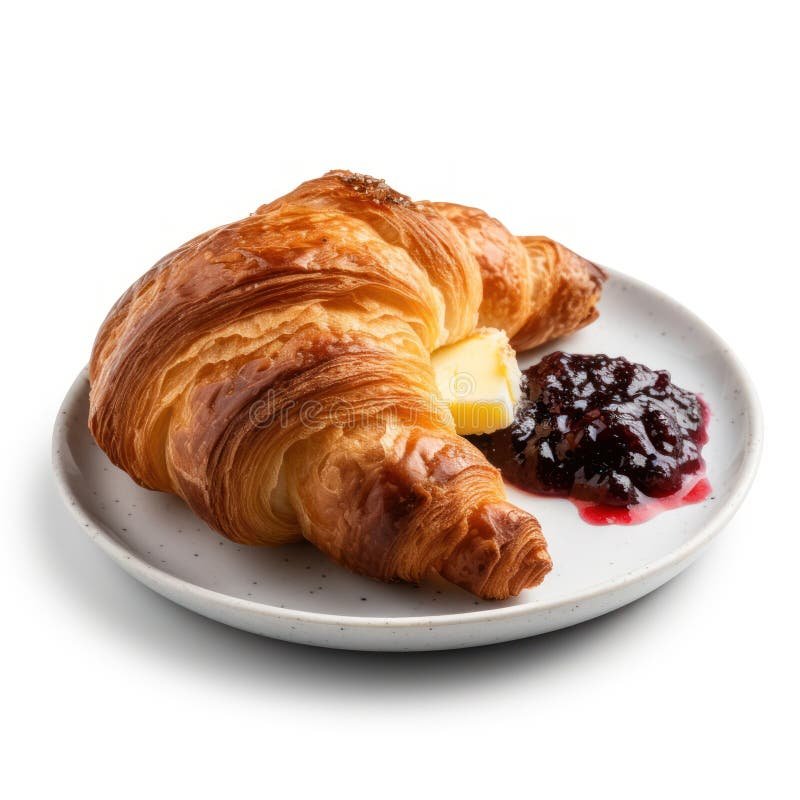
But in those milliseconds of misunderstanding, a side effect of my neurological condition known as PBA or “pseudobulbar affect” took over; PBA means I have trouble regulating emotions like happiness and sadness, and so the absurdity of my breakfast order coupled with the caregiver’s “respectful” confusion (outwardly masking his thoughts of “Matt has lost it” while inwardly thinking “Matt has lost it”) caused a smile (more of a smirk) to come across my face, giving the game away.
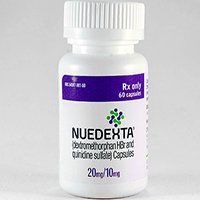
This inability to hide my emotions, even in a playful, comic scenario, used to bother me, so I brought it up with my neurologist. He prescribed a ludicrously expensive medication called Nuedexta that did little to help me. And then I came to a realization.
My bursting into tears at a shelter dog adoption video online (PBA affects not just laughter but crying as well), my smirk giving a joke away, is me being unfiltered. It’s me saying to hell with convention, or expectations, or even the emotional discipline necessary to pull off a ruse. That’s not a bad thing; it is profoundly honest.
So I ditched the med that was supposed to control all this and just embraced my emotional incontinence. At least once a day I fire up YouTube and watch videos of dogs in shelters meeting their forever humans and going home. I bawl my eyes out. Poor Gordon…

…when I get like this, he has to put up with me scooping him up and hugging him so tightly that his eyes start to bulge out of his head. He tries to lick the tears streaming down my face, thinking something is wrong. But actually, something is right – that is my genuine emotion at that point and there’s nothing wrong with that.
As regards my tell-tale smirk ordering breakfast from the caregiver, or at the doctor’s office yesterday when the check-in nurse asked me his standard questions including “do you feel safe at home?” and I responded “yes, now that the beatings have stopped,” I needed a name to describe the happy I was feeling, and decided on mirth.
Unlike some of its louder cousins, mirth doesn’t need a spotlight. It’s content to linger in the background, quietly improving everything. Mirth is democratic. It doesn’t care about your job title, your five-year plan, or whether you finally learned how to fold a fitted sheet (no one truly has). It shows up for everyone. Children, of course, are its most enthusiastic ambassadors. They find mirth in the most unexpected places: a cardboard box, a funny noise, a sock that has mysteriously vanished into the void. Adults, on the other hand, sometimes need a bit of coaxing. We’ve trained ourselves to be very busy, very serious, and very concerned about things like “email tone.” Mirth patiently waits for us to remember that life is also allowed to be a little ridiculous.
One of the charming things about mirth is how contagious it is. You might be minding your own business, scrolling through your day with all the enthusiasm of someone reading a cereal box for the third time, when suddenly you hear someone laughing nearby. Not a polite, “ha ha, that’s nice” kind of laugh, but a genuine, slightly out-of-control laugh that suggests something truly delightful has occurred. Before you know it, you’re smiling too, even though you have no idea what’s so funny. That’s mirth at work, spreading like a benevolent rumor.
Of course, mirth has its own personality quirks. It can be a bit mischievous. It enjoys timing. It knows that the funniest moment to squeak a chair is during a very serious pause, or that the one time you’ll forget someone’s name is exactly when you’re introducing them with great confidence. Mirth doesn’t mean to embarrass you (well, not entirely), but it does have a flair for reminding us that perfection is both overrated and, frankly, a little boring.

Mirth thrives on the small things. Grand spectacles are all well and good, but mirth is just as happy with a clever turn of phrase, an unexpected pun, or the realization that you’ve been singing the wrong lyrics to a song for years. (It’s not “hold me closer, Tony Danza,” but honestly, mirth would argue that maybe it should be.) It’s the accumulation of tiny absurdities that make life feel lighter, like pockets filled with confetti instead of receipts.
There’s also a subtle bravery in mirth. To embrace it, you have to be willing to let your guard down, even briefly. You have to accept that you might look a little silly, that your laugh might be louder or stranger than you intended, that you might not be entirely composed. Mirth asks you to trade a bit of dignity for a lot of delight, which, when you think about it, is an excellent deal.
Of course, like any good thing, mirth appreciates balance. It doesn’t demand that every moment be filled with laughter. In fact, it often shines brightest in contrast to seriousness. A well-timed bit of humor in a tense situation can feel like opening a window in a stuffy room. Suddenly, there’s air. Perspective returns. The problem might still be there, but it no longer feels quite so suffocating.

In the end, mirth is less about big, booming laughter and more about a general lightness of spirit. It’s the quiet acknowledgment that life is strange, unpredictable, and occasionally very funny. It’s the ability to smile at the little mishaps, to find amusement in the everyday, and to share those moments with others.
If you encounter mirth, welcome it. Let it sit for a while. It doesn’t take up much space, and it leaves things better than it found them.
