
When I was growing up in Los Angeles in the 70s, every car had two things inside: the Fleetwood Mac album Rumours on 8-track tape, and a copy of the Thomas Guide. The Thomas Guide was a paperback, spiral-bound atlas featuring detailed street maps of the city; it was such a fixture of life in the sprawling metropolis of LA that many companies included the Thomas Guide map grid information for their locations in Yellow Pages listings and other advertisements.
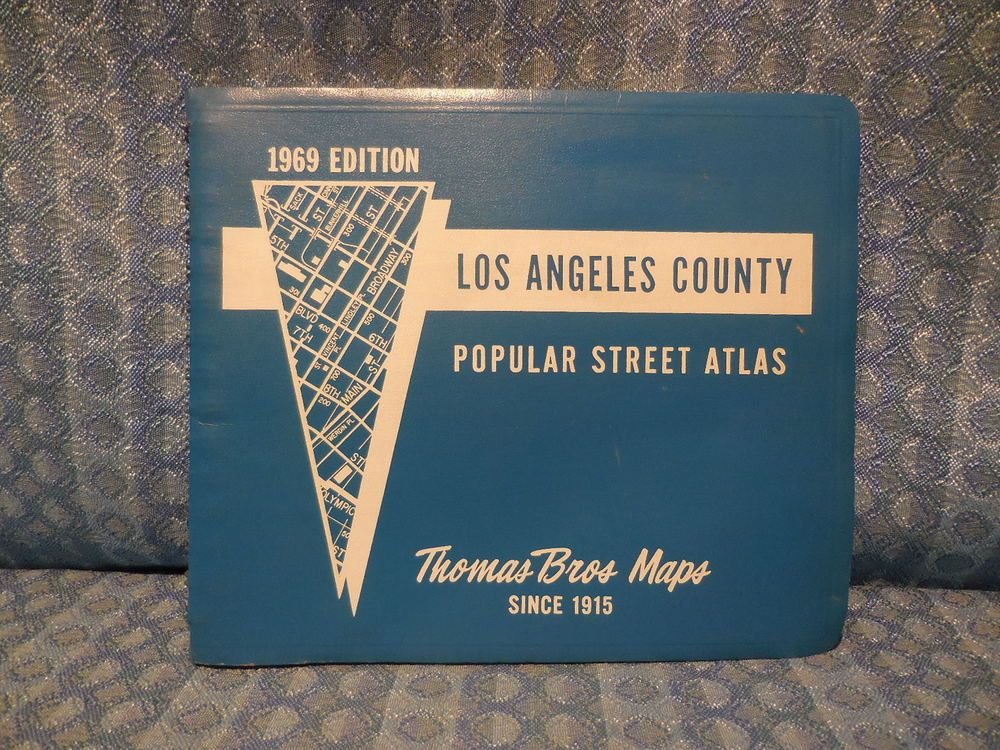
Of course, this was before GPS. If you wanted to get to that mattress store on Cahuenga, you broke out your Thomas Guide, looked up its address, and then traced a route back to your location. Each page was divided into a checkerboard grid with an x and y axis, and if your route led you off a page, the edge of each page pointed to its continuation on another page with a page number and an arrow. A long journey might have you traversing several pages.
I mention Thomas Guides not out of a sense of nostalgia, pleasant though it is, but to make a point. People these days don’t know how to read maps. This is not a “kids these days…” rant from an about-to-turn-60-year-old. Adults are affected too.
Technology has always reshaped the way humans think, learn, and interact with the world. Tools like GPS navigation, while undeniably convenient, have sparked growing concern about their long-term effects on human intelligence and cognitive skills. Although these technologies improve efficiency and accessibility, they may also contribute to a decline in things like critical thinking and spatial awareness – I would argue that they are making people “stupider.”
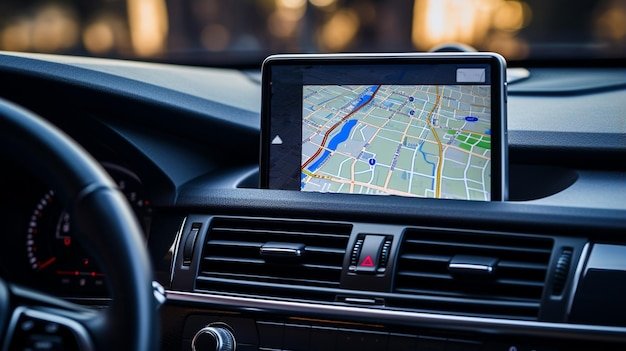
One of the most noticeable impacts of GPS technology is the erosion of spatial navigation skills. Before digital navigation, people relied on maps like the Thomas Guide, landmarks, and a sense of direction to move through their environments. This process required active engagement of the brain, particularly areas responsible for memory and spatial reasoning. Today, GPS devices provide step-by-step instructions, removing the need to think about routes or surroundings. As a result, individuals may become less capable of navigating independently, often feeling lost without digital assistance. Over time, this reliance can weaken the brain’s natural ability to form and recall spatial information.
Case in point. Last night I wasn’t feeling the chicken noodle soup with grilled cheese sandwich being served for dinner in our dining room, so I ordered a pastrami sandwich with no pickles on a French roll with some fries from a local greasy spoon for delivery by Grubhub.

Now I should point out here that my residence used to be a mid-century modern boutique hotel before it was renovated and turned into an assisted living facility, and that when it was a hotel its entrance was located off the parking lot in what we now call the back of the property, even though its address puts it on the street in the front of the property. After the renovation, the entrance and the address were both on the street in the front of the property – Palm Canyon Drive; we still have a parking lot located in the back of the property off Zanjero Road.
Grubhub uses GPS maps provided by Google – I know because I inquired – and even though Stonewall Gardens Assisted Living replaced the Desert Moon Hotel over eleven years ago, they still show the old entrance in what today we call the back. It is important to note here that both Stonewall and the Desert Moon were listed at the same address on Palm Canyon Drive, but architecturally the Desert Moon’s entrance was on Zanjero Road and Google Maps still erroneously reflects this as the entrance for our address on Palm Canyon Drive.
So, the Grubhub driver took my sandwich to the back of our building. You might say that was a reasonable, even defensible, mistake. Let me tell you why it is not and why this driver was/is an idiot.
The driver was relying exclusively on his GPS. We know, because Google shows the wrong entrance, that this will take him to Zanjero Road. But the address is on Palm Canyon Drive. So when he called me and said “I’m in front of your building,” and I said, “no you’re not,” I was not just arguing semantics with him, as I included this in the “notes to driver” section of the Grubhub app:
Please note: GPS/maps taking drivers to back of building; I will meet you in the front of the building ON PALM CANYON DRIVE
and yes, I used all caps to emphasize my location

So clearly Mr. Grubhub driver can’t read. Be that as it may, I asked him what address he had for my delivery. He responded correctly with my address on Palm Canyon Drive. I then asked him to find a street sign where he was and tell me what street he was on. He looked and then responded he was on Zanjero Road. I pointed out, sarcastically, that my delivery was for an address on Palm Canyon Drive, and he snapped back, rather annoyed, “yah I know, but this is where GPS took me.” So calling him an idiot was too kind; we now know he is a moron.
GPS and similar technologies can diminish critical thinking and decision-making skills. When navigating without assistance, individuals must evaluate options, consider alternatives, and make judgments based on incomplete information. GPS systems, however, automate these decisions, often providing a single “best” route. Users tend to follow these directions without question, even when they are inefficient or incorrect. This passive acceptance can discourage independent thinking and reduce a person’s ability to assess situations critically.
Another concern is the broader impact on attention and awareness. Relying on GPS can lead people to focus more on their devices than on their surroundings. This not only affects navigation skills but also reduces situational awareness, making individuals less observant and engaged with the world around them.
However, it is important to recognize that technology itself is not inherently harmful. GPS and similar tools offer significant benefits, including increased safety, efficiency, and accessibility. They can help people explore unfamiliar places with confidence and save time in daily life. The issue arises not from the technology, but from how it is used. When individuals rely on these tools exclusively, without exercising their own cognitive abilities, they risk losing important mental skills.
While GPS technology has revolutionized navigation and improved convenience, it may also contribute to a decline in certain cognitive functions, including spatial awareness and critical thinking. To maintain cognitive strength, it is essential for individuals to strike a balance: using technology as a tool, rather than a crutch, and continuing to challenge their minds in meaningful ways.
I did, eventually, get my sandwich – it was delicious. I literally had to become a human GPS device. I told Mr. Grubhub driver:
- Get in your car; point it away from the dead end (Zanjero is not a thru street)
- Proceed to the first and only intersection; turn right onto Via Escuela
- At the first intersection, marked by a streetlight, turn right onto Palm Canyon Drive; proceed a quarter of a block
- When you see the large sign that says Stonewall Gardens Assisted Living, turn right into the circular driveway
- When you see a very handsome bald man who might be a little overweight in a wheelchair waving at you STOP – you have arrived at your destination
- Give the man his sandwich and be on your way