
Today, the calendar turns our attention to St. Patrick, who was not himself Irish but is credited with bringing Christianity to Ireland in the 5th century. “St. Patrick’s Day” comes around once a year and celebrates Irish culture, heritage, and traditions with wearing green (symbolizing Ireland, the “Emerald Isle”), symbols like shamrocks (which Saint Patrick used to explain the Christian concept of the triune deity known as The Trinity), as well as music, dancing, and Irish food – our menu here at Stonewall Gardens today calls for corned beef and cabbage and, what else, potatoes!
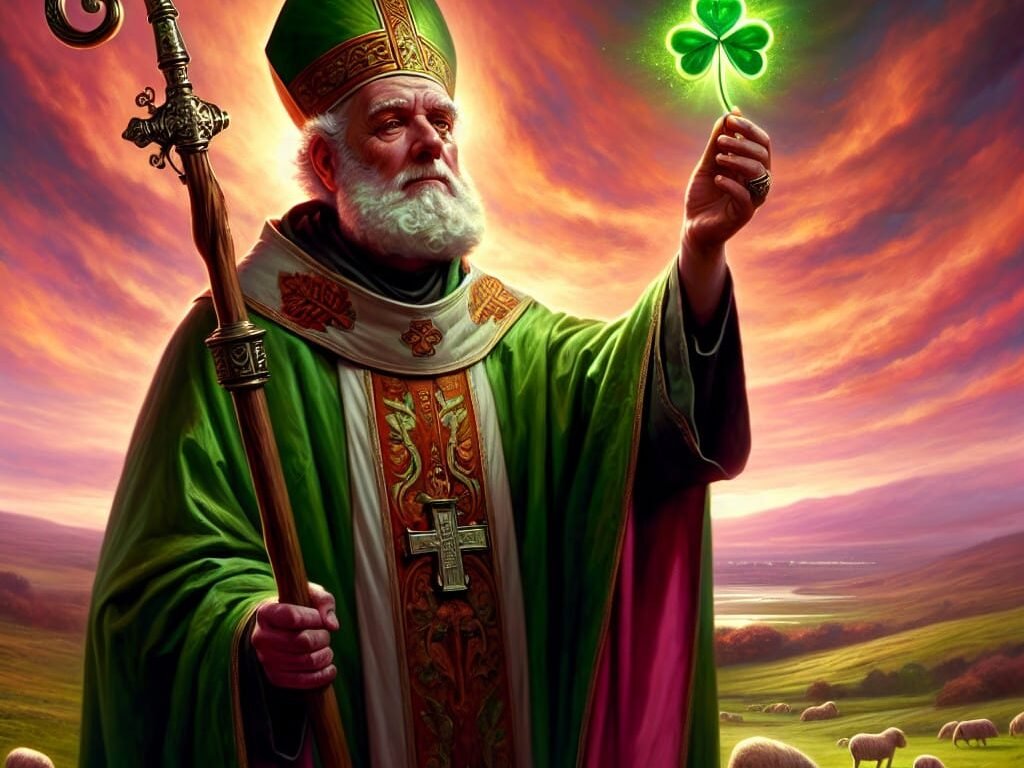
The day is a western cultural touchstone – everyone, except maybe the Iranians, is Irish on St. Patrick’s Day. Tradition calls for anyone not wearing green in the spirit of the day to be pinched as a kindof playful punishment. Although it began as a religious feast day in Ireland to commemorate his death, St. Patrick’s Day is now widely celebrated in places like the United States, especially in cities with large Irish communities such as Boston and Chicago (famous for dyeing its river green).
As human beings, our identities – who we are – demand ritual and tradition. St. Patrick’s Day is an archetypal demonstration of that. And the day’s historical origin in religion, specifically Catholicism, underscores the beneficial role religion can play in society, if you jettison all the supernatural claims of virgin teenagers giving birth, executed itinerant preachers rising from the dead, and the overemphasized focus on matters of the pelvis leading to moral decay and ruin.
On paper, I’m as Catholic as they come. Eight years of CCD (Confraternity of Christian Doctrine – weekly classes in everything Catholic), four years of Catholic high school which included one religion class per semester, five years as a Conventual Franciscan (three as a vowed “Brother,” two in training and preparation for vows), and undergraduate studies in philosophy and theology at a free-standing Catholic seminary in Massachusetts (often called “the next diocese west of Ireland” because of its large Irish-Catholic population).
But today I am a “recovering Catholic,” with seven years of Catholic sobriety – well, technically three years, because I briefly fell off the wagon in 2023 and started receiving communion on a weekly basis from a eucharistic minister who visited me at home every Sunday. My takeaway from that brief return to the fold was that atheists like myself have been too quick to dismiss religion, and in doing so, they have overlooked many of its most valuable functions. One form of religion or another has been and continues to be a part of every society in the history of the world, and I’ve come to believe atheists reject this at their own peril; what if we could adopt religion’s psychological, social, and cultural tools while discarding its supernatural claims?
Call it Poodlism.
At its heart religion is not merely a set of irrational beliefs about the divine, but a sophisticated system designed to address fundamental human needs. While traditional atheism (what Richard Dawkins calls “militant atheism”) often focuses on debunking religious doctrines, it ignores the ways in which religion provides comfort, moral guidance, and a sense of belonging – human needs that persist regardless of one’s beliefs about God.
The processing of difficult emotions and the need to find meaning in adversity are addressed by religions like Catholicism through rituals, sermons, and communal practices. By contrast, modern secular culture tends to prioritize rationality and individualism, often leaving people without a clear framework for dealing with life’s hardships. Moreover, the Catholic “calendar” (a three-year cycle of instructive scriptural readings and commemorative “feast days” like St. Patrick’s Day) and weekly Sunday gatherings called “Mass” to reinforce concepts like community and belonging instill core values over time. Instead of assuming that people will remember important life-lessons after hearing them once, religions repeat these messages in various forms – through weekly services, annual holidays, and daily practices. This repetition acknowledges a basic truth about human nature: we are forgetful and in constant need of reminders. Secular culture assumes that knowledge alone is sufficient.
The idea of community is key. Religion brings people together, fostering a sense of belonging and shared identity. In contrast, modern secular life can be isolating – people may now have access to vast networks online, yet still lack meaningful, face-to-face connections essential to deriving support on life’s journey.
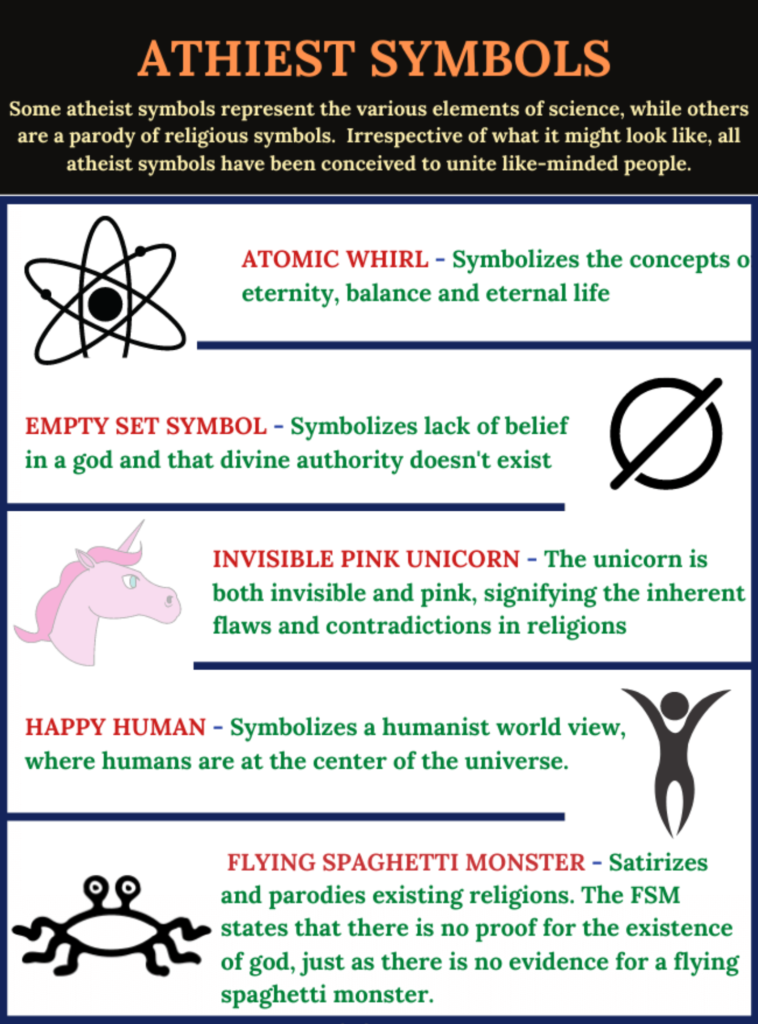
And we humans need rituals and symbols. While atheists often view religious rituals as empty or irrational, one cannot deny they serve important psychological functions. Rituals create a sense of continuity, mark important life events, and reinforce shared values. They can provide comfort in times of uncertainty and help individuals feel connected to something larger than themselves. By rejecting rituals outright, secular society is discarding tools that could enhance emotional well-being.
People see the visible symbols of a religion like Catholicism – the pope in his white outfit, the statues and depictions of Mary, the mother of Jesus, the local bishop with his funny pointed hat (called a miter), rosary beads – and think that is all there is. They overlook the primary schools (one in nearly every parish), the secondary schools (like my alma mater St. Francis High School), the institutions of higher education, the hospitals and the vast far-reaching network of social services and community support – the Catholic Church is the largest non-governmental provider of education and medical/social services in the world. Secular society, by contrast, often lacks comparable institutions dedicated to these functions. While there are schools and community organizations, they are typically fragmented and do not address the full spectrum of human needs in a coordinated fashion.
At the end of the day, I am not antagonistic toward religion or the Catholicism of my youth. Rather, I would like to see a more respectful and open-minded dialogue between believers and non-believers. Atheists can and should learn from religion without compromising their commitment to reason and evidence, not just define themselves in opposition to religious belief. Dismissing religion entirely is like throwing away a complex machine without first understanding how its parts function or the benefits derived from the role they play. It is throwing out the baby with the bathwater.

There is enduring value in religion’s practices and structures. By embracing elements such as community, ritual, and repetition, secular society can better address the emotional and social needs that religion has long fulfilled, even if it’s just for a day of Irish traditions. And wearing green. We could call it Poodlism, but then you might accuse me of having a messiah complex.
