
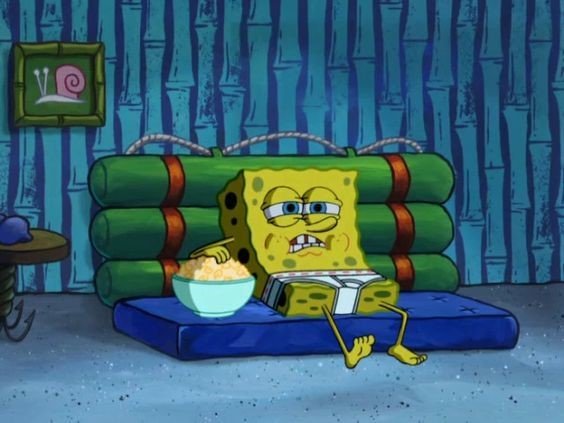
Contemporary television viewing is decidedly different than in years gone by due to “on demand” streaming services and the modern practice of binging, wherein the viewer watches several “episodes” of a show in one sitting, sometimes without bathing or eating (Doritos, Slim Jim’s, or a big bowl of popcorn don’t count).
This means the tales being told have time to breathe; writers can create more realistic three-dimensional characters and believable stories that more accurately reflect the real world. In the old days, you might have a favorite show, or shows, and you scheduled your life around these. It was called “appointment television.” In the 90s, I loved Friends and Seinfeld, so that was how I spent my Thursday nights. And the episodic nature of shows – one a week for 22 weeks – meant writers had to introduce a storyline (or plot point), develop it, and then resolve it each week. Multi-episode stories were carried on the shoulders of recurring characters (Janice on Friends with her annoying laugh and her catchphrase “Oh. My. God!” or Mr. Peterman on Seinfeld who despite being a clueless idiot was wildly successful and Elaine’s boss).
But here I’m talking about situation comedies, known as sitcoms. Each episode introduces a situation, and that situation is fully explored and lived by the characters (to humorous effect) within the timeframe of the episode. What about dramas? In America, we basically have three types: medical, crime, and legal in the world of scripted television (with reality tv, all bets are off!). But the same episodic constraint from sitcoms applies to dramas: each week’s show does not require the viewer to have seen previous episodes, and episodes have a self-contained plot that is introduced, developed, and resolved within the same episode. This is known as “procedural drama,” and the most common is the crime procedural – this is sometimes called a police procedural, though they do not always involve the police so that moniker is too limiting; the crime might be a government coverup involving politicians which is investigated and uncovered/exposed by a reporter, or some other illegal malfeasance where the hero/protagonist is a PI (“private investigator”).

When Law & Order came along in 1990, it redefined the procedural drama into a simple but unique hybrid of crime and legal stories: each episode is divided into two halves – the first follows police detectives as they investigate a crime, and the second focuses on prosecutors as they attempt to bring the perpetrators to justice in court. But given each episode was an hour long, this approach meant there was only 30 minutes to tell the story of the crime and its investigation, and 30 minutes for the prosecution and court verdict (less for each actually when you take commercials into account), the net result of which was gross oversimplifications and often radically compressed (even unrealistic) timeframes for the drama to unfold.
It’s hard to deny the cultural impact of the show. The original series ran for 20 seasons, making it one of the longest-running primetime dramas in American television history, and its success led to multiple spin-offs, including Law & Order: Special Victims Unit, Criminal Intent, and Organized Crime. Among these, SVU has surpassed even the original series in terms of longevity and cultural influence.
The show’s distinctive “dun-dun” sound effect is instantly recognizable as a kindof audio logo, and characters such as Detective Lennie Briscoe (right), portrayed by Jerry Orbach, became iconic due to his dry, laconic wit, his decades of experience, and his humanity (the character is a recovering alcoholic); Briscoe’s one-liners and world-weary compassion exemplified how Law & Order balanced seriousness with subtle and relatable humor.

The minimalist style of Law & Order sets it apart, even from other crime procedurals. The show famously avoids background music (though its bass-heavy theme is classic), flashy special effects, or elaborate camera work. This stripped-down approach contributes to the show’s timeless quality. Episodes from the early 90s don’t feel at all dated; they are still relevant and very watchable today, or in 2007 when I “discovered” the show. At the time, I was in the hospital, and cable channel TNT had reruns on every afternoon, two episodes back-to-back, which I watched religiously.
It was basic, un-challenging stuff. The crime introduced before the opening credits roll, the investigation, an arrest, the case handed over to the DA’s office, court, and then a verdict. All wrapped up for you neat and tidy with a bow. At the time, I’d been given four months to live, so complex character development and depth to the storytelling was not what I wanted – the development of my own character with a fatal, usually terminal illness and the depth of the drama going on around me as doctors tried different things and remained cautiously optimistic that I might beat the odds and survive was enough “realism” for me; Law & Order was my escape. At the time, its simple sameness and predictability were comforting.
Like many people living through the current state of the world and of the United States, I’ve been searching for ways to settle my nerves. Something to offer even a brief escape from the horrors, the headlines, and the general sense of doom. It needs to be something that gives my brain a short break, engaging enough that it distracts me but simple (simplistic?) enough that it doesn’t get me spiraling into what I call a “thought attack.” And many of the entertainment options on my streaming services today offer the opposite: complex characters struggling with moral dilemmas, realistic situations where you can easily see both sides as being in the right, and plots with storylines that take maybe 6 or 8 episodes to resolve. It’s hard work!

So, there comes a time when a man living in the midst of today’s fraught environment must turn to crime. Procedurals. If you’re thinking that these shows are a bit same-y and a bit silly, you’re correct. That’s the point. I don’t want to concentrate on high concepts or delve into deep emotions. With procedurals, each episode is different, yet sortof the same. The joy of them lies in their gentle, soothing predictability. There is a pleasant repetitiveness, which means I can now tell immediately when someone is the bad guy simply by the way they enter the episode, or from the fact s/he randomly mentions a nut allergy out of the blue.
I felt the need, as a modern bleeding heart “woke” liberal, to neutralize gender in the last sentence, but in the black and white world of Law & Order, and crime procedurals in general, the bad guy is always a “he.” The episodes are interesting enough to entertain but repetitive enough that it’s like my brain has been put in a nice warm bath. These shows also don’t take themselves too seriously, which is important.
There are a lot of moments where you have to suspend your disbelief, forget how things actually work, and get on board with someone solving the crime by noticing a book of matches from a hotel in Reno in plain sight on a coffee table that blows the case wide open leading to an arrest before the next commercial for Ozempic.

I used to have to rely on porn for this level of superficial and improbable escapism. I mean, seriously, I’m turning 60 in three months and not once in my life has the guy delivering my ExtraMostBestest pepperoni pizza from Little Caesars offered to come in and help me eat my breadsticks! I also have horrible “delivery person karma” but that’s a story for another time.
So, if you’re like me, and as I’ve said before I hope you are not, and you need a break from the latest escapades of the orange horror clown, may I suggest Law & Order to you? Tonight is the premier of Season 25 on NBC at 8:00 pm local time. The episode will be available to stream on Peacock tomorrow. And the whole series dating back to 1990 is available on nine different streaming services: click here to find out more.
Bonus… SVU is on tonight right after Law & Order, 9:00 on NBC. Play your cards right and that’s 2 hours of relief from you-know-who running the country off a cliff.
